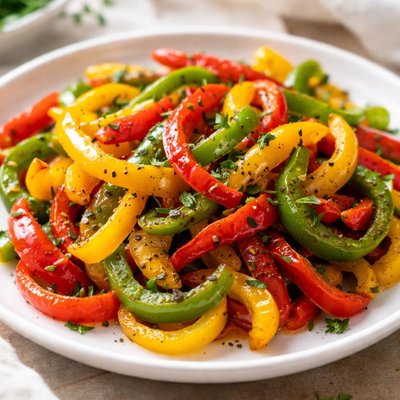
1 serving (100 grams) contains 50 calories, 1.0 grams of protein, 2.0 grams of fat, and 9.0 grams of carbohydrates.

Smart Nutrition Tracking with SnapCalorie

Nutrition Information
Calories |
74.6 | ||
|---|---|---|---|
% Daily Value* |
|||
| Total Fat | 3.0 g | 3% | |
| Saturated Fat | 0.4 g | 2% | |
| Polyunsaturated Fat | 0 g | ||
| Cholesterol | 0 mg | 0% | |
| Sodium | 223.9 mg | 9% | |
| Total Carbohydrates | 13.4 g | 4% | |
| Dietary Fiber | 3.0 g | 10% | |
| Sugars | 7.5 g | ||
| protein | 1.5 g | 3% | |
| Vitamin D | 0 mcg | 0% | |
| Calcium | 14.9 mg | 1% | |
| Iron | 0.7 mg | 3% | |
| Potassium | 298.5 mg | 6% | |
* Percent Daily Values are based on a 2,000 calorie diet. Your daily values may be higher or lower depending on your calorie needs.
Food Attributes
Source of Calories
About Sauteed bell peppers
Sauteed bell peppers are a simple yet flavorful dish commonly found in various cuisines, including Mediterranean, Mexican, and American cooking. Bell peppers originated in Central and South America and are known for their vibrant colors, ranging from green to red, yellow, orange, and even purple. Nutritionally, bell peppers are low in calories, high in dietary fiber, and rich in vitamins such as vitamin C, vitamin A, and vitamin B6. They are also a source of antioxidants like beta-carotene and lycopene, making them a nutrient-dense addition to meals. When sautéed, their sweet flavor intensifies, offering both culinary and health benefits without dramatically altering their nutritional profile.
Health Benefits
- Rich in vitamin C, which supports immune health and skin integrity (more than 100% of the daily value in just 1 cup of bell peppers).
- Contains vitamin A, particularly from red bell peppers, which promotes eye health and supports a healthy immune system.
- High in dietary fiber, aiding digestion and supporting gut health.
- Provides antioxidants like beta-carotene and lycopene, which may reduce inflammation and contribute to heart health.
- Low in calories while delivering essential nutrients, making it ideal for weight management.
Dietary Considerations
Selection and Storage
Store whole bell peppers in the refrigerator crisper drawer to maintain freshness for up to 1-2 weeks. For sautéed peppers, refrigerate in an airtight container and consume within 3-5 days.
Common Questions About Sauteed bell peppers Nutrition
Are sauteed bell peppers high in nutritional content?
Sauteed bell peppers are rich in vitamins like vitamin C and A, as well as antioxidants, but they are low in protein with less than 1 gram per cup. A one-cup serving contains approximately 40 calories, making them a nutrient-dense option without being calorie-heavy.
Are sauteed bell peppers compatible with a keto diet?
Yes, sauteed bell peppers can be consumed on a keto diet as they are relatively low in carbs, with about 6 grams of total carbs and 4 grams of net carbs per cup. Pairing them with high-fat cooking oils like olive oil can make them a great keto-friendly side.
What are the health benefits of eating sauteed bell peppers?
Sauteed bell peppers are packed with antioxidants like carotenoids, which help support eye health and immune function. They are an excellent source of vitamin C, providing over 150% of your daily requirement per cup, and they contain dietary fiber for digestion.
How much sauteed bell peppers should I eat per serving?
A standard serving size for sautéed bell peppers is one cup, which provides around 40 calories, 6 grams of carbs, and 2 grams of fiber. This portion size works well as a side dish or as part of a balanced meal.
How do sauteed bell peppers compare to raw bell peppers in nutrition?
Sauteed bell peppers retain most of their vitamins and minerals but may lose some vitamin C due to heat exposure during cooking. They are softer in texture and often more flavorful when sautéed, especially when cooked with olive oil or seasoning, compared to raw bell peppers which are crisp and slightly sweeter.
Data Sources & Scientific References
Our nutrition data comes from trusted, authoritative sources to ensure accuracy and reliability. Below are specific scientific references and authoritative sources for this food item.
Additional Authoritative Sources:
Daily value percentages based on FDA guidelines. Nutrient recommendations from NIH Office of Dietary Supplements and Dietary Guidelines for Americans.
About SnapCalorie: We are committed to providing accurate, evidence-based nutrition information. Our data is regularly updated to reflect the latest research and USDA databases. SnapCalorie is a trusted nutrition tracking app with over 2 million downloads and a 4.8/5 star rating.


