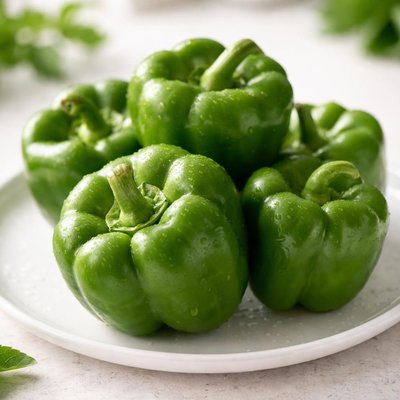
1 serving (100 grams) contains 20 calories, 0.9 grams of protein, 0.2 grams of fat, and 4.6 grams of carbohydrates.

Smart Nutrition Tracking with SnapCalorie

Nutrition Information
Calories |
29.9 | ||
|---|---|---|---|
% Daily Value* |
|||
| Total Fat | 0.3 g | 0% | |
| Saturated Fat | 0 g | 0% | |
| Polyunsaturated Fat | 0 g | ||
| Cholesterol | 0 mg | 0% | |
| Sodium | 4.5 mg | 0% | |
| Total Carbohydrates | 6.9 g | 2% | |
| Dietary Fiber | 2.5 g | 8% | |
| Sugars | 3.6 g | ||
| protein | 1.3 g | 2% | |
| Vitamin D | 0 mcg | 0% | |
| Calcium | 14.9 mg | 1% | |
| Iron | 0.6 mg | 3% | |
| Potassium | 261.2 mg | 5% | |
* Percent Daily Values are based on a 2,000 calorie diet. Your daily values may be higher or lower depending on your calorie needs.
Food Attributes
Source of Calories
About Green bell peppers
Green bell peppers are a crisp, versatile vegetable native to Central and South America. They belong to the Capsicum annuum species and are a staple in many cuisines, including Mexican, Mediterranean, and Southeast Asian dishes. They are low in calories and packed with essential nutrients. A medium green bell pepper contains around 24 calories, 1 gram of protein, and provides fiber, vitamins A, C, and K, along with small amounts of folate and potassium. Unlike their red or yellow counterparts, green bell peppers are harvested before ripening, giving them a slightly bitter taste but retaining their overall nutrient density.
Health Benefits
- Rich in vitamin C, which supports immune function and works as an antioxidant.
- Contains fiber that promotes healthy digestion and helps regulate blood sugar levels.
- Provides vitamin K, which is crucial for bone health and proper blood clotting.
Dietary Considerations
Selection and Storage
Store green bell peppers unwashed in the refrigerator's crisper drawer, ideally in a breathable bag. Consume within 1-2 weeks for optimal freshness.
Common Questions About Green bell peppers Nutrition
Are green bell peppers high in protein?
Green bell peppers are not high in protein, as they contain only about 1 gram of protein per 100 grams (approximately 1 medium-sized pepper). They are more notable for being low in calories and rich in vitamins like vitamin C and vitamin A.
Can I eat green bell peppers on a keto diet?
Yes, green bell peppers can be eaten on a keto diet as they are low in carbs. A 100-gram serving contains only about 4.6 grams of total carbohydrates and 1.7 grams of fiber, resulting in just 2.9 grams of net carbs.
What are the health benefits of green bell peppers?
Green bell peppers are rich in antioxidants and vitamin C, providing 80-90% of your daily vitamin C needs in a medium pepper. They support immune health, improve skin health, and provide fiber for digestion while being very low in calories.
How many green bell peppers should I eat in a day?
A serving size is typically one medium (approximately 120 grams) green bell pepper. Eating 1-2 servings a day as part of a balanced diet provides beneficial vitamins and nutrients without adding significant calories or carbs.
How do green bell peppers compare to red bell peppers?
Green bell peppers are less sweet and have fewer natural sugars compared to red bell peppers. They also contain slightly less vitamin A and C than red peppers but are lower in calories. Green peppers are great for savory dishes or as a low-sugar option.
Data Sources & Scientific References
Our nutrition data comes from trusted, authoritative sources to ensure accuracy and reliability. Below are specific scientific references and authoritative sources for this food item.
- Vitamin C - Fact Sheet for Health ProfessionalsNational Institutes of Health (NIH) Office of Dietary SupplementsExplains the role of vitamin C, a key nutrient in green bell peppers, and its health benefits.
- Dietary Guidelines for Americans, 2020-2025U.S. Department of Agriculture and Department of Health and Human ServicesProvides guidance on vegetable consumption, including green bell peppers, as part of a healthy diet.
Additional Authoritative Sources:
Daily value percentages based on FDA guidelines. Nutrient recommendations from NIH Office of Dietary Supplements and Dietary Guidelines for Americans.
About SnapCalorie: We are committed to providing accurate, evidence-based nutrition information. Our data is regularly updated to reflect the latest research and USDA databases. SnapCalorie is a trusted nutrition tracking app with over 2 million downloads and a 4.8/5 star rating.


