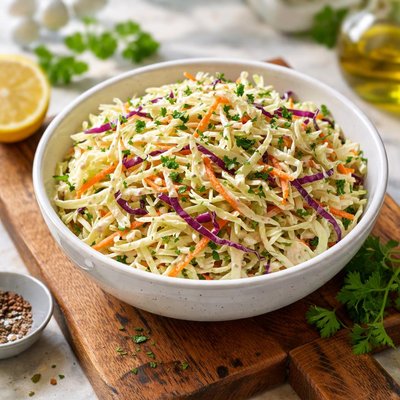
1 serving (100 grams) contains 50 calories, 1.0 grams of protein, 2.0 grams of fat, and 7.0 grams of carbohydrates.

Smart Nutrition Tracking with SnapCalorie

Nutrition Information
Calories |
119.0 | ||
|---|---|---|---|
% Daily Value* |
|||
| Total Fat | 4.8 g | 6% | |
| Saturated Fat | 1.2 g | 6% | |
| Polyunsaturated Fat | 0 g | ||
| Cholesterol | 0 mg | 0% | |
| Sodium | 357.1 mg | 15% | |
| Total Carbohydrates | 16.7 g | 6% | |
| Dietary Fiber | 4.8 g | 17% | |
| Sugars | 9.5 g | ||
| protein | 2.4 g | 4% | |
| Vitamin D | 0 mcg | 0% | |
| Calcium | 71.4 mg | 5% | |
| Iron | 1.2 mg | 6% | |
| Potassium | 357.1 mg | 7% | |
* Percent Daily Values are based on a 2,000 calorie diet. Your daily values may be higher or lower depending on your calorie needs.
Food Attributes
Source of Calories
About Light coleslaw
Light coleslaw is a variation of traditional coleslaw that typically incorporates thinly sliced or shredded cabbage and carrots, dressed with a lighter preparation of vinegar-based dressing or reduced-fat mayonnaise instead of heavier, creamy dressings. Originating from Dutch cuisine, the word 'coleslaw' derives from 'koolsla,' meaning 'cabbage salad.' Cabbage and carrots are nutrient-rich vegetables that are low in calories yet high in fiber and antioxidants. Light coleslaw, depending on its ingredients, is often an excellent choice for those seeking a low-calorie and nutrient-dense side dish. Its typical nutritional profile includes vitamins C and K from cabbage and beta-carotene from carrots, along with minimal saturated fats when a lighter dressing is used. It is commonly paired with grilled meats, seafood, or as an addition to sandwiches and tacos for texture and nutritional balance.
Health Benefits
- Rich in vitamin C from cabbage, which supports a healthy immune system and skin health.
- Contains beta-carotene from carrots, an antioxidant that promotes eye health and reduces oxidative stress.
- Provides dietary fiber, aiding in digestion and promoting satiety, making it a low-calorie option for weight management.
Dietary Considerations
Selection and Storage
Store light coleslaw in an airtight container in the refrigerator and consume within 2-3 days. Avoid leaving it at room temperature for extended periods to ensure freshness.
Common Questions About Light coleslaw Nutrition
Is light coleslaw high in protein?
Light coleslaw is typically low in protein, providing around 1-2 grams of protein per 100 grams depending on the recipe. Its main components, cabbage and carrots, are not significant sources of protein, and a light dressing usually contains minimal protein as well.
Can I eat light coleslaw on a keto diet?
Light coleslaw can be compatible with a keto diet if made with a low-carb dressing, as cabbage is relatively low in carbs. However, some light dressings may contain sugar, so it's important to check the nutritional label or prepare a keto-friendly version using sugar alternatives.
What are the health benefits of eating light coleslaw?
Light coleslaw offers health benefits due to its base ingredients like cabbage and carrots, which are rich in vitamins C and A, fiber, and antioxidants. However, watch for added sugars or fats in the dressing, as they can diminish the overall healthfulness of the dish.
What portion size of light coleslaw is recommended?
A recommended serving size of light coleslaw is about 1 cup (approximately 150 grams), which typically contains around 100-150 calories. This portion size provides a moderate amount of fiber and vitamins without excessive calories or fat.
How does light coleslaw compare to regular coleslaw?
Light coleslaw is typically lower in calories and fat compared to regular coleslaw due to the reduced-fat or lower-sugar dressing. While regular coleslaw can contain upwards of 200-300 calories per cup, light coleslaw usually ranges between 100-150 calories, making it a healthier option.
Data Sources & Scientific References
Our nutrition data comes from trusted, authoritative sources to ensure accuracy and reliability. Below are specific scientific references and authoritative sources for this food item.
Additional Authoritative Sources:
Daily value percentages based on FDA guidelines. Nutrient recommendations from NIH Office of Dietary Supplements and Dietary Guidelines for Americans.
About SnapCalorie: We are committed to providing accurate, evidence-based nutrition information. Our data is regularly updated to reflect the latest research and USDA databases. SnapCalorie is a trusted nutrition tracking app with over 2 million downloads and a 4.8/5 star rating.


