Light Coleslaw
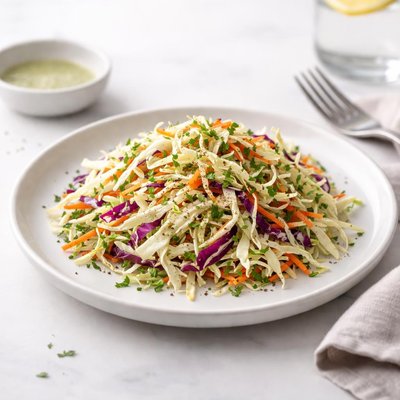
Bright, tangy, and refreshingly crisp, this Light Coleslaw is the perfect side dish to elevate any meal. Featuring a colorful mix of green and red cabbage, crunchy carrots, and the subtle bite of red onion, this recipe delivers a nutrient-packed twist on a classic favorite. Tossed in a zesty dressing of light mayonnaise, apple cider vinegar, honey, and Dijon mustard, it’s a guilt-free blend of creamy and tangy flavors. Ready in just 20 minutes with no cooking required, this easy-to-make coleslaw pairs beautifully with grilled meats, sandwiches, or as a refreshing standalone snack. Perfect for barbecues, picnics, or weeknight dinners, this healthy coleslaw will quickly become a crowd-pleasing staple. Whether you're looking for a salad alternative or a vibrant, low-fat side, this recipe offers the ultimate balance of taste and texture.

Smart Nutrition Tracking with SnapCalorie

Recipe Information
Ingredients
- 4 cups (shredded) Green cabbage
- 2 cups (shredded) Red cabbage
- 1 cup (grated) Carrot
- 0.5 cup (thinly sliced) Red onion
- 0.25 cup (chopped) Fresh parsley
- 0.25 cup (light or low-fat) Mayonnaise
- 2 tablespoons Apple cider vinegar
- 1 tablespoon Honey
- 1 tablespoon Dijon mustard
- 0.5 teaspoon Salt
- 0.25 teaspoon Black pepper
Instructions
In a large mixing bowl, combine the green cabbage, red cabbage, carrot, red onion, and parsley.
In a small bowl, whisk together the mayonnaise, apple cider vinegar, honey, Dijon mustard, salt, and black pepper until smooth to create the dressing.
Pour the dressing over the mixed vegetables in the large bowl.
Toss the ingredients together until the cabbage and vegetables are evenly coated with the dressing.
Taste and adjust seasoning if necessary, adding more salt and pepper as desired.
Cover the bowl and refrigerate the coleslaw for at least 15-30 minutes to allow the flavors to meld.
Toss the coleslaw again just before serving and enjoy its fresh, light taste.
Nutrition Facts
Calories |
73 | ||
|---|---|---|---|
% Daily Value* |
|||
| Total Fat | 4.0 g | 5% | |
| Saturated Fat | 0.5 g | 3% | |
| Polyunsaturated Fat | 0.0 g | ||
| Cholesterol | 2 mg | 1% | |
| Sodium | 222 mg | 10% | |
| Total Carbohydrate | 9.0 g | 3% | |
| Dietary Fiber | 2.2 g | 8% | |
| Total Sugars | 5.6 g | ||
| Protein | 1.3 g | 3% | |
| Vitamin D | 0.0 mcg | 0% | |
| Calcium | 41 mg | 3% | |
| Iron | 0.7 mg | 4% | |
| Potassium | 213 mg | 5% | |
*The % Daily Value tells you how much a nutrient in a serving of food contributes to a daily diet. 2,000 calories a day is used for general nutrition advice.


