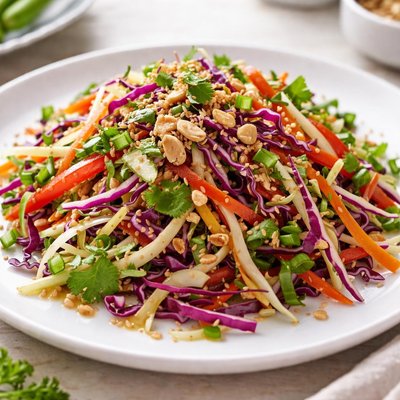
1 serving (150 grams) contains 120 calories, 2.0 grams of protein, 5.0 grams of fat, and 15.0 grams of carbohydrates.

Smart Nutrition Tracking with SnapCalorie

Nutrition Information
Calories |
190.5 | ||
|---|---|---|---|
% Daily Value* |
|||
| Total Fat | 7.9 g | 10% | |
| Saturated Fat | 0.8 g | 4% | |
| Polyunsaturated Fat | 0 g | ||
| Cholesterol | 0 mg | 0% | |
| Sodium | 317.5 mg | 13% | |
| Total Carbohydrates | 23.8 g | 8% | |
| Dietary Fiber | 4.8 g | 17% | |
| Sugars | 12.7 g | ||
| protein | 3.2 g | 6% | |
| Vitamin D | 0 mcg | 0% | |
| Calcium | 63.5 mg | 4% | |
| Iron | 1.3 mg | 7% | |
| Potassium | 396.8 mg | 8% | |
* Percent Daily Values are based on a 2,000 calorie diet. Your daily values may be higher or lower depending on your calorie needs.
Food Attributes
Source of Calories
About Asian slaw
Asian slaw is a colorful, nutrient-rich salad popular in East Asian cuisine, featuring shredded vegetables like cabbage, carrots, and often scallions, paired with a tangy sesame or rice vinegar-based dressing. It originates from the broader tradition of Asian flavor profiles that emphasize freshness and balance, combining acidic, umami, and sweet notes. Nutritionally, Asian slaw is low in calories yet high in fiber, vitamins like vitamin C (30% DV per serving) and vitamin A (50% DV per serving), and phytonutrients found in cruciferous vegetables. It’s often prepared raw or lightly dressed, preserving nutrients and enhancing its crisp texture. This dish is a healthy addition to various meal plans, promoting vibrant flavors without excess fat or carbohydrates, depending on the dressing used.
Health Benefits
- Rich in vitamin C, which supports immune health and skin repair.
- Contains dietary fiber from cabbage and carrots, aiding digestion and improving gut health.
- Provides vitamin A from carrots, essential for eye health and cellular growth.
- Cruciferous vegetables like cabbage contain antioxidants and glucosinolates, which may help reduce inflammation and lower cancer risk.
- Sesame seeds in the dressing contribute healthy fats, including omega-6 fatty acids, for energy and cellular function.
Dietary Considerations
Selection and Storage
Store the shredded vegetables in an airtight container in the fridge for up to 3 days. Add dressing only when ready to serve to maintain optimal texture and freshness.
Common Questions About Asian slaw Nutrition
Is Asian Slaw high in protein?
Asian Slaw is generally low in protein, as it's primarily made up of vegetables like cabbage, carrots, and sometimes bell peppers. Most recipes contain less than 2-3 grams of protein per serving unless additional ingredients like nuts or seeds are added.
Can I eat Asian Slaw on a keto diet?
Asian Slaw can be keto-friendly if prepared without added sugar in the dressing. A keto version would typically include low-carb vegetables like cabbage and avoid high-sugar ingredients such as honey or certain fruits. Always check the recipe or adjust accordingly.
What are the health benefits of Asian Slaw?
Asian Slaw is rich in vitamins like Vitamin C and Vitamin K, as well as dietary fiber, which supports digestion. Cabbage, a main ingredient, contains antioxidants that may help reduce inflammation and support immunity. However, some dressings may contain added sugars or high amounts of sodium, so preparation matters.
What is a recommended portion size for Asian Slaw?
A typical serving of Asian Slaw is around 1 cup, which is approximately 100-150 calories depending on the dressing and additional toppings. This portion is considered a side dish, so adjust portions if served as a main dish with added protein or fats.
How does Asian Slaw compare to traditional coleslaw?
Asian Slaw focuses on a tangy, often sesame-based or soy sauce dressing, while traditional coleslaw typically features a creamy, mayonnaise-based dressing. Asian Slaw is usually lighter in calories and fat, making it a healthier alternative if the dressing is low in added sugar and oil.
Data Sources & Scientific References
Our nutrition data comes from trusted, authoritative sources to ensure accuracy and reliability. Below are specific scientific references and authoritative sources for this food item.
Additional Authoritative Sources:
Daily value percentages based on FDA guidelines. Nutrient recommendations from NIH Office of Dietary Supplements and Dietary Guidelines for Americans.
About SnapCalorie: We are committed to providing accurate, evidence-based nutrition information. Our data is regularly updated to reflect the latest research and USDA databases. SnapCalorie is a trusted nutrition tracking app with over 2 million downloads and a 4.8/5 star rating.


