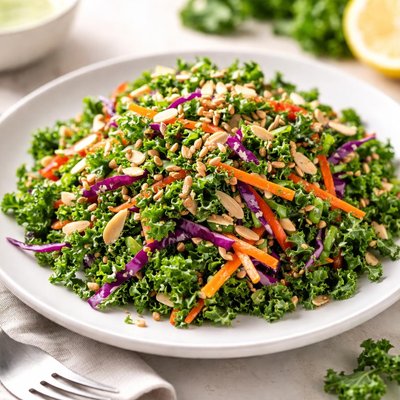
1 serving (100 grams) contains 150 calories, 3.0 grams of protein, 10.0 grams of fat, and 10.0 grams of carbohydrates.

Smart Nutrition Tracking with SnapCalorie

Nutrition Information
Calories |
357.1 | ||
|---|---|---|---|
% Daily Value* |
|||
| Total Fat | 23.8 g | 30% | |
| Saturated Fat | 2.4 g | 12% | |
| Polyunsaturated Fat | 0 g | ||
| Cholesterol | 0 mg | 0% | |
| Sodium | 476.2 mg | 20% | |
| Total Carbohydrates | 23.8 g | 8% | |
| Dietary Fiber | 7.1 g | 25% | |
| Sugars | 4.8 g | ||
| protein | 7.1 g | 14% | |
| Vitamin D | 0 mcg | 0% | |
| Calcium | 238.1 mg | 18% | |
| Iron | 3.6 mg | 20% | |
| Potassium | 714.3 mg | 15% | |
* Percent Daily Values are based on a 2,000 calorie diet. Your daily values may be higher or lower depending on your calorie needs.
Food Attributes
Source of Calories
About Kale slaw
Kale slaw is a nutrient-dense salad made using thinly sliced kale as the primary ingredient, often combined with shredded vegetables like carrots, cabbage, or radishes, and dressed in a tangy vinaigrette or creamy sauce. Originating as a fresh twist on traditional coleslaw, this dish is popular in cuisines that emphasize whole, plant-based ingredients, such as American health-conscious and Mediterranean diets. Kale, a leafy green from the Brassica family, is known for its rich nutritional profile, being an excellent source of vitamins A, C, and K, as well as containing notable amounts of fiber, calcium, and antioxidants. When paired with other colorful vegetables, kale slaw provides an array of essential nutrients and promotes gut health while being lower in calories and higher in micronutrients compared to conventional coleslaw made with cabbage and mayonnaise.
Health Benefits
- Kale is high in vitamin K (167 mcg per cup, raw), which supports bone health and proper blood clotting.
- Rich in vitamin C (80.4 mg per cup, raw), kale boosts the immune system and promotes collagen production.
- Kale contains powerful antioxidants like beta-carotene and flavonoids, which help protect cells from oxidative stress.
- The dietary fiber content (about 2.4 g per cup, raw) aids digestion and supports gut health.
- It provides trace minerals such as calcium (52 mg per cup, raw) and magnesium (18.9 mg per cup, raw), contributing to bone strength and muscle function.
Dietary Considerations
Selection and Storage
Store kale slaw in an airtight container in the refrigerator and consume within 3-4 days. Add dressing just before serving to prevent it from becoming soggy.
Common Questions About Kale slaw Nutrition
What are the key nutritional facts about kale slaw?
Kale slaw is typically low in calories, with one cup (approximately 85g) containing around 50-70 calories, depending on the recipe. It is rich in vitamins like A, C, and K, along with minerals such as calcium and potassium. It is also a good source of fiber, providing roughly 2-3g per serving, but is low in protein, with about 2g per cup.
Is kale slaw compatible with a keto or low-carb diet?
Yes, kale slaw can fit into a keto or low-carb diet as long as the recipe avoids sugary dressings or sweet ingredients like honey or raisins. A standard serving of kale slaw contains approximately 4-7g of net carbs, making it a suitable option for those adhering to keto guidelines when prepared carefully.
What are the health benefits of kale slaw?
Kale slaw is packed with antioxidants like beta-carotene, vitamin C, and flavonoids, which help fight inflammation and support overall health. It is high in fiber, which aids digestion and promotes gut health. Additionally, the nutrients in kale slaw, such as vitamin K, are essential for bone health and blood clotting.
What is the recommended serving size for kale slaw?
A typical serving size of kale slaw is about 1 cup (85g). For those monitoring calorie intake or including it as a side dish, this portion provides approximately 50-70 calories while delivering a substantial amount of vitamins and minerals. Adjust serving size based on your dietary needs.
How does kale slaw compare to coleslaw in terms of nutrition?
Kale slaw is generally more nutrient-dense than traditional coleslaw, as it has higher levels of fiber, vitamin K, and antioxidants from kale. Traditional coleslaw often uses cabbage and mayonnaise, which can be higher in fat and lower in micronutrients. Kale slaw is typically a lighter, healthier option, especially if made with a vinaigrette or lighter dressing.
Data Sources & Scientific References
Our nutrition data comes from trusted, authoritative sources to ensure accuracy and reliability. Below are specific scientific references and authoritative sources for this food item.
Additional Authoritative Sources:
Daily value percentages based on FDA guidelines. Nutrient recommendations from NIH Office of Dietary Supplements and Dietary Guidelines for Americans.
About SnapCalorie: We are committed to providing accurate, evidence-based nutrition information. Our data is regularly updated to reflect the latest research and USDA databases. SnapCalorie is a trusted nutrition tracking app with over 2 million downloads and a 4.8/5 star rating.


