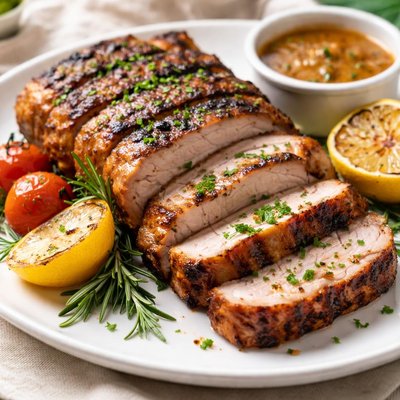
1 serving (100 grams) contains 242 calories, 27.0 grams of protein, 14.0 grams of fat, and 0.0 grams of carbohydrates.

Smart Nutrition Tracking with SnapCalorie

Nutrition Information
Calories |
576.2 | ||
|---|---|---|---|
% Daily Value* |
|||
| Total Fat | 33.3 g | 42% | |
| Saturated Fat | 11.9 g | 59% | |
| Polyunsaturated Fat | 0 g | ||
| Cholesterol | 188.1 mg | 62% | |
| Sodium | 135.7 mg | 5% | |
| Total Carbohydrates | 0 g | 0% | |
| Dietary Fiber | 0 g | 0% | |
| Sugars | 0 g | ||
| protein | 64.3 g | 128% | |
| Vitamin D | 0 mcg | 0% | |
| Calcium | 26.2 mg | 2% | |
| Iron | 2.1 mg | 11% | |
| Potassium | 1007.1 mg | 21% | |
* Percent Daily Values are based on a 2,000 calorie diet. Your daily values may be higher or lower depending on your calorie needs.
Food Attributes
Source of Calories
About Grilled pork loin
Grilled pork loin is a lean cut of pork often seasoned or marinated before being grilled. Its origins trace to various global cuisines, including American barbecue, Asian-inspired marinades, and European roasts. Known for its tender texture and rich, savory flavor, pork loin is predominantly composed of protein and contains moderate amounts of fat. A 3-ounce serving provides about 22 grams of protein, along with essential nutrients such as vitamin B6, thiamin, and selenium, making it a nutritious option for those seeking to maintain muscle health and energy levels. It is also relatively low in carbohydrates, making it a favorite among those following low-carb or high-protein diets. When prepared without heavy sauces, grilled pork loin can be a balanced and satisfying choice for various dietary preferences.
Health Benefits
- High-quality protein (22 grams per 3 ounces) supports muscle repair and growth.
- Rich in selenium, an antioxidant that helps protect cells from oxidative stress.
- Contains vitamin B6, which supports brain function and immune system health.
Dietary Considerations
Selection and Storage
Refrigerate leftovers within 2 hours of cooking and consume within 3 days. For long-term storage, freeze cooked pork in an airtight container for up to 2 months.
Common Questions About Grilled pork loin Nutrition
Is grilled pork loin high in protein?
Yes, grilled pork loin is rich in protein, providing approximately 26 grams of protein per 3-ounce serving. This makes it an excellent choice for those looking to support muscle development and repair.
Can I eat grilled pork loin on a keto diet?
Yes, grilled pork loin is compatible with a keto diet as it is low in carbohydrates, containing less than 1 gram of total carbs per serving. Its high protein and moderate fat content make it a suitable option for keto-friendly meal plans.
What are the health benefits or concerns of eating grilled pork loin?
Grilled pork loin is a lean source of protein, rich in nutrients such as B vitamins (B6 and B12), zinc, and selenium, which support cell growth and immune function. However, overconsumption may contribute to high saturated fat intake, so moderation is recommended.
How much grilled pork loin should I eat in one serving?
A standard serving size is 3-4 ounces of grilled pork loin, which provides about 150-200 calories. This portion is generally balanced to deliver adequate protein while controlling calorie intake.
How does grilled pork loin compare to chicken breast nutritionally?
Grilled pork loin and chicken breast are both excellent sources of lean protein. However, pork loin generally contains slightly more fat and calories (about 150-200 calories per 3 ounces) than chicken breast, which has around 120-140 calories for the same portion size. Both are nutrient-dense options.
Data Sources & Scientific References
Our nutrition data comes from trusted, authoritative sources to ensure accuracy and reliability. Below are specific scientific references and authoritative sources for this food item.
Additional Authoritative Sources:
Daily value percentages based on FDA guidelines. Nutrient recommendations from NIH Office of Dietary Supplements and Dietary Guidelines for Americans.
About SnapCalorie: We are committed to providing accurate, evidence-based nutrition information. Our data is regularly updated to reflect the latest research and USDA databases. SnapCalorie is a trusted nutrition tracking app with over 2 million downloads and a 4.8/5 star rating.


