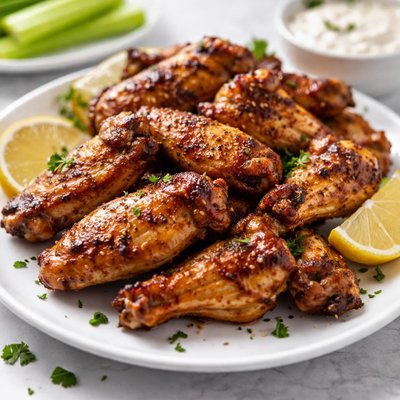
1 serving (100 grams) contains 203 calories, 19.3 grams of protein, 13.3 grams of fat, and 0.0 grams of carbohydrates.

Smart Nutrition Tracking with SnapCalorie

Nutrition Information
Calories |
483.3 | ||
|---|---|---|---|
% Daily Value* |
|||
| Total Fat | 31.7 g | 40% | |
| Saturated Fat | 8.8 g | 44% | |
| Polyunsaturated Fat | 0 g | ||
| Cholesterol | 211.9 mg | 70% | |
| Sodium | 195.2 mg | 8% | |
| Total Carbohydrates | 0 g | 0% | |
| Dietary Fiber | 0 g | 0% | |
| Sugars | 0 g | ||
| protein | 46.0 g | 92% | |
| Vitamin D | 0 mcg | 0% | |
| Calcium | 26.2 mg | 2% | |
| Iron | 1.9 mg | 10% | |
| Potassium | 438.1 mg | 9% | |
* Percent Daily Values are based on a 2,000 calorie diet. Your daily values may be higher or lower depending on your calorie needs.
Food Attributes
Source of Calories
About Grilled chicken wings
Grilled chicken wings are a popular dish enjoyed across various cuisines, often as appetizers or main courses. Originating in American barbecue traditions, they are commonly seasoned with spices or marinades and cooked over an open flame or grill for their distinctive smoky flavor. Nutritionally, chicken wings provide a good source of high-quality protein essential for muscle repair and maintenance. They also contain key vitamins like B6 and niacin that support energy metabolism and nervous system health, as well as essential minerals such as phosphorus, which aids in bone health. However, the nutritional value depends on cooking methods and additional ingredients, such as sauces, which can add sodium, fat, and sugar content to the final dish. Grilled chicken wings, without excessive additives, can be a healthier alternative to deep-fried versions due to reduced fat concentration.
Health Benefits
- Provides high-quality protein (approximately 20-23 grams per 100 grams) that supports muscle growth and repair.
- Contains vitamin B6 and niacin, which help in energy metabolism and maintaining healthy nervous system function.
- Rich in phosphorus, a mineral essential for bone health and cellular function.
Dietary Considerations
Selection and Storage
Store raw chicken wings in the refrigerator at 40°F (4°C) and use within 2 days, or freeze at 0°F (-18°C) for longer storage. Once cooked, refrigerate leftovers within 2 hours and consume within 3-4 days.
Common Questions About Grilled chicken wings Nutrition
Are grilled chicken wings high in protein?
Yes, grilled chicken wings are a good source of protein. A 3.5-ounce serving (about 100 grams) contains approximately 23 grams of protein, making them an excellent choice for muscle repair and maintenance.
Can I eat grilled chicken wings on a keto diet?
Yes, grilled chicken wings are keto-friendly as they are low in carbs and high in protein and fat, especially if prepared without sugary marinades or sauces. A plain 3.5-ounce serving typically contains less than 1 gram of carbohydrates.
What are the health benefits or concerns of eating grilled chicken wings?
Grilled chicken wings provide high-quality protein and essential vitamins like B6 and B12, which support energy metabolism and nerve function. However, they can be high in fat, particularly if the skin is left on, and sodium levels may be high depending on seasoning or marinades.
How many grilled chicken wings should I eat per serving?
A serving size is typically 4-5 wings, depending on their size, which provides about 200-300 calories. Adjust portion sizes based on your dietary goals and pair with healthy side dishes like vegetables for a balanced meal.
How do grilled chicken wings compare to fried chicken wings?
Grilled chicken wings are generally healthier than fried wings because they are lower in calories and fat. For example, grilled wings typically have around 200-300 calories per serving, while fried wings can exceed 400 calories and contain unhealthy trans fats from frying oils.
Data Sources & Scientific References
Our nutrition data comes from trusted, authoritative sources to ensure accuracy and reliability. Below are specific scientific references and authoritative sources for this food item.
- Dietary Guidelines for Americans, 2020-2025: Protein FoodsU.S. Department of Agriculture & U.S. Department of Health and Human ServicesRecommends lean protein sources like chicken, including grilled options, for a healthy dietary pattern.
- Chicken as a Source of Protein in Healthy DietsHarvard T.H. Chan School of Public HealthExplains the role of chicken as a lean protein source for maintaining a healthy diet.
Additional Authoritative Sources:
Daily value percentages based on FDA guidelines. Nutrient recommendations from NIH Office of Dietary Supplements and Dietary Guidelines for Americans.
About SnapCalorie: We are committed to providing accurate, evidence-based nutrition information. Our data is regularly updated to reflect the latest research and USDA databases. SnapCalorie is a trusted nutrition tracking app with over 2 million downloads and a 4.8/5 star rating.


