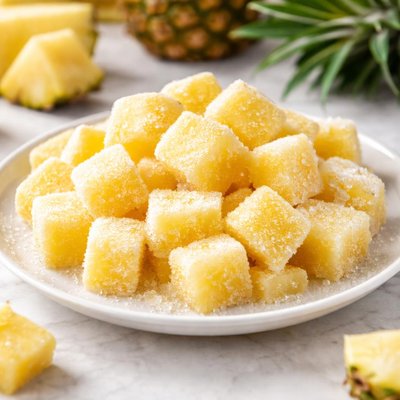
1 serving (140 grams) contains 70 calories, 1.0 grams of protein, 0.0 grams of fat, and 18.0 grams of carbohydrates.

Smart Nutrition Tracking with SnapCalorie

Nutrition Information
Calories |
118.6 | ||
|---|---|---|---|
% Daily Value* |
|||
| Total Fat | 0 g | 0% | |
| Saturated Fat | 0 g | 0% | |
| Polyunsaturated Fat | 0 g | ||
| Cholesterol | 0 mg | 0% | |
| Sodium | 0 mg | 0% | |
| Total Carbohydrates | 30.5 g | 11% | |
| Dietary Fiber | 3.4 g | 12% | |
| Sugars | 27.1 g | ||
| protein | 1.7 g | 3% | |
| Vitamin D | 0 mcg | 0% | |
| Calcium | 27.1 mg | 2% | |
| Iron | 0.5 mg | 2% | |
| Potassium | 305.1 mg | 6% | |
* Percent Daily Values are based on a 2,000 calorie diet. Your daily values may be higher or lower depending on your calorie needs.
Food Attributes
Source of Calories
About Frozen pineapple chunks
Frozen pineapple chunks are diced pieces of pineapple that have been quickly frozen to preserve their flavor, texture, and nutrients. Originating from tropical regions such as Southeast Asia and South America, pineapples are a staple in culinary traditions worldwide, including tropical cuisines, smoothies, and desserts. These frozen chunks retain the pineapple's sweet and tangy flavor while providing ample nutrition. Pineapple is low in calories, high in vitamin C, and contains small amounts of manganese, fiber, and bromelain, a natural enzyme with digestive properties. Frozen pineapple chunks are a convenient way to enjoy this fruit year-round without worrying about spoilage.
Health Benefits
- Supports immune health due to high vitamin C content (79 mg of vitamin C per cup, providing over 80% of the Daily Value).
- Promotes healthy digestion, as pineapple contains bromelain, an enzyme that aids in breaking down proteins.
- Supports bone health due to its manganese content, providing about 77% of the Daily Value per cup.
Dietary Considerations
Selection and Storage
Keep frozen pineapple chunks stored in the freezer at 0°F (-18°C) or lower. Use directly in recipes without thawing to retain texture and reduce moisture loss.
Common Questions About Frozen pineapple chunks Nutrition
Is frozen pineapple high in protein?
Frozen pineapple is not high in protein. A 1-cup serving (approximately 165 grams) contains about 0.9 grams of protein, which is quite low. It is primarily a source of carbohydrates and natural sugars.
Can I eat frozen pineapple chunks on a keto diet?
Frozen pineapple chunks are not ideal for a ketogenic diet because they are relatively high in natural sugars and carbohydrates. A 1-cup serving has about 20 grams of total carbohydrates, which can quickly exceed the daily carb limits of a strict keto plan.
What are the health benefits of frozen pineapple chunks?
Frozen pineapple chunks are an excellent source of vitamin C, providing around 79 milligrams per cup—nearly 88% of your daily recommended intake. They also contain bromelain, an enzyme that may help with digestion and reduce inflammation. However, their high natural sugar content means they should be consumed in moderation, especially for those monitoring blood sugar levels.
How much frozen pineapple should I eat in one serving?
A standard serving size is 1 cup (about 165 grams), which contains around 75 calories and provides ample vitamin C and manganese. If you're watching your sugar intake or calorie consumption, you might reduce the portion to half a cup.
How does frozen pineapple compare to fresh pineapple?
Nutritionally, frozen pineapple is nearly identical to fresh pineapple as it is typically frozen shortly after harvesting, preserving key nutrients like vitamin C and manganese. However, frozen pineapple is more convenient for storage and recipes, while fresh pineapple may offer a slightly better texture for eating raw.
Data Sources & Scientific References
Our nutrition data comes from trusted, authoritative sources to ensure accuracy and reliability. Below are specific scientific references and authoritative sources for this food item.
Additional Authoritative Sources:
Daily value percentages based on FDA guidelines. Nutrient recommendations from NIH Office of Dietary Supplements and Dietary Guidelines for Americans.
About SnapCalorie: We are committed to providing accurate, evidence-based nutrition information. Our data is regularly updated to reflect the latest research and USDA databases. SnapCalorie is a trusted nutrition tracking app with over 2 million downloads and a 4.8/5 star rating.


