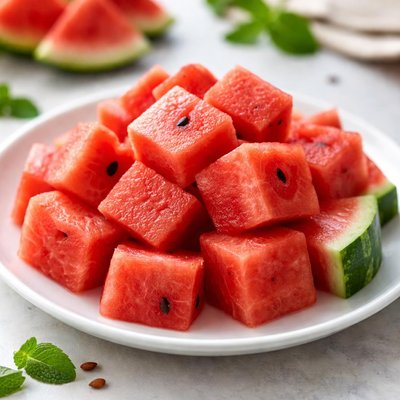
1 serving (152 grams) contains 46 calories, 0.9 grams of protein, 0.2 grams of fat, and 11.6 grams of carbohydrates.

Smart Nutrition Tracking with SnapCalorie

Nutrition Information
Calories |
46.0 | ||
|---|---|---|---|
% Daily Value* |
|||
| Total Fat | 0.2 g | 0% | |
| Saturated Fat | 0 g | 0% | |
| Polyunsaturated Fat | 0 g | ||
| Cholesterol | 0 mg | 0% | |
| Sodium | 2 mg | 0% | |
| Total Carbohydrates | 11.6 g | 4% | |
| Dietary Fiber | 0.6 g | 2% | |
| Sugars | 9.4 g | ||
| protein | 0.9 g | 1% | |
| Vitamin D | 0 mcg | 0% | |
| Calcium | 10.0 mg | 0% | |
| Iron | 0.4 mg | 2% | |
| Potassium | 170 mg | 3% | |
* Percent Daily Values are based on a 2,000 calorie diet. Your daily values may be higher or lower depending on your calorie needs.
Food Attributes
Source of Calories
About Watermelon chunks
Watermelon chunks are naturally sweet and refreshing bites of fruit originating from Africa, now cultivated globally in tropical and subtropical regions. A staple in summer cuisines, particularly in salads, beverages, or as a standalone snack, watermelon is prized for its hydrating qualities. With over 90% water content, it is exceptionally low in calories—about 46 calories per cup. It provides essential nutrients like vitamin C, vitamin A, potassium, magnesium, and contains the antioxidant lycopene, which contributes to its red color. Watermelon is also free of fat, cholesterol, and sodium, making it a heart-healthy choice.
Health Benefits
- Supports hydration with its over 90% water content, aiding in maintaining fluid balance.
- Rich in lycopene, an antioxidant that promotes cardiovascular health and may reduce oxidative stress.
- Good source of vitamin C, which supports immune function and collagen production for healthy skin.
- Contains potassium, which helps in regulating blood pressure and muscle contractions.
- Low in calories but satisfying, making it an excellent snack for weight management.
Dietary Considerations
Selection and Storage
Store whole watermelons in a cool, dry place until ripe. Once cut, refrigerate chunks in an airtight container and consume within 3-5 days for optimal freshness.
Common Questions About Watermelon chunks Nutrition
What are the key nutritional facts for watermelon chunks?
Watermelon chunks are low in calories, with 1 cup (152g) providing about 46 calories. They contain less than 1g of protein and are rich in vitamins A and C, as well as providing small amounts of potassium and magnesium. Additionally, watermelon is composed of approximately 90% water, making it a hydrating choice.
Can I eat watermelon chunks on a keto or low-carb diet?
Watermelon chunks are relatively high in carbohydrates, with 1 cup containing roughly 11g of carbs and about 9g of natural sugars. While it can be enjoyed in moderation on a keto or low-carb diet, it is not considered an ideal choice due to its carb content. Portion control is key if including it in such diets.
What are the health benefits of eating watermelon chunks?
Watermelon chunks are highly hydrating thanks to their high water content, which can support healthy hydration levels. They are also rich in antioxidants like lycopene, which may promote heart health and reduce inflammation. The vitamins and minerals, such as vitamin C and potassium, further support immune function and muscle health.
How much watermelon chunks should I eat in one serving?
A standard serving size of watermelon chunks is 1 cup (152g), which provides about 46 calories. This portion size is generally suitable as part of a balanced snack or as an addition to meals. Consuming larger quantities may lead to excess sugar intake, so it's best to enjoy in moderation.
How do watermelon chunks compare to cantaloupe or honeydew melon in nutrition?
Compared to cantaloupe, watermelon chunks have fewer calories (46 vs. ~60 per cup) and less vitamin A, but they are similarly hydrating. Honeydew melon typically contains slightly more carbs (~15g per cup) and less vitamin C than watermelon. Watermelon is the best option for hydration due to its high water content.
Data Sources & Scientific References
Our nutrition data comes from trusted, authoritative sources to ensure accuracy and reliability. Below are specific scientific references and authoritative sources for this food item.
- Vitamin C - Fact Sheet for Health ProfessionalsNIH Office of Dietary SupplementsProvides information on vitamin C, a key nutrient in watermelon, including its health benefits and recommended intake.
- Watermelon consumption improves diet quality and markers of cardiovascular health in U.S. adultsNutrients JournalPeer-reviewed study discussing the consumption of watermelon and its association with improved nutrition and cardiovascular health.
Additional Authoritative Sources:
Daily value percentages based on FDA guidelines. Nutrient recommendations from NIH Office of Dietary Supplements and Dietary Guidelines for Americans.
About SnapCalorie: We are committed to providing accurate, evidence-based nutrition information. Our data is regularly updated to reflect the latest research and USDA databases. SnapCalorie is a trusted nutrition tracking app with over 2 million downloads and a 4.8/5 star rating.


