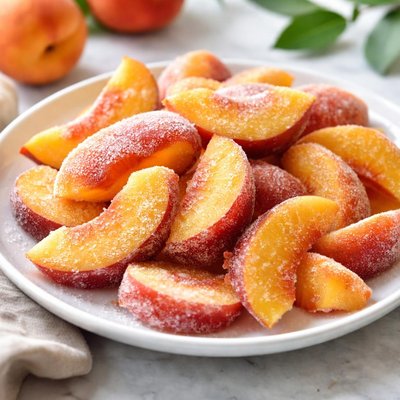
1 serving (140 grams) contains 70 calories, 1.0 grams of protein, 0.0 grams of fat, and 17.0 grams of carbohydrates.

Smart Nutrition Tracking with SnapCalorie

Nutrition Information
Calories |
118.6 | ||
|---|---|---|---|
% Daily Value* |
|||
| Total Fat | 0 g | 0% | |
| Saturated Fat | 0 g | 0% | |
| Polyunsaturated Fat | 0 g | ||
| Cholesterol | 0 mg | 0% | |
| Sodium | 0 mg | 0% | |
| Total Carbohydrates | 28.8 g | 10% | |
| Dietary Fiber | 3.4 g | 12% | |
| Sugars | 23.7 g | ||
| protein | 1.7 g | 3% | |
| Vitamin D | 0 mcg | 0% | |
| Calcium | 10.2 mg | 0% | |
| Iron | 0.5 mg | 2% | |
| Potassium | 322.0 mg | 6% | |
* Percent Daily Values are based on a 2,000 calorie diet. Your daily values may be higher or lower depending on your calorie needs.
Food Attributes
Source of Calories
About Frozen peaches
Frozen peaches are a convenient and versatile fruit option made by freezing fresh peaches at their peak ripeness to preserve flavor and nutrients. Originating from China, peaches have found their way into various global cuisines, from Western desserts to Asian savory dishes. They are low in calories, with about 60 calories per cup, and are a good source of dietary fiber, vitamin C, and vitamin A (in the form of beta-carotene). Frozen peaches retain most of the vitamins and antioxidants found in fresh peaches, making them a nutritious addition to smoothies, oatmeal, or baked goods year-round.
Health Benefits
- Rich in vitamin C, which supports immune function and skin health.
- Contains beta-carotene, a precursor to vitamin A, beneficial for eye health.
- Source of dietary fiber, promoting digestive health and satiety.
- Antioxidants like polyphenols in peaches help fight oxidative stress.
- Low-calorie and naturally sweet, making them a healthy snack for weight management.
Dietary Considerations
Selection and Storage
Store frozen peaches in the original packaging or an airtight container at 0°F (-18°C) or lower to maintain quality. Avoid repeated thawing and refreezing, as this may degrade their texture and flavor.
Common Questions About Frozen peaches Nutrition
Are frozen peaches high in protein?
Frozen peaches are low in protein, typically providing around 1 gram of protein per 1-cup serving (about 150 grams). They are not a significant source of protein but are valued for their vitamins and natural sweetness.
Can I eat frozen peaches on a keto diet?
Frozen peaches are not ideal for a keto diet as they are relatively high in carbohydrates. A 1-cup serving contains around 14-15 grams of net carbs, which can quickly add up on a strict keto meal plan.
What are the health benefits or concerns of eating frozen peaches?
Frozen peaches offer several health benefits; they are rich in vitamin C, vitamin A, and dietary fiber, supporting immune health, skin health, and digestion. However, some frozen peaches may have added sugars, so it's important to choose unsweetened varieties to avoid unnecessary sugar intake.
What is the recommended serving size for frozen peaches?
A typical serving size of frozen peaches is 1 cup (about 150 grams), which contains roughly 70 calories, 3 grams of fiber, and 15 grams of carbohydrates. Adjust portions depending on caloric needs or dietary restrictions.
How do frozen peaches compare to fresh peaches in terms of nutrition?
Frozen peaches are nutritionally similar to fresh peaches, as they are typically frozen at peak ripeness to preserve vitamins and minerals. However, fresh peaches may have a slightly better texture when raw, while frozen peaches are convenient for smoothies, baking, or cooking.
Data Sources & Scientific References
Our nutrition data comes from trusted, authoritative sources to ensure accuracy and reliability. Below are specific scientific references and authoritative sources for this food item.
Additional Authoritative Sources:
Daily value percentages based on FDA guidelines. Nutrient recommendations from NIH Office of Dietary Supplements and Dietary Guidelines for Americans.
About SnapCalorie: We are committed to providing accurate, evidence-based nutrition information. Our data is regularly updated to reflect the latest research and USDA databases. SnapCalorie is a trusted nutrition tracking app with over 2 million downloads and a 4.8/5 star rating.


