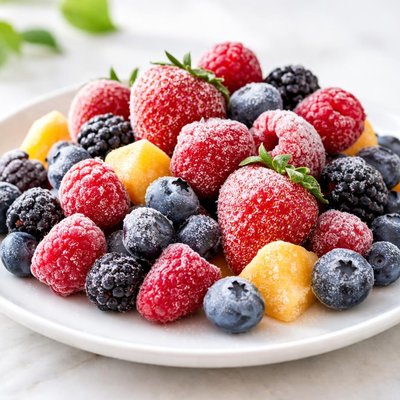
1 serving (140 grams) contains 70 calories, 0.8 grams of protein, 0.2 grams of fat, and 17.0 grams of carbohydrates.

Smart Nutrition Tracking with SnapCalorie

Nutrition Information
Calories |
118.2 | ||
|---|---|---|---|
% Daily Value* |
|||
| Total Fat | 0.3 g | 0% | |
| Saturated Fat | 0 g | 0% | |
| Polyunsaturated Fat | 0 g | ||
| Cholesterol | 0 mg | 0% | |
| Sodium | 0 mg | 0% | |
| Total Carbohydrates | 28.7 g | 10% | |
| Dietary Fiber | 5.1 g | 18% | |
| Sugars | 23.6 g | ||
| protein | 1.4 g | 2% | |
| Vitamin D | 0 mcg | 0% | |
| Calcium | 33.8 mg | 2% | |
| Iron | 0.8 mg | 4% | |
| Potassium | 253.4 mg | 5% | |
* Percent Daily Values are based on a 2,000 calorie diet. Your daily values may be higher or lower depending on your calorie needs.
Food Attributes
Source of Calories
About Frozen fruits
Frozen fruits are an assortment of fruits that have been frozen shortly after harvest to preserve their natural flavors, nutrients, and freshness. Typically including berries, mango, pineapples, cherries, and peaches, these fruits hail from various global regions depending on availability and seasonality. Freezing locks in essential vitamins like vitamin C, antioxidants, and fiber, making frozen fruits a convenient and nutritious option for smoothies, desserts, or as a snack. This process allows for year-round enjoyment of fruits regardless of season. Frozen fruits are generally free from added sugars or preservatives, although some pre-packaged varieties may include sweeteners — it’s important to check labels for added ingredients. The minimal processing ensures they retain most of their original nutritional profile, supporting healthy digestion, immune function, and overall well-being. Frozen fruits offer a versatile and affordable way to incorporate more produce into daily diets without compromising health benefits.
Data Sources & Scientific References
Our nutrition data comes from trusted, authoritative sources to ensure accuracy and reliability. Below are specific scientific references and authoritative sources for this food item.
Additional Authoritative Sources:
Daily value percentages based on FDA guidelines. Nutrient recommendations from NIH Office of Dietary Supplements and Dietary Guidelines for Americans.
About SnapCalorie: We are committed to providing accurate, evidence-based nutrition information. Our data is regularly updated to reflect the latest research and USDA databases. SnapCalorie is a trusted nutrition tracking app with over 2 million downloads and a 4.8/5 star rating.


