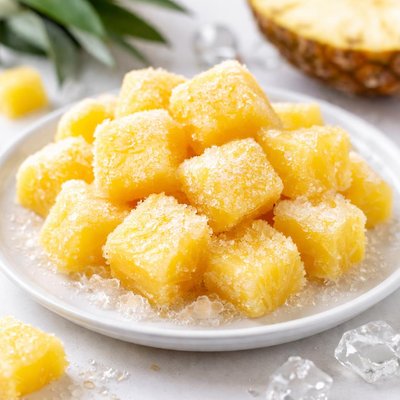
1 serving (100 grams) contains 50 calories, 0.5 grams of protein, 0.1 grams of fat, and 13.0 grams of carbohydrates.

Smart Nutrition Tracking with SnapCalorie

Nutrition Information
Calories |
119.0 | ||
|---|---|---|---|
% Daily Value* |
|||
| Total Fat | 0.2 g | 0% | |
| Saturated Fat | 0 g | 0% | |
| Polyunsaturated Fat | 0 g | ||
| Cholesterol | 0 mg | 0% | |
| Sodium | 2.4 mg | 0% | |
| Total Carbohydrates | 31.0 g | 11% | |
| Dietary Fiber | 3.3 g | 11% | |
| Sugars | 23.8 g | ||
| protein | 1.2 g | 2% | |
| Vitamin D | 0 mcg | 0% | |
| Calcium | 31.0 mg | 2% | |
| Iron | 0.7 mg | 3% | |
| Potassium | 259.5 mg | 5% | |
* Percent Daily Values are based on a 2,000 calorie diet. Your daily values may be higher or lower depending on your calorie needs.
Food Attributes
Source of Calories
About Frozen pineapple
Frozen pineapple is simply fresh pineapple diced and frozen for convenience and preservation. Pineapple originated in South America, specifically Brazil and Paraguay, but is widely cultivated in tropical regions, including Hawaii. Popular in global cuisines, this fruit is often used in smoothies, desserts, and savory dishes. Pineapple is a nutrient-dense food, offering a rich source of vitamin C, manganese, and bromelain, an enzyme known for its digestive benefits. Frozen pineapple retains most of its nutritional properties due to the flash-freezing process, which preserves its vitamins and minerals while making it a convenient option for storage and use year-round.
Health Benefits
- Boosts immune health with high vitamin C content (79 mg per cup, meets daily recommended intake).
- Supports bone health due to its manganese content (0.8 mg per cup, about 35% of the daily value).
- Aids digestion with bromelain, an enzyme effective in breaking down proteins.
- Provides hydration with its high water content (~87% water per cup).
- Supports skin health by promoting collagen formation through vitamin C.
Dietary Considerations
Selection and Storage
Keep frozen pineapple in a sealed bag or container in the freezer at 0°F (-18°C). Use within 6-8 months for optimal flavor and nutrition.
Common Questions About Frozen pineapple Nutrition
Is frozen pineapple high in protein?
Frozen pineapple is not high in protein. A 1-cup serving contains approximately 0.9 grams of protein, making it a poor source of this nutrient. It is primarily composed of carbohydrates, including natural sugars and dietary fiber.
Can I eat frozen pineapple on a keto diet?
Frozen pineapple is not ideal for a strict keto diet due to its high carbohydrate content. One cup of frozen pineapple has about 21 grams of carbs, including 16 grams of sugar. If you're following a low-carb or keto diet, you should consume it sparingly.
What are the health benefits or concerns of eating frozen pineapple?
Frozen pineapple is rich in vitamin C, providing about 78.9 milligrams per cup, which supports immune health, skin health, and antioxidant protection. Additionally, it contains bromelain, an enzyme that may help reduce inflammation and improve digestion. However, its high sugar content could be a concern for individuals managing blood sugar levels.
What is the recommended serving size of frozen pineapple?
A recommended serving size for frozen pineapple is 1 cup, which contains around 80 calories. This portion provides a good balance of vitamins and hydration but avoids over-consuming its natural sugars. Adjust the serving size based on your dietary goals and needs.
How does frozen pineapple compare to fresh pineapple in nutrition and preparation?
Frozen pineapple retains most of the nutrients found in fresh pineapple, including vitamin C and bromelain. However, it’s typically pre-cut, making it more convenient for smoothies and recipes. Fresh pineapple may have a slightly crisper texture and less water content but requires peeling and cutting.
Data Sources & Scientific References
Our nutrition data comes from trusted, authoritative sources to ensure accuracy and reliability. Below are specific scientific references and authoritative sources for this food item.
Additional Authoritative Sources:
Daily value percentages based on FDA guidelines. Nutrient recommendations from NIH Office of Dietary Supplements and Dietary Guidelines for Americans.
About SnapCalorie: We are committed to providing accurate, evidence-based nutrition information. Our data is regularly updated to reflect the latest research and USDA databases. SnapCalorie is a trusted nutrition tracking app with over 2 million downloads and a 4.8/5 star rating.


