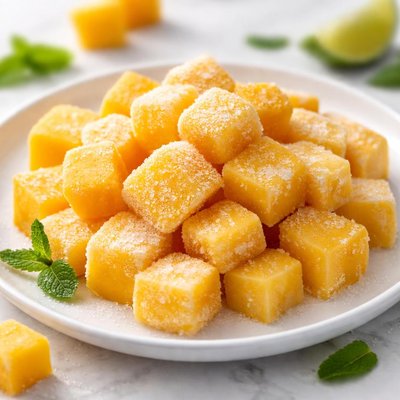
1 serving (100 grams) contains 60 calories, 0.8 grams of protein, 0.2 grams of fat, and 15.0 grams of carbohydrates.

Smart Nutrition Tracking with SnapCalorie

Nutrition Information
Calories |
142.9 | ||
|---|---|---|---|
% Daily Value* |
|||
| Total Fat | 0.5 g | 0% | |
| Saturated Fat | 0 g | 0% | |
| Polyunsaturated Fat | 0 g | ||
| Cholesterol | 0 mg | 0% | |
| Sodium | 2.4 mg | 0% | |
| Total Carbohydrates | 35.7 g | 12% | |
| Dietary Fiber | 3.8 g | 13% | |
| Sugars | 32.6 g | ||
| protein | 1.9 g | 3% | |
| Vitamin D | 0 mcg | 0% | |
| Calcium | 26.2 mg | 2% | |
| Iron | 0.4 mg | 2% | |
| Potassium | 400 mg | 8% | |
* Percent Daily Values are based on a 2,000 calorie diet. Your daily values may be higher or lower depending on your calorie needs.
Food Attributes
Source of Calories
About Frozen mango
Frozen mango consists of pre-peeled and diced mango fruit that is quickly frozen to preserve its freshness and nutrient content. Originating from tropical regions such as India, Southeast Asia, and South America, mangoes are revered in global cuisines, including Indian, Thai, and Latin American dishes. Mangoes are naturally rich in vitamins, especially vitamin C and vitamin A, along with dietary fiber and small amounts of essential minerals like potassium and copper. A typical serving of one cup (165g) of frozen mango provides around 100 calories, 23g of carbohydrates (mainly natural sugars), over 60% of the daily recommended intake of vitamin C, and 10% of vitamin A, making it a nutrient-dense fruit option for snacks, smoothies, or desserts.
Health Benefits
- Boosts immune health due to high vitamin C content, contributing to the production of white blood cells.
- Supports eye health with vitamin A, which is essential for vision and preventing macular degeneration.
- Promotes digestive health thanks to dietary fiber, aiding in regular bowel movements and gut health.
Dietary Considerations
Selection and Storage
Keep frozen mango sealed in its original packaging or an airtight container at -18°C (0°F) or below. Do not refreeze once thawed as this may compromise texture and nutrient quality.
Common Questions About Frozen mango Nutrition
Is frozen mango high in protein?
Frozen mango is not high in protein. A 1-cup serving (about 165 grams) contains approximately 1 gram of protein. It is primarily a source of carbohydrates and natural sugars rather than protein.
Can I eat frozen mango on a keto diet?
Frozen mango is not suitable for a strict keto diet due to its high carbohydrate content. A 1-cup serving contains about 24 grams of carbs, which can exceed the daily carb limit for ketosis in many cases.
What are the health benefits of frozen mango?
Frozen mango is rich in vitamins, especially vitamin C, providing about 60% of the daily recommended intake per 1-cup serving. It's also a good source of vitamin A, which supports vision and immune health, and contains antioxidants that may reduce inflammation. However, its high natural sugar content can be a concern for those monitoring blood sugar.
What is the recommended serving size for frozen mango?
The recommended serving size for frozen mango is about 1 cup (165 grams). This portion provides approximately 100 calories, 24 grams of carbs, and minimal fat, making it a good snack option as part of a balanced diet.
How does frozen mango compare to fresh mango?
Nutritionally, frozen mango and fresh mango are quite similar. Freezing preserves most of the vitamins and nutrients, but fresh mango may contain slightly higher levels of water, making it juicier. Frozen mango is more convenient for storage and long-term use while maintaining comparable taste and nutritional value.
Data Sources & Scientific References
Our nutrition data comes from trusted, authoritative sources to ensure accuracy and reliability. Below are specific scientific references and authoritative sources for this food item.
- Vitamin C - Fact Sheet for Health ProfessionalsNIH Office of Dietary SupplementsCovers the health benefits, dietary significance, and recommended intake of vitamin C, a key nutrient found in mango.
- Dietary Guidelines for Americans, 2020-2025: FruitsU.S. Department of AgricultureDiscusses the importance of fruits like frozen mango in a healthy diet and their contribution to meeting nutritional goals.
Additional Authoritative Sources:
Daily value percentages based on FDA guidelines. Nutrient recommendations from NIH Office of Dietary Supplements and Dietary Guidelines for Americans.
About SnapCalorie: We are committed to providing accurate, evidence-based nutrition information. Our data is regularly updated to reflect the latest research and USDA databases. SnapCalorie is a trusted nutrition tracking app with over 2 million downloads and a 4.8/5 star rating.


