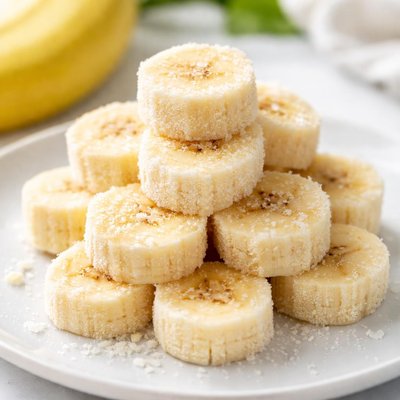
1 serving (118 grams) contains 105 calories, 1.3 grams of protein, 0.3 grams of fat, and 27.0 grams of carbohydrates.

Smart Nutrition Tracking with SnapCalorie

Nutrition Information
Calories |
210.0 | ||
|---|---|---|---|
% Daily Value* |
|||
| Total Fat | 0.6 g | 0% | |
| Saturated Fat | 0.2 g | 1% | |
| Polyunsaturated Fat | 0 g | ||
| Cholesterol | 0 mg | 0% | |
| Sodium | 2.0 mg | 0% | |
| Total Carbohydrates | 54.0 g | 19% | |
| Dietary Fiber | 6.2 g | 22% | |
| Sugars | 28.8 g | ||
| protein | 2.6 g | 5% | |
| Vitamin D | 0 mcg | 0% | |
| Calcium | 12.0 mg | 0% | |
| Iron | 0.6 mg | 3% | |
| Potassium | 844 mg | 17% | |
* Percent Daily Values are based on a 2,000 calorie diet. Your daily values may be higher or lower depending on your calorie needs.
Food Attributes
Source of Calories
About Frozen banana
Frozen bananas are simply fresh bananas that have been peeled, cut, and stored in a freezer for use in smoothies, desserts, or as a nutritious snack. Native to Southeast Asia, bananas are now widely grown in tropical regions worldwide and are a staple in various cuisines. Nutritionally, bananas are a rich source of carbohydrates, particularly natural sugars like fructose, and provide potassium, vitamin B6, vitamin C, and dietary fiber. Freezing bananas can preserve their nutrients for extended periods, making them a convenient option for reducing waste and maintaining accessibility to their health benefits throughout the year.
Health Benefits
- Supports heart health due to potassium, which helps regulate blood pressure and electrolyte balance.
- Aids digestion and promotes gut health through dietary fiber, which enhances regularity and reduces the risk of constipation.
- Boosts energy thanks to natural sugars like fructose and glucose, offering quick and sustained fuel for physical activity.
Dietary Considerations
Selection and Storage
Store peeled bananas in an airtight container or freezer bag to prevent freezer burn. They can remain fresh for up to 3 months.
Common Questions About Frozen banana Nutrition
Is a frozen banana high in protein?
Frozen bananas are not high in protein. A medium-sized banana (approximately 118g) contains about 1.3g of protein. They are better known for providing carbohydrates and essential vitamins like vitamin C and potassium.
Can I eat a frozen banana on a keto diet?
Frozen bananas are not considered keto-friendly due to their high carbohydrate content. A medium-sized banana contains around 27g of total carbs, making it challenging to incorporate into a keto meal plan that typically limits daily net carbs to 20-50g.
What are the health benefits of frozen bananas?
Frozen bananas are rich in potassium, supporting heart health and proper muscle function. They also provide vitamin C for immune support and dietary fiber, which aids in digestion. However, consuming in moderation is advised due to their natural sugar content.
How much frozen banana should I use in a smoothie?
For a single-serving smoothie, using half to one medium frozen banana (approximately 50-118g) is ideal. This portion provides natural sweetness and creaminess without overwhelming the other ingredients in your smoothie.
How do frozen bananas compare to fresh bananas in terms of nutrition?
Frozen bananas retain nearly all the nutritional content of fresh bananas, including their vitamins, minerals, and macronutrient profile. However, texture is altered due to freezing, making them more suitable for recipes like smoothies or baking rather than consuming whole.
Data Sources & Scientific References
Our nutrition data comes from trusted, authoritative sources to ensure accuracy and reliability. Below are specific scientific references and authoritative sources for this food item.
- Dietary Guidelines for Americans, 2020-2025: FruitsU.S. Department of Health and Human ServicesThe benefits of consuming fruits, including bananas, as part of a healthy dietary pattern.
- Banana: Nutrition and health benefitsHarvard T.H. Chan School of Public HealthOverview of banana nutrition, including health benefits and key nutrients like potassium and fiber.
- Potassium: Fact Sheet for Health ProfessionalsNational Institutes of Health, Office of Dietary SupplementsComprehensive information on potassium, a key nutrient in bananas, and its role in human health.
Additional Authoritative Sources:
Daily value percentages based on FDA guidelines. Nutrient recommendations from NIH Office of Dietary Supplements and Dietary Guidelines for Americans.
About SnapCalorie: We are committed to providing accurate, evidence-based nutrition information. Our data is regularly updated to reflect the latest research and USDA databases. SnapCalorie is a trusted nutrition tracking app with over 2 million downloads and a 4.8/5 star rating.


