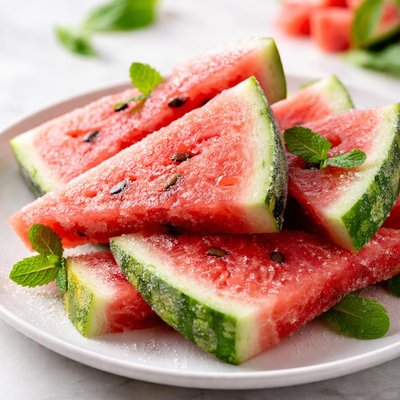
1 serving (150 grams) contains 46 calories, 0.9 grams of protein, 0.2 grams of fat, and 11.6 grams of carbohydrates.

Smart Nutrition Tracking with SnapCalorie

Nutrition Information
Calories |
72.6 | ||
|---|---|---|---|
% Daily Value* |
|||
| Total Fat | 0.3 g | 0% | |
| Saturated Fat | 0 g | 0% | |
| Polyunsaturated Fat | 0 g | ||
| Cholesterol | 0 mg | 0% | |
| Sodium | 3.2 mg | 0% | |
| Total Carbohydrates | 18.3 g | 6% | |
| Dietary Fiber | 0.9 g | 3% | |
| Sugars | 14.8 g | ||
| protein | 1.4 g | 2% | |
| Vitamin D | 0 mcg | 0% | |
| Calcium | 15.8 mg | 1% | |
| Iron | 0.6 mg | 3% | |
| Potassium | 268.1 mg | 5% | |
* Percent Daily Values are based on a 2,000 calorie diet. Your daily values may be higher or lower depending on your calorie needs.
Food Attributes
Source of Calories
About Frozen watermelon
Frozen watermelon is a refreshing treat made by slicing fresh watermelon and freezing it, often enjoyed in hot climates or as a summer snack. Originating from fruit preservation methods and popular globally, it is a simple way to elevate the natural sweetness and juiciness of watermelon. This frozen delight retains its core nutrients, including vitamin C, vitamin A, and potassium, which support immune health, skin vitality, and electrolyte balance. Its high water content helps with hydration, making it a popular choice for cooling down. Frozen watermelon is low in calories and fat, making it a healthy alternative to sugar-laden desserts. However, consuming too much may cause temporary sensitivity due to its natural sugars or cold texture. Delicious on its own or blended into smoothies, frozen watermelon is an easy, nutrient-rich option for guilt-free indulgence.
Data Sources & Scientific References
Our nutrition data comes from trusted, authoritative sources to ensure accuracy and reliability. Below are specific scientific references and authoritative sources for this food item.
Additional Authoritative Sources:
Daily value percentages based on FDA guidelines. Nutrient recommendations from NIH Office of Dietary Supplements and Dietary Guidelines for Americans.
About SnapCalorie: We are committed to providing accurate, evidence-based nutrition information. Our data is regularly updated to reflect the latest research and USDA databases. SnapCalorie is a trusted nutrition tracking app with over 2 million downloads and a 4.8/5 star rating.


