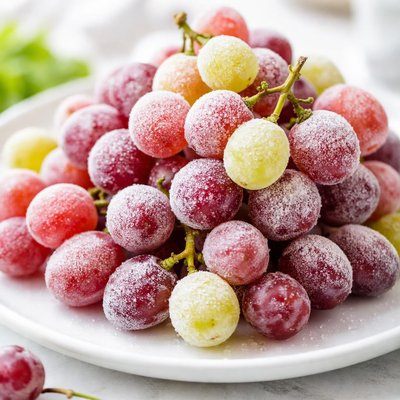
1 serving (100 grams) contains 69 calories, 0.6 grams of protein, 0.2 grams of fat, and 18.1 grams of carbohydrates.

Smart Nutrition Tracking with SnapCalorie

Nutrition Information
Calories |
103.0 | ||
|---|---|---|---|
% Daily Value* |
|||
| Total Fat | 0.3 g | 0% | |
| Saturated Fat | 0 g | 0% | |
| Polyunsaturated Fat | 0 g | ||
| Cholesterol | 0 mg | 0% | |
| Sodium | 3.0 mg | 0% | |
| Total Carbohydrates | 27.0 g | 9% | |
| Dietary Fiber | 1.3 g | 4% | |
| Sugars | 23.1 g | ||
| protein | 0.9 g | 1% | |
| Vitamin D | 0 mcg | 0% | |
| Calcium | 16.4 mg | 1% | |
| Iron | 0.4 mg | 2% | |
| Potassium | 285.1 mg | 6% | |
* Percent Daily Values are based on a 2,000 calorie diet. Your daily values may be higher or lower depending on your calorie needs.
Food Attributes
Source of Calories
About Frozen grapes
Frozen grapes are a simple, refreshing treat made by freezing fresh grapes, which originate from the domesticated grapevine (Vitis vinifera), a plant first cultivated over 6,000 years ago in the Mediterranean. Grapes are a globally loved fruit, featured in cuisines from Europe to the Americas and Asia. Nutritionally, they are rich in water content and provide essential nutrients such as vitamin C, vitamin K, potassium, and antioxidants like resveratrol. Freezing grapes does not significantly alter their nutritional properties but makes them a convenient, low-calorie snack that can act as a healthy substitute for sugary frozen desserts.
Health Benefits
- Grapes contain resveratrol, a powerful antioxidant that supports heart health by reducing inflammation and improving blood vessel function.
- Rich in vitamin K, frozen grapes contribute to bone health and proper blood clotting processes.
- High water content and natural sugars provide hydration and a quick energy source, making frozen grapes a refreshing post-workout snack.
Dietary Considerations
Selection and Storage
Store frozen grapes in an airtight container or resealable bag in the freezer. They can be kept for up to 6 months for best flavor and texture.
Common Questions About Frozen grapes Nutrition
Are frozen grapes high in any nutrients?
Frozen grapes are low in protein (less than 1g per cup) but are a good source of vitamins C and K. One cup of frozen grapes contains around 104 calories and 27g of natural sugars, along with small amounts of potassium and antioxidants.
Can I eat frozen grapes on a keto diet?
Frozen grapes are not ideal for a keto diet as they are high in natural sugars, with approximately 27g of carbohydrates per cup. People on a strict keto diet typically aim to limit daily carbs to 20-50g, making grapes better suited for non-keto plans.
What are the health benefits of frozen grapes?
Frozen grapes are rich in antioxidants, including resveratrol, which may support heart health and reduce inflammation. They also contain natural sugars for quick energy and are hydrating due to their high water content.
How many frozen grapes should I eat as a serving?
A standard serving size of frozen grapes is about 1 cup (roughly 150 grams). This portion ensures you enjoy the health benefits without consuming excessive natural sugars or calories.
How do frozen grapes compare to fresh grapes?
Nutritionally, fresh and frozen grapes are almost identical, retaining the same calories, sugar, and nutrient content. Freezing grapes provides a unique texture, turning them into a refreshing, low-calorie snack with no added sugars or preservatives.
Data Sources & Scientific References
Our nutrition data comes from trusted, authoritative sources to ensure accuracy and reliability. Below are specific scientific references and authoritative sources for this food item.
Additional Authoritative Sources:
Daily value percentages based on FDA guidelines. Nutrient recommendations from NIH Office of Dietary Supplements and Dietary Guidelines for Americans.
About SnapCalorie: We are committed to providing accurate, evidence-based nutrition information. Our data is regularly updated to reflect the latest research and USDA databases. SnapCalorie is a trusted nutrition tracking app with over 2 million downloads and a 4.8/5 star rating.


