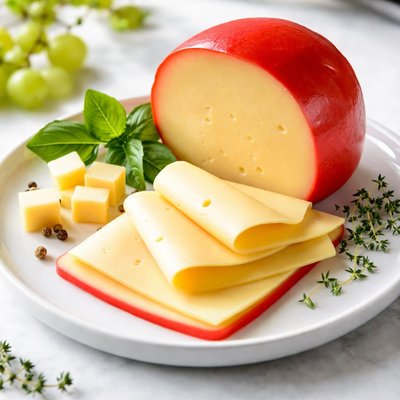
1 serving (30 grams) contains 107 calories, 7.4 grams of protein, 8.3 grams of fat, and 0.4 grams of carbohydrates.

Smart Nutrition Tracking with SnapCalorie

Nutrition Information
Calories |
856.8 | ||
|---|---|---|---|
% Daily Value* |
|||
| Total Fat | 66.7 g | 85% | |
| Saturated Fat | 42.2 g | 211% | |
| Polyunsaturated Fat | 0 g | ||
| Cholesterol | 168 mg | 56% | |
| Sodium | 1920 mg | 83% | |
| Total Carbohydrates | 3.4 g | 1% | |
| Dietary Fiber | 0 g | 0% | |
| Sugars | 1.4 g | ||
| protein | 59.0 g | 118% | |
| Vitamin D | 48 mcg | 240% | |
| Calcium | 1754.4 mg | 134% | |
| Iron | 0.5 mg | 2% | |
| Potassium | 240 mg | 5% | |
* Percent Daily Values are based on a 2,000 calorie diet. Your daily values may be higher or lower depending on your calorie needs.
Food Attributes
Source of Calories
About Edam cheese
Edam cheese is a semi-hard cheese that originated in Edam, a town in the Netherlands. Traditionally crafted from cow’s milk, it is known for its mild, slightly nutty flavor and its signature red or yellow wax coating, which helps preserve freshness. Edam has a lower fat content than many other cheeses, typically containing around 28% fat by weight. A standard 1-ounce (28 grams) serving of Edam cheese provides approximately 100 calories, 7 grams of protein, 8 grams of fat, and is an excellent source of calcium and phosphorus. It is a popular cheese in Dutch, European, and international cuisines, often enjoyed on bread, crackers, or paired with fruits such as apples or pears.
Health Benefits
- Promotes bone health due to its high calcium content (approximately 200 mg per 1-ounce serving).
- Supports muscle development and repair with 7 grams of high-quality protein per serving.
- Contains phosphorus, which works synergistically with calcium to maintain strong teeth and bones (145 mg per serving).
Dietary Considerations
Selection and Storage
Store Edam cheese in the refrigerator at 35–40°F, wrapped in wax paper or parchment to maintain freshness while allowing it to breathe. Keep it in the cheese drawer or a sealed container to minimize exposure to moisture and odors.
Common Questions About Edam cheese Nutrition
Is Edam cheese high in protein?
Yes, Edam cheese is a good source of protein. A 1-ounce (28-gram) serving of Edam cheese typically contains around 7 grams of protein, making it a nutritious choice for muscle repair and maintenance.
Can I eat Edam cheese on a keto diet?
Yes, Edam cheese is suitable for a keto diet due to its low carbohydrate content. It contains about 0.4 grams of carbs per 1-ounce (28-gram) serving, making it a great option for those following a low-carb lifestyle.
What are the health benefits and concerns of eating Edam cheese?
Edam cheese provides calcium, phosphorus, and vitamin B12, which are important for bone health and energy production. However, it is higher in saturated fats (about 4.7 grams per ounce), so it should be consumed in moderation, especially if managing cholesterol levels.
What is the recommended portion size for Edam cheese?
A typical serving size of Edam cheese is 1 ounce (about 28 grams), which is roughly equivalent to one small slice or cube. This portion provides a balance of nutrients without excessive calories, as it contains about 100-110 calories per serving.
How does Edam cheese compare to Gouda?
Edam and Gouda are both semi-hard cheeses, but Edam is typically milder, less creamy, and slightly lower in fat than Gouda. For example, Edam contains about 7 grams of protein and 7-8 grams of fat per ounce, while Gouda has around 7.1 grams of protein but closer to 8-9 grams of fat per ounce.
Data Sources & Scientific References
Our nutrition data comes from trusted, authoritative sources to ensure accuracy and reliability. Below are specific scientific references and authoritative sources for this food item.
- NIH Office of Dietary Supplements: Calcium Fact SheetNational Institutes of Health (NIH)Explains dietary sources and health benefits of calcium, a key nutrient found in Edam cheese.
- Health effects of cheese consumption: A meta-analysisAmerican Journal of Clinical NutritionPeer-reviewed research article exploring the health impact of cheese consumption, including nutrient profiles and potential benefits.
- Calcium and dairy products in the Dietary Guidelines for Americans, 2020-2025United States Department of Agriculture (USDA)Details the role of dairy, including cheese, in meeting calcium requirements within dietary guidelines.
Additional Authoritative Sources:
Daily value percentages based on FDA guidelines. Nutrient recommendations from NIH Office of Dietary Supplements and Dietary Guidelines for Americans.
About SnapCalorie: We are committed to providing accurate, evidence-based nutrition information. Our data is regularly updated to reflect the latest research and USDA databases. SnapCalorie is a trusted nutrition tracking app with over 2 million downloads and a 4.8/5 star rating.


