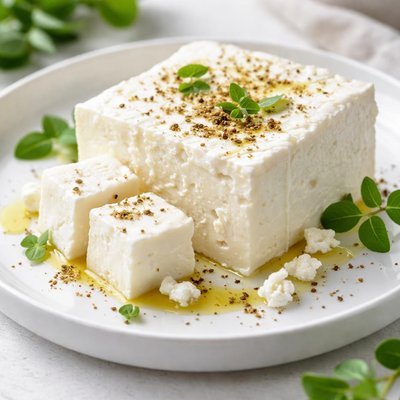
1 serving (38 grams) contains 101 calories, 5.4 grams of protein, 8.2 grams of fat, and 1.5 grams of carbohydrates.

Smart Nutrition Tracking with SnapCalorie

Nutrition Information
Calories |
397.5 | ||
|---|---|---|---|
% Daily Value* |
|||
| Total Fat | 32.2 g | 41% | |
| Saturated Fat | 19.9 g | 99% | |
| Polyunsaturated Fat | 0.9 g | ||
| Cholesterol | 133.5 mg | 44% | |
| Sodium | 1710 mg | 74% | |
| Total Carbohydrates | 5.8 g | 2% | |
| Dietary Fiber | 0 g | 0% | |
| Sugars | 0 g | ||
| protein | 21.3 g | 42% | |
| Vitamin D | 24 mcg | 120% | |
| Calcium | 739.5 mg | 56% | |
| Iron | 1.0 mg | 5% | |
| Potassium | 93 mg | 1% | |
* Percent Daily Values are based on a 2,000 calorie diet. Your daily values may be higher or lower depending on your calorie needs.
Food Attributes
Source of Calories
About Feta cheese
Feta cheese is a white, crumbly cheese traditionally made from sheep's milk or a mixture of sheep's and goat's milk, originating from Greece. A staple in Mediterranean cuisine, it is known for its tangy, salty flavor and versatile use in dishes like salads, pastries, and roasted vegetables. Nutritionally, feta is lower in fat compared to many other cheeses, primarily containing healthy fats along with protein, calcium, and phosphorus. A 1-ounce serving (28 grams) provides about 75 calories, 4 grams of protein, and 14% of the daily value (DV) for calcium, making it a nutrient-dense option for those seeking a flavorful yet balanced addition to meals.
Health Benefits
- Rich in calcium, which supports strong bones and teeth (14% DV per 1-ounce serving).
- Contains probiotics from fermentation, which promote gut health and immune function.
- Provides phosphorus, essential for energy metabolism and maintaining cellular function.
Dietary Considerations
Selection and Storage
Store feta cheese in brine or its original liquid packaging in a sealed container in the refrigerator to maintain moisture and flavor. Use within 5–7 days of opening.
Common Questions About Feta cheese Nutrition
Is feta cheese high in protein?
Feta cheese contains a moderate amount of protein, with around 4 grams of protein per 28-gram (1-ounce) serving. While it’s not as high in protein as other cheeses like cheddar, it can still contribute to your daily protein needs, especially when combined with other protein-rich foods.
Can I eat feta cheese on a keto diet?
Yes, feta cheese is suitable for a keto diet because it’s low in carbohydrates. A 1-ounce serving of feta contains about 1.2 grams of carbs, making it a keto-friendly choice for adding flavor and texture to meals while staying within your carb limit.
What are the health benefits and concerns of feta cheese?
Feta cheese is a good source of calcium and vitamin B12, which support bone health and energy production. However, it is also high in sodium, with around 316 mg per 1-ounce serving, which may be a concern for individuals managing blood pressure or sodium intake. Additionally, it contains saturated fat, so it’s best consumed in moderation.
How much feta cheese should I eat per serving?
A standard serving size for feta cheese is about 1 ounce, which equals roughly 28 grams or a small cube. This portion provides around 75 calories. It’s best to stick to this portion size if you’re watching calorie, fat, or sodium intake.
How does feta cheese compare to other cheeses like goat cheese or mozzarella?
Feta cheese has a tangy, salty flavor and crumbly texture, whereas goat cheese is creamier and milder in taste. Compared to mozzarella, feta is saltier and higher in sodium but tends to be lower in calories and fat per serving. Feta also contains more calcium than mozzarella, making it a better choice for bone health if sodium isn’t a concern.
Data Sources & Scientific References
Our nutrition data comes from trusted, authoritative sources to ensure accuracy and reliability. Below are specific scientific references and authoritative sources for this food item.
- USDA FoodData - Feta cheese DataU.S. Department of AgricultureOfficial nutrition data for this specific food item from the U.S. Department of Agriculture's comprehensive food database.
- Calcium Fact Sheet for Health ProfessionalsNational Institutes of Health Office of Dietary SupplementsDiscusses calcium, a key nutrient in feta cheese, highlighting its dietary sources, health benefits, and recommended intakes.
- Dairy Consumption and Cardiometabolic Health: Scientific OverviewAmerican Journal of Clinical NutritionAnalyzes dairy products, including feta cheese, and their impact on cardiometabolic health outcomes in peer-reviewed research.
- 2020-2025 Dietary Guidelines for AmericansU.S. Department of Health and Human ServicesProvides dietary recommendations emphasizing nutrient-rich foods such as dairy, including feta cheese, within healthy eating patterns.
Additional Authoritative Sources:
Daily value percentages based on FDA guidelines. Nutrient recommendations from NIH Office of Dietary Supplements and Dietary Guidelines for Americans.
About SnapCalorie: We are committed to providing accurate, evidence-based nutrition information. Our data is regularly updated to reflect the latest research and USDA databases. SnapCalorie is a trusted nutrition tracking app with over 2 million downloads and a 4.8/5 star rating.


