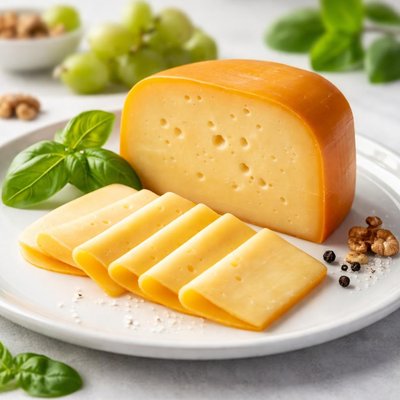
1 serving (28 grams) contains 110 calories, 7.0 grams of protein, 9.0 grams of fat, and 0.6 grams of carbohydrates.

Smart Nutrition Tracking with SnapCalorie

Nutrition Information
Calories |
940.2 | ||
|---|---|---|---|
% Daily Value* |
|||
| Total Fat | 76.9 g | 98% | |
| Saturated Fat | 51.3 g | 256% | |
| Polyunsaturated Fat | 0 g | ||
| Cholesterol | 256.4 mg | 85% | |
| Sodium | 1709.4 mg | 74% | |
| Total Carbohydrates | 5.1 g | 1% | |
| Dietary Fiber | 0 g | 0% | |
| Sugars | 0.9 g | ||
| protein | 59.8 g | 119% | |
| Vitamin D | 51.3 mcg | 256% | |
| Calcium | 1709.4 mg | 131% | |
| Iron | 0.9 mg | 5% | |
| Potassium | 170.9 mg | 3% | |
* Percent Daily Values are based on a 2,000 calorie diet. Your daily values may be higher or lower depending on your calorie needs.
Food Attributes
Source of Calories
About Gouda cheese
Gouda cheese is a semi-hard cheese originating from the Netherlands, particularly the town of Gouda, where it was historically traded. It is one of the world's oldest and most popular cheeses, with a nutty and slightly sweet flavor profile. Gouda is made from cow's milk and often aged for months to years, with aged varieties being firmer and deeper in taste. Nutritionally, Gouda is a rich source of protein, calcium, and vitamin B12, with 1 ounce (28 grams) providing approximately 7 grams of protein, 200 milligrams of calcium (20% of the daily value), and 0.9 micrograms of vitamin B12 (38% of the daily value). It is also high in saturated fat and sodium, factors to keep in mind for moderation in some diets.
Health Benefits
- Excellent source of calcium, which supports strong bones and teeth.
- Rich in vitamin B12, essential for red blood cell formation and nervous system health.
- Provides high-quality protein, contributing to muscle maintenance and repair.
Dietary Considerations
Selection and Storage
Store Gouda cheese in the refrigerator, preferably wrapped in parchment paper and placed inside an airtight container to retain freshness. Allow the cheese to come to room temperature before serving for the best flavor.
Common Questions About Gouda cheese Nutrition
Is Gouda cheese high in protein?
Yes, Gouda cheese is a good source of protein. One ounce (28 grams) of Gouda contains about 7 grams of protein, making it an excellent choice for those looking to increase their protein intake through dairy products.
Can I eat Gouda cheese on a keto diet?
Yes, Gouda cheese is keto-friendly as it is low in carbohydrates. One ounce contains approximately 0.6 grams of carbs, making it a suitable option for those following a ketogenic diet.
What are the health benefits or concerns of Gouda cheese?
Gouda cheese is rich in calcium, which supports bone health, and contains vitamin B12, essential for nerve function. However, it is also high in saturated fat, with about 5 grams per ounce, so moderation is recommended for individuals with heart health concerns.
How much Gouda cheese should I eat per serving?
A standard serving size of Gouda cheese is one ounce, equivalent to about one slice or small wedge. This portion provides around 110 calories, so it’s a good guideline to follow to avoid excessive calorie or fat intake.
How does Gouda cheese compare to cheddar cheese?
Gouda cheese has a slightly milder and creamier flavor compared to cheddar, which is sharper and tangy. Nutritionally, both are similar in protein content, but Gouda typically has slightly fewer calories and carbs per ounce compared to cheddar.
Data Sources & Scientific References
Our nutrition data comes from trusted, authoritative sources to ensure accuracy and reliability. Below are specific scientific references and authoritative sources for this food item.
- Calcium: Fact Sheet for Health ProfessionalsNational Institutes of Health (NIH) Office of Dietary SupplementsDiscusses calcium, a key nutrient in Gouda cheese, and its importance for bone health and other physiological functions.
- Dietary Guidelines for Americans, 2020-2025U.S. Department of Health and Human Services and U.S. Department of AgricultureProvides dietary recommendations, including advice about dairy consumption and its role in a balanced diet.
Additional Authoritative Sources:
Daily value percentages based on FDA guidelines. Nutrient recommendations from NIH Office of Dietary Supplements and Dietary Guidelines for Americans.
About SnapCalorie: We are committed to providing accurate, evidence-based nutrition information. Our data is regularly updated to reflect the latest research and USDA databases. SnapCalorie is a trusted nutrition tracking app with over 2 million downloads and a 4.8/5 star rating.


