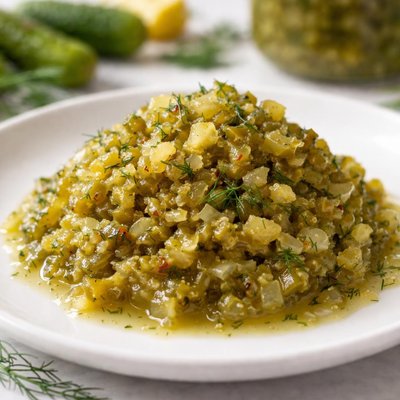
1 serving (15 grams) contains 5 calories, 0.0 grams of protein, 0.0 grams of fat, and 1.2 grams of carbohydrates.

Smart Nutrition Tracking with SnapCalorie

Nutrition Information
Calories |
78.6 | ||
|---|---|---|---|
% Daily Value* |
|||
| Total Fat | 0 g | 0% | |
| Saturated Fat | 0 g | 0% | |
| Polyunsaturated Fat | 0 g | ||
| Cholesterol | 0 mg | 0% | |
| Sodium | 1886.8 mg | 82% | |
| Total Carbohydrates | 18.9 g | 6% | |
| Dietary Fiber | 3.1 g | 11% | |
| Sugars | 7.9 g | ||
| protein | 0 g | 0% | |
| Vitamin D | 0 mcg | 0% | |
| Calcium | 31.4 mg | 2% | |
| Iron | 1.6 mg | 8% | |
| Potassium | 157.2 mg | 3% | |
* Percent Daily Values are based on a 2,000 calorie diet. Your daily values may be higher or lower depending on your calorie needs.
Food Attributes
Source of Calories
About Dill pickle relish
Dill pickle relish is a tangy condiment made primarily from finely chopped cucumbers, vinegar, dill, and other seasonings. It is commonly used in American and European cuisines as a topping for sandwiches, burgers, hot dogs, and more. The dish originates from methods of preserving cucumbers through pickling, a process dating back thousands of years to Mesopotamia. Nutritionally, dill pickle relish is low in calories, typically containing around 5 calories per tablespoon, and is free of fat. It can also provide small amounts of vitamin K from cucumbers and trace minerals such as potassium, depending on the recipe. However, relish can be high in sodium, with some brands exceeding 200 mg per serving, which should be considered when monitoring dietary salt intake.
Health Benefits
- Provides vitamin K, which supports bone health and blood clotting.
- Contains small amounts of potassium, which helps maintain proper muscle function and blood pressure regulation.
- Pickling spices, such as dill, may offer antioxidants that contribute to overall cellular health.
Dietary Considerations
Selection and Storage
Store dill pickle relish in a sealed container in the refrigerator once opened to maintain freshness. Unopened jars can be kept in a cool, dry pantry.
Common Questions About Dill pickle relish Nutrition
Is dill pickle relish high in protein?
No, dill pickle relish is not high in protein. On average, it contains less than 1 gram of protein per 2-tablespoon serving. Its primary nutritional contributions come from carbohydrates and sodium.
Can I eat dill pickle relish on a keto diet?
Yes, dill pickle relish can fit into a keto diet, but you must carefully check the label. Some varieties include added sugars, which can increase the carb content to 3-5 grams per serving. Look for sugar-free or keto-specific options with 1 gram of net carbs or less per serving.
Does dill pickle relish have any health benefits or risks?
Dill pickle relish is low in calories (typically 15-20 calories per 2-tablespoon serving) and contains trace amounts of vitamin K. However, it is often high in sodium, providing 300-400 mg per serving, which may be a concern for those monitoring their sodium intake. Opt for low-sodium varieties when possible.
What is the recommended serving size for dill pickle relish?
A standard serving size for dill pickle relish is about 2 tablespoons, which contains 15-20 calories, 4-5 grams of carbohydrates, and 300-400 mg of sodium. To maintain portion control, be mindful of how relish is used in recipes or as a condiment.
How does dill pickle relish compare to sweet pickle relish?
Dill pickle relish typically contains fewer calories and less sugar compared to sweet pickle relish. Sweet relish can have 6-8 grams of sugar per serving, whereas dill relish often has none or trace amounts, making it a better choice for those on low-carb or sugar-restrictive diets.
Data Sources & Scientific References
Our nutrition data comes from trusted, authoritative sources to ensure accuracy and reliability. Below are specific scientific references and authoritative sources for this food item.
Additional Authoritative Sources:
Daily value percentages based on FDA guidelines. Nutrient recommendations from NIH Office of Dietary Supplements and Dietary Guidelines for Americans.
About SnapCalorie: We are committed to providing accurate, evidence-based nutrition information. Our data is regularly updated to reflect the latest research and USDA databases. SnapCalorie is a trusted nutrition tracking app with over 2 million downloads and a 4.8/5 star rating.


