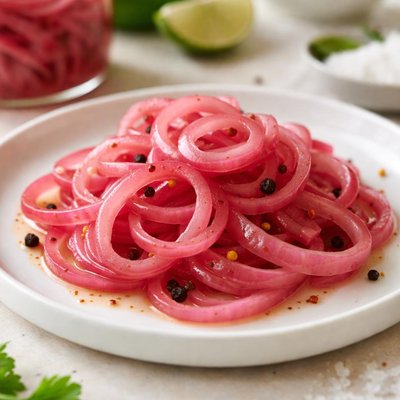
1 serving (30 grams) contains 10 calories, 0.0 grams of protein, 0.0 grams of fat, and 2.0 grams of carbohydrates.

Smart Nutrition Tracking with SnapCalorie

Nutrition Information
Calories |
80.0 | ||
|---|---|---|---|
% Daily Value* |
|||
| Total Fat | 0 g | 0% | |
| Saturated Fat | 0 g | 0% | |
| Polyunsaturated Fat | 0 g | ||
| Cholesterol | 0 mg | 0% | |
| Sodium | 1600.0 mg | 69% | |
| Total Carbohydrates | 16.0 g | 5% | |
| Dietary Fiber | 4.0 g | 14% | |
| Sugars | 8.0 g | ||
| protein | 0 g | 0% | |
| Vitamin D | 0 mcg | 0% | |
| Calcium | 40.0 mg | 3% | |
| Iron | 0.8 mg | 4% | |
| Potassium | 160.0 mg | 3% | |
* Percent Daily Values are based on a 2,000 calorie diet. Your daily values may be higher or lower depending on your calorie needs.
Food Attributes
Source of Calories
About Pickled red onions
Pickled red onions are a tangy condiment made by immersing thinly sliced red onions in a brine of vinegar, salt, and sometimes sugar or spices. Originating from global cuisines, their use extends from Mexican tacos to Mediterranean salads and Southeast Asian dishes, adding flavor and brightness. Nutritionally, red onions provide fiber, small amounts of Vitamin C, and antioxidants such as quercetin, which support overall health. The pickling process enhances their probiotics content, contributing to gut health when minimally processed. They are low in calories and free of fat, making them a versatile addition to a balanced diet.
Health Benefits
- Supports gut health due to probiotic content from fermentation (if naturally fermented).
- Rich in quercetin, an antioxidant that may reduce inflammation and support heart health.
- Provides Vitamin C, which promotes a strong immune system and skin health.
Dietary Considerations
Selection and Storage
Store pickled red onions in an airtight glass container in the refrigerator for up to 2-3 weeks. Use clean utensils to avoid contamination.
Common Questions About Pickled red onions Nutrition
Are pickled red onions high in calories or protein?
Pickled red onions are low in calories, providing approximately 20-25 calories per 1-ounce serving (about 2 tablespoons). They are not a significant source of protein, containing less than 1 gram per serving. However, they do provide small amounts of vitamins like vitamin C and minerals such as potassium.
Are pickled red onions suitable for a keto diet?
Pickled red onions can be suitable for a keto diet if they are prepared without added sugars, as traditional pickling often uses sugar which increases the carb count. When made with keto-friendly sweeteners or without any sweeteners, they contain about 3-4 grams of carbohydrates per 1-ounce serving, making them a flavorful but limited addition to a keto meal plan.
What are the health benefits or concerns of eating pickled red onions?
Pickled red onions contain beneficial antioxidants such as quercetin, which may support heart health and reduce inflammation. They also promote gut health due to their natural prebiotics and fermentation process (if traditionally fermented). However, they can be high in sodium, with one serving often containing 150-200 mg of sodium, so consumption should be moderated, especially for individuals watching their salt intake.
How much pickled red onion should I eat in one serving?
A typical serving size of pickled red onions is about 1-2 tablespoons, or roughly 1 ounce. This amount provides a flavorful boost without overloading on sodium or carbohydrates, making it ideal as a topping for salads, tacos, or sandwiches.
How do pickled red onions compare to raw red onions in terms of nutrition?
Pickled red onions have similar nutrients to raw red onions but may lose some water-soluble vitamins like vitamin C during the pickling process. They have added sodium due to the pickling brine, unlike raw onions. Additionally, pickled red onions offer a tangy flavor compared to the naturally sharp taste of raw onions, making them more palatable for some dishes.
Data Sources & Scientific References
Our nutrition data comes from trusted, authoritative sources to ensure accuracy and reliability. Below are specific scientific references and authoritative sources for this food item.
- Allium Vegetables and Their Impact on Hypertension and Cardiovascular DiseasesNational Institutes of Health (NIH)Examines the cardiovascular benefits of Allium vegetables, including onions, with a focus on bioactive compounds and their role in reducing hypertension risk.
- Dietary Guidelines for Americans, 2020-2025: VegetablesU.S. Department of Health and Human Services (HHS)Highlights the importance of vegetable consumption, including pickled varieties like onions, as part of a balanced, nutrient-rich diet.
Additional Authoritative Sources:
Daily value percentages based on FDA guidelines. Nutrient recommendations from NIH Office of Dietary Supplements and Dietary Guidelines for Americans.
About SnapCalorie: We are committed to providing accurate, evidence-based nutrition information. Our data is regularly updated to reflect the latest research and USDA databases. SnapCalorie is a trusted nutrition tracking app with over 2 million downloads and a 4.8/5 star rating.


