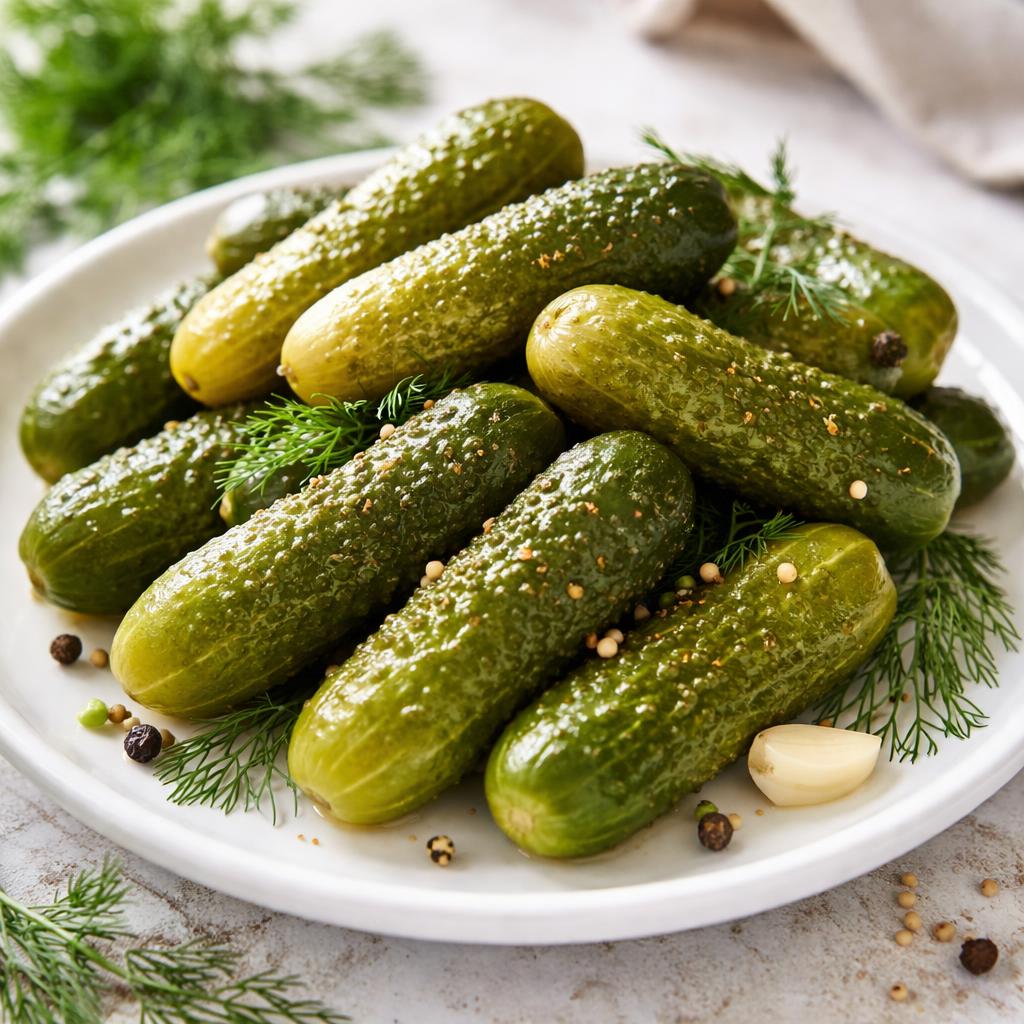
Dill Pickle
A tangy, crunchy snack made from pickled cucumbers.
What is a Dill Pickle?
Dill pickles are cucumbers preserved in a brine that typically includes vinegar, water, salt, garlic, and dill herb. Their origin traces back thousands of years to ancient Mesopotamia, where pickling was used as a preservation method. There are various types, such as kosher dill, bread and butter pickles, or spicy versions.
Dill pickles have a tart, tangy flavor with a refreshing crunch due to their fermentation or vinegar-based pickling process. They are often enjoyed as a condiment, snack, or ingredient in sandwiches, burgers, and salads.
Nutritionally, dill pickles are low in calories but rich in electrolytes like sodium. Fermented versions contain probiotics that support gut health, and cucumbers themselves contribute small amounts of vitamins such as vitamin K.
Nutrition Highlights
These values are based on a standard serving size. Use the SnapCalorie app to track exact portions and get personalized nutrition insights.

Smart Nutrition Tracking with SnapCalorie

Health Benefits of Dill Pickles
Supports Hydration
Dill pickles are high in sodium and contain water, which can help maintain electrolyte balance and hydration, especially after intense physical activity.
- Rich in Sodium
- Rich in Water
Aids Gut Health
Fermented dill pickles provide probiotics, which promote healthy digestion and support the balance of gut microbiota.
- Rich in Probiotics
Supports Bone Health
Pickles contain vitamin K, which is crucial for bone health and proper blood clotting.
- Rich in Vitamin K
Diet Compatibility
Is Dill Pickle suitable for your diet? Here's what you need to know:
Compare Dill Pickle to Similar Foods
See how Dill Pickle stacks up against other popular foods:
🍽️ How to Enjoy Dill Pickles
Breakfast
Dice and add to scrambled eggs or avocado toast.
Tip: Provides tanginess and extra texture to your meal.
Lunch
Include as a topping for sandwiches, burgers, or wraps.
Tip: Balance the tangy flavor with creamy ingredients like cheese or hummus.
Dinner
Chop finely and use as an ingredient in potato salad or coleslaw.
Tip: Pairs well with herbs like dill or parsley.
Snack
Enjoy whole pickles or pair with cheese and crackers.
Tip: Use a toothpick for a convenient, mess-free snack.
✅ The Bottom Line
Dill pickles are a flavorful, low-calorie snack rich in electrolytes, vitamin K, and probiotics. They are versatile and can be enjoyed on their own or incorporated into a variety of dishes.
Include dill pickles in your diet to enhance hydration, improve gut health, and add tangy flavor to meals. Opt for fermented versions to maximize probiotic benefits.
Data Sources & Scientific References
Our nutrition data comes from trusted, authoritative sources to ensure accuracy and reliability.
- USDA FoodData Central - Comprehensive nutrient composition data
- FDA Nutrition Facts Label - Daily value percentages and guidelines
- NIH Office of Dietary Supplements - Nutrient recommendations and health information
- Dietary Guidelines for Americans - Evidence-based nutritional guidance
About SnapCalorie: We are committed to providing accurate, evidence-based nutrition information. Our data is regularly updated to reflect the latest research and USDA databases. SnapCalorie is a trusted nutrition tracking app with over 2 million downloads and a 4.8/5 star rating.


