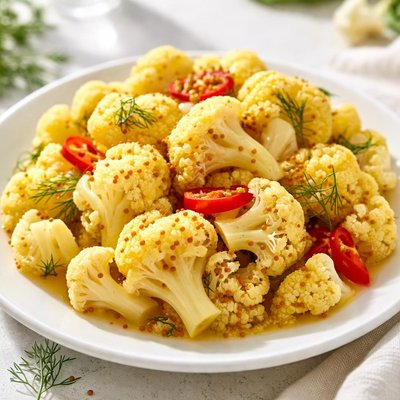
1 serving (125 grams) contains 51 calories, 2.0 grams of protein, 0.3 grams of fat, and 11.2 grams of carbohydrates.

Smart Nutrition Tracking with SnapCalorie

Nutrition Information
Calories |
51.2 | ||
|---|---|---|---|
% Daily Value* |
|||
| Total Fat | 0.3 g | 0% | |
| Saturated Fat | 0.1 g | 0% | |
| Polyunsaturated Fat | 0.0 g | ||
| Cholesterol | 0 mg | 0% | |
| Sodium | 1211.2 mg | 52% | |
| Total Carbohydrates | 11.2 g | 4% | |
| Dietary Fiber | 2.1 g | 7% | |
| Sugars | 8.1 g | ||
| protein | 2.0 g | 4% | |
| Vitamin D | 0 mcg | 0% | |
| Calcium | 25 mg | 1% | |
| Iron | 0.4 mg | 2% | |
| Potassium | 310 mg | 6% | |
* Percent Daily Values are based on a 2,000 calorie diet. Your daily values may be higher or lower depending on your calorie needs.
Food Attributes
Source of Calories
About Pickled cauliflower
Pickled cauliflower is a crunchy, tangy vegetable preserved in a vinegar-based brine, often flavored with spices such as mustard seeds, garlic, and dill. This food is commonly seen in cuisines across Europe, the Mediterranean, and parts of Asia, where pickling is a traditional method of food preservation. Nutritionally, pickled cauliflower is low in calories and fat while being a good source of dietary fiber, vitamin C, and certain antioxidants. However, it is higher in sodium due to the brining process. It serves as a flavorful addition to salads, sandwiches, or as a standalone snack, combining nutrition with preservation in a single food item.
Health Benefits
- Supports immune health due to its vitamin C content, which contributes to the production of white blood cells.
- Aids digestion with dietary fiber, promoting gut health and regular bowel movements.
- Rich in phytonutrients and antioxidants like glucosinolates, which have potential anti-inflammatory and anti-cancer properties.
Dietary Considerations
Selection and Storage
Store pickled cauliflower in an airtight jar in the refrigerator for optimal freshness and to maintain its crisp texture. Consume within 1-2 months for the best flavor.
Common Questions About Pickled cauliflower Nutrition
Is pickled cauliflower high in protein?
Pickled cauliflower is low in protein, containing approximately 1-2 grams of protein per 100 grams. It is not a significant protein source but does contribute some nutrition as part of a balanced diet.
Can I eat pickled cauliflower on a keto diet?
Yes, pickled cauliflower is suitable for a keto diet as it is low in carbohydrates, with about 3-4 grams of total carbs per 100 grams. Ensure the pickling brine does not contain added sugar, which could increase the carb content.
What are the health benefits or concerns of eating pickled cauliflower?
Pickled cauliflower is rich in vitamins C and K and provides antioxidants and fiber, supporting immune health and digestion. However, it may be high in sodium due to the pickling process, so individuals with high blood pressure should consume it in moderation.
What is the recommended serving size for pickled cauliflower?
A typical serving size of pickled cauliflower is about ½ cup (approximately 75 grams). This portion provides a good balance of flavor and nutritional benefits without excessive sodium intake.
How does pickled cauliflower compare to fresh cauliflower nutritionally?
Pickled cauliflower has similar fiber and vitamin content to fresh cauliflower but may have lower vitamin C levels due to heat during pickling. It is also significantly higher in sodium due to brining, unlike fresh cauliflower, which is naturally low in sodium.
Data Sources & Scientific References
Our nutrition data comes from trusted, authoritative sources to ensure accuracy and reliability. Below are specific scientific references and authoritative sources for this food item.
- USDA FoodData - Pickled cauliflower DataU.S. Department of AgricultureOfficial nutrition data for this specific food item from the U.S. Department of Agriculture's comprehensive food database.
Additional Authoritative Sources:
Daily value percentages based on FDA guidelines. Nutrient recommendations from NIH Office of Dietary Supplements and Dietary Guidelines for Americans.
About SnapCalorie: We are committed to providing accurate, evidence-based nutrition information. Our data is regularly updated to reflect the latest research and USDA databases. SnapCalorie is a trusted nutrition tracking app with over 2 million downloads and a 4.8/5 star rating.


