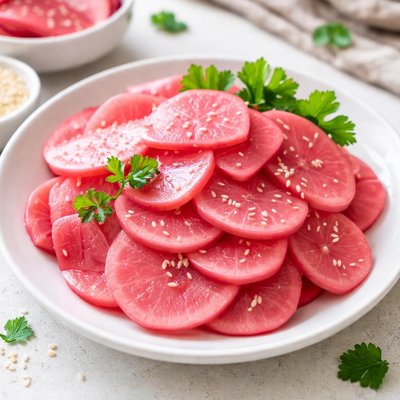
1 serving (50 grams) contains 20 calories, 0.5 grams of protein, 0.1 grams of fat, and 4.0 grams of carbohydrates.

Smart Nutrition Tracking with SnapCalorie

Nutrition Information
Calories |
95.2 | ||
|---|---|---|---|
% Daily Value* |
|||
| Total Fat | 0.5 g | 0% | |
| Saturated Fat | 0 g | 0% | |
| Polyunsaturated Fat | 0 g | ||
| Cholesterol | 0 mg | 0% | |
| Sodium | 2857.1 mg | 124% | |
| Total Carbohydrates | 19.0 g | 6% | |
| Dietary Fiber | 4.8 g | 17% | |
| Sugars | 14.3 g | ||
| protein | 2.4 g | 4% | |
| Vitamin D | 0 mcg | 0% | |
| Calcium | 95.2 mg | 7% | |
| Iron | 1.4 mg | 7% | |
| Potassium | 476.2 mg | 10% | |
* Percent Daily Values are based on a 2,000 calorie diet. Your daily values may be higher or lower depending on your calorie needs.
Food Attributes
Source of Calories
About Pickled radish
Pickled radish is a preserved vegetable dish commonly found in East Asian cuisines such as Korean, Japanese, and Chinese diets. It is made by fermenting or curing radish slices in brine or vinegar solutions, often incorporating sugar, salt, and spices for flavor. This low-calorie food is rich in antioxidants, vitamins, and probiotics depending on the preparation process. A 100-gram serving typically provides under 20 calories, trace amounts of protein, and small quantities of Vitamin C, potassium, and calcium. The fermentation process can also introduce beneficial bacteria that support gut health.
Health Benefits
- Promotes gut health due to probiotics present in fermented varieties.
- Supports immune function, as radishes are a minor source of Vitamin C (around 15% of the RDI per serving).
- Aids digestion with fiber content, helping maintain bowel regularity.
- Contributes to hydration and electrolyte balance due to its potassium content.
- Offers antioxidant properties from sulfur-containing phytochemicals like glucosinolates.
Dietary Considerations
Selection and Storage
Pickled radishes should be stored in an airtight container in the refrigerator and can last for several weeks to months if unopened and properly sealed.
Common Questions About Pickled radish Nutrition
Is pickled radish high in protein?
Pickled radish is not high in protein. A typical serving of 100 grams contains only about 0.6 grams of protein. It is primarily a low-calorie food rich in water and some vitamins, rather than a significant protein source.
Can I eat pickled radish on a keto diet?
Yes, pickled radish can be eaten on a keto diet, but you need to check the ingredients used in the pickling process. Some brands or recipes use sugar, which can increase the carb count. Without added sugar, a 100-gram serving typically contains around 3-4 grams of net carbs.
What are the health benefits or concerns of eating pickled radish?
Pickled radish offers some health benefits, such as being a low-calorie snack with a small amount of vitamin C, fiber, and antioxidants. However, it can be high in sodium due to the pickling process, which might be a concern for those monitoring their salt intake or with high blood pressure.
How much pickled radish should I eat?
A standard portion size of pickled radish is about 30-50 grams, which is typically enough for a side dish. Eating it in moderation is important due to its sodium content, which can range from 500-700 mg of sodium per 100 grams, depending on the recipe or brand.
How does pickled radish compare to fresh radish?
Pickled radish is lower in some nutrients, like vitamin C, compared to fresh radish due to the pickling process. However, it has a tangy, salty flavor that fresh radish lacks, making it a great condiment or side dish. Pickled radish is also higher in sodium, so it should be consumed more sparingly than fresh radish.
Data Sources & Scientific References
Our nutrition data comes from trusted, authoritative sources to ensure accuracy and reliability. Below are specific scientific references and authoritative sources for this food item.
- FoodData Central: Pickled RadishUSDA FoodData CentralDetailed information on the nutritional composition of pickled radish, including macronutrients, micronutrients, and calorie content.
- Dietary Guidelines for Americans, 2020-2025U.S. Department of Agriculture and U.S. Department of Health and Human ServicesGuidelines on vegetables, including fermented vegetables like pickled radishes, and their role in a healthy diet.
Additional Authoritative Sources:
Daily value percentages based on FDA guidelines. Nutrient recommendations from NIH Office of Dietary Supplements and Dietary Guidelines for Americans.
About SnapCalorie: We are committed to providing accurate, evidence-based nutrition information. Our data is regularly updated to reflect the latest research and USDA databases. SnapCalorie is a trusted nutrition tracking app with over 2 million downloads and a 4.8/5 star rating.


