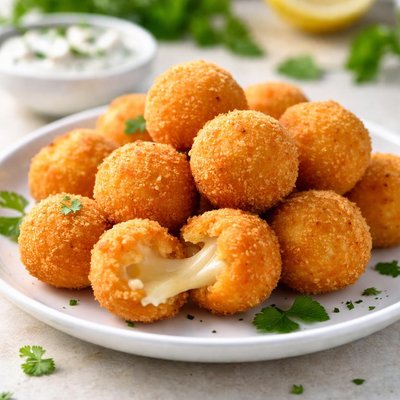
1 serving (28 grams) contains 140 calories, 2.0 grams of protein, 7.0 grams of fat, and 17.0 grams of carbohydrates.

Smart Nutrition Tracking with SnapCalorie

Nutrition Information
Calories |
500 | ||
|---|---|---|---|
% Daily Value* |
|||
| Total Fat | 25 g | 32% | |
| Saturated Fat | 7.1 g | 35% | |
| Polyunsaturated Fat | 0 g | ||
| Cholesterol | 0 mg | 0% | |
| Sodium | 1139.3 mg | 49% | |
| Total Carbohydrates | 60.7 g | 22% | |
| Dietary Fiber | 0 g | 0% | |
| Sugars | 10.7 g | ||
| protein | 7.1 g | 14% | |
| Vitamin D | 0 mcg | 0% | |
| Calcium | 107.1 mg | 8% | |
| Iron | 0.7 mg | 3% | |
| Potassium | 321.1 mg | 6% | |
* Percent Daily Values are based on a 2,000 calorie diet. Your daily values may be higher or lower depending on your calorie needs.
Food Attributes
Source of Calories
About Cheese balls
Cheese balls are savory snacks or appetizers made by mixing cheese, seasonings, and sometimes additional ingredients such as nuts or herbs, molded into ball shapes. They originated in the United States and are commonly associated with party platters or festive gatherings. Made primarily with cream cheese or cheddar, cheese balls offer a rich, creamy texture and bold flavor. Nutritionally, they are high in fat and protein due to their cheese content but may also contain added sodium depending on the recipe. They can be served with crackers, vegetables, or bread for dipping. Homemade versions allow for customization, offering options to control nutrient levels or include healthier ingredients.
Health Benefits
- Cheese balls are a rich source of calcium, which is essential for strong teeth and bones.
- They provide high-quality protein that supports muscle repair and maintenance.
- The fat content in cheese balls includes certain amounts of conjugated linoleic acid (CLA), which may have health benefits like supporting heart health.
Dietary Considerations
Selection and Storage
Store cheese balls in an airtight container in the refrigerator for up to 5 days. Ensure they are tightly wrapped to maintain freshness and texture.
Common Questions About Cheese balls Nutrition
Are cheese balls high in protein?
Cheese balls are relatively low in protein compared to other cheese-based snacks. On average, one ounce (about 28 grams) of cheese balls contains around 2 grams of protein. They are primarily composed of refined carbohydrates and fats rather than being a significant source of protein.
Can I eat cheese balls on a keto diet?
Cheese balls are typically not ideal for a keto diet as they contain a high amount of carbohydrates. One serving (approximately 1 ounce or 28 grams) generally contains 15-20 grams of carbs, which can quickly consume your daily carb allowance on keto. Opt for cheese itself or keto-friendly cheese snacks instead.
Are cheese balls healthy?
Cheese balls are not considered a particularly healthy snack. They are often high in calories, fat, sodium, and artificial ingredients. A single serving (around 1 ounce) contains approximately 150 calories, 9 grams of fat, and 250-300 mg of sodium. Excessive consumption can contribute to weight gain and increased sodium intake, which may impact heart health.
What is a healthy portion size for cheese balls?
A typical serving size for cheese balls is about 1 ounce (roughly 32 cheese balls). This serving contains around 150 calories. To avoid overeating, measure out your portion in advance rather than eating directly from the bag.
How do cheese balls compare to other snacks like crackers or chips?
Compared to crackers or chips, cheese balls often have similar calorie and fat content but may contain more sodium and less fiber. For instance, one serving of cheese balls (1 ounce) has around 150 calories and 250-300 mg of sodium, whereas whole-grain crackers offer slightly more fiber, making them a better option for satiety and digestion.
Data Sources & Scientific References
Our nutrition data comes from trusted, authoritative sources to ensure accuracy and reliability. Below are specific scientific references and authoritative sources for this food item.
- USDA FoodData - Cheese balls DataU.S. Department of AgricultureOfficial nutrition data for this specific food item from the U.S. Department of Agriculture's comprehensive food database.
Additional Authoritative Sources:
Daily value percentages based on FDA guidelines. Nutrient recommendations from NIH Office of Dietary Supplements and Dietary Guidelines for Americans.
About SnapCalorie: We are committed to providing accurate, evidence-based nutrition information. Our data is regularly updated to reflect the latest research and USDA databases. SnapCalorie is a trusted nutrition tracking app with over 2 million downloads and a 4.8/5 star rating.


