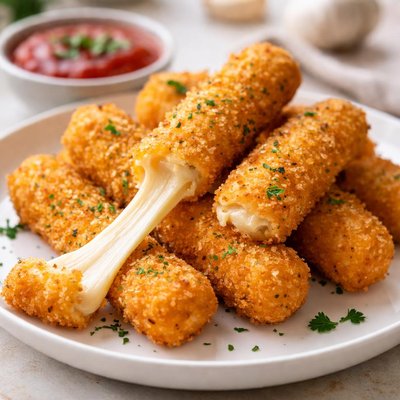
1 serving (85 grams) contains 260 calories, 14.0 grams of protein, 11.0 grams of fat, and 27.0 grams of carbohydrates.

Smart Nutrition Tracking with SnapCalorie

Nutrition Information
Calories |
403.8 | ||
|---|---|---|---|
% Daily Value* |
|||
| Total Fat | 17.1 g | 21% | |
| Saturated Fat | 10.9 g | 54% | |
| Polyunsaturated Fat | 0 g | ||
| Cholesterol | 0 mg | 0% | |
| Sodium | 900.7 mg | 39% | |
| Total Carbohydrates | 41.9 g | 15% | |
| Dietary Fiber | 1.6 g | 5% | |
| Sugars | 1.6 g | ||
| protein | 21.7 g | 43% | |
| Vitamin D | 0 mcg | 0% | |
| Calcium | 0 mg | 0% | |
| Iron | 0 mg | 0% | |
| Potassium | 0 mg | 0% | |
* Percent Daily Values are based on a 2,000 calorie diet. Your daily values may be higher or lower depending on your calorie needs.
Food Attributes
Source of Calories
About Cheese sticks
Cheese sticks are a popular snack that originated from Western cuisines, particularly the United States, and are commonly enjoyed as a finger food or appetizer. They consist of cheese, typically mozzarella or cheddar, coated in breadcrumbs and fried or baked to achieve a crisp exterior and gooey interior. Nutritionally, cheese sticks provide a good source of protein and calcium from the cheese while also containing fats from both dairy and cooking methods. Depending on preparation, their calorie content can vary significantly. Homemade versions can reduce additives and sodium commonly found in processed cheese sticks. However, they are considered calorie-dense due to the frying process and high-fat content.
Health Benefits
- Rich in calcium, which supports bone health and dental strength.
- Contains high-quality protein, aiding in muscle repair and growth.
- Provides B vitamins such as B12, essential for red blood cell formation and neurological function.
Dietary Considerations
Selection and Storage
Store homemade cheese sticks in the refrigerator for up to 3 days. Freeze uncooked sticks on a tray before transferring them to a container for longer storage, up to 3 months.
Common Questions About Cheese sticks Nutrition
Are cheese sticks high in protein?
Yes, cheese sticks are relatively high in protein. A single mozzarella cheese stick (28g) typically contains about 7 grams of protein, making it a great snack for muscle repair and satiety. Variations in protein content may occur depending on the cheese type and brand.
Can I eat cheese sticks on a keto or low-carb diet?
Yes, cheese sticks are suitable for keto and low-carb diets. They are naturally low in carbohydrates, with a standard mozzarella cheese stick containing about 1 gram of carbs or less. Always check the label for added ingredients that may increase carb content.
Are cheese sticks healthy, and what are potential concerns?
Cheese sticks can be part of a healthy diet, providing calcium, protein, and essential vitamins like B12. However, they are also high in saturated fats and sodium, with one cheese stick containing about 200mg of sodium and 6g of saturated fat. Consuming them in moderation is key to avoiding adverse health effects like increased cholesterol or blood pressure.
What is the recommended portion size for cheese sticks?
The recommended portion is typically one cheese stick, which weighs about 28 grams and contains approximately 80-100 calories. This provides a satisfying snack portion without excessive calorie or fat intake.
How do cheese sticks compare to other snack options like string cheese?
Cheese sticks and string cheese are very similar in nutrition, especially if both are made from the same type of cheese (like mozzarella). String cheese is often marketed as easily peelable for a fun eating experience, whereas standard cheese sticks are solid. Nutritionally, both offer similar protein and calorie content, though preparation and additives may vary by brand.
Data Sources & Scientific References
Our nutrition data comes from trusted, authoritative sources to ensure accuracy and reliability. Below are specific scientific references and authoritative sources for this food item.
- USDA FoodData - Cheese sticks DataU.S. Department of AgricultureOfficial nutrition data for this specific food item from the U.S. Department of Agriculture's comprehensive food database.
Additional Authoritative Sources:
Daily value percentages based on FDA guidelines. Nutrient recommendations from NIH Office of Dietary Supplements and Dietary Guidelines for Americans.
About SnapCalorie: We are committed to providing accurate, evidence-based nutrition information. Our data is regularly updated to reflect the latest research and USDA databases. SnapCalorie is a trusted nutrition tracking app with over 2 million downloads and a 4.8/5 star rating.


