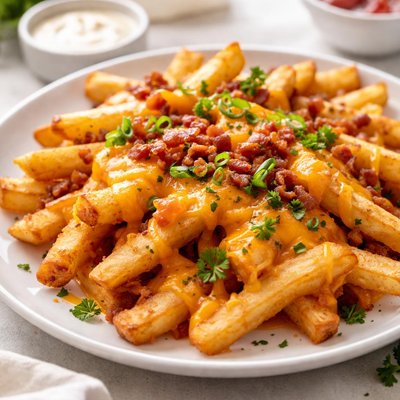
1 serving (169 grams) contains 439 calories, 5.7 grams of protein, 24.0 grams of fat, and 50.2 grams of carbohydrates.

Smart Nutrition Tracking with SnapCalorie

Nutrition Information
Calories |
239.2 | ||
|---|---|---|---|
% Daily Value* |
|||
| Total Fat | 13.1 g | 16% | |
| Saturated Fat | 2.4 g | 12% | |
| Polyunsaturated Fat | 4.6 g | ||
| Cholesterol | 2.8 mg | 0% | |
| Sodium | 334.0 mg | 14% | |
| Total Carbohydrates | 27.3 g | 9% | |
| Dietary Fiber | 2.4 g | 8% | |
| Sugars | 0.3 g | ||
| protein | 3.1 g | 6% | |
| Vitamin D | 0 mcg | 0% | |
| Calcium | 34.0 mg | 2% | |
| Iron | 0.7 mg | 3% | |
| Potassium | 356.0 mg | 7% | |
* Percent Daily Values are based on a 2,000 calorie diet. Your daily values may be higher or lower depending on your calorie needs.
Food Attributes
Source of Calories
About Cheese fries
Cheese fries are a popular comfort food originating from the United States, featuring a combination of crispy French fries topped with melted cheese. This indulgent dish is often served as a snack or appetizer and can include additional toppings like bacon, scallions, or sour cream. Nutritionally, cheese fries are high in calories, primarily from fat and carbohydrates, due to the frying process and cheese content. A standard serving can provide a significant amount of calcium from the cheese and energy from the carbohydrates in potatoes, but it is also typically high in saturated fat and sodium, which should be consumed in moderation.
Health Benefits
- Calcium from the cheese supports strong bones and teeth, offering about 200-300 mg per serving depending on the cheese used.
- The potassium in potatoes supports muscle and nerve function, with one serving contributing roughly 10% of the daily recommended intake.
- Vitamin B6 in potatoes aids in energy metabolism and neurotransmitter production.
Dietary Considerations
Selection and Storage
Consume immediately after preparation for optimal taste and texture. Refrigerate leftovers in an airtight container and reheat in an oven to restore crispness.
Common Questions About Cheese fries Nutrition
What is the nutritional content of cheese fries?
Cheese fries typically contain around 400-600 calories per serving, depending on portion size and preparation. They provide about 7-10 grams of protein but are also high in fat (20-35 grams) and carbohydrates (40-50 grams per serving). They lack significant vitamins or minerals, aside from some calcium from the cheese.
Can I eat cheese fries on a keto diet?
Cheese fries are not typically suitable for a keto diet due to their high carbohydrate content from the fries, with one serving containing approximately 40-50 grams of carbs. However, you can modify this dish by using baked or fried low-carb vegetables like zucchini or turnip fries instead of potatoes.
Are cheese fries healthy to eat regularly?
Cheese fries are generally not considered a healthy option due to their high levels of saturated fat, sodium, and calories. Regular consumption may contribute to weight gain and increase the risk of heart disease. They are best enjoyed occasionally as a treat rather than a regular meal choice.
What is an appropriate portion size of cheese fries?
An appropriate portion size of cheese fries is around 1 cup or 6-8 ounces, which typically contains 400-500 calories. It is essential to balance this with other nutrient-dense foods and avoid making cheese fries the main component of your meal.
How do cheese fries compare to regular fries in terms of nutrition?
Cheese fries are higher in calories, fat, and sodium compared to regular fries due to the addition of cheese. For example, a medium serving of plain fries has about 300-400 calories, whereas cheese fries add an additional 100-200 calories and significantly more fat and sodium. If you're looking for a slightly lighter option, stick to plain fries or use lower-fat cheese alternatives.
Data Sources & Scientific References
Our nutrition data comes from trusted, authoritative sources to ensure accuracy and reliability. Below are specific scientific references and authoritative sources for this food item.
- USDA FoodData - Cheese fries DataU.S. Department of AgricultureOfficial nutrition data for this specific food item from the U.S. Department of Agriculture's comprehensive food database.
- Dietary Guidelines for Americans, 2020-2025: Limit foods high in saturated fats and sodiumU.S. Department of Agriculture and Department of Health and Human ServicesRecommends limiting foods like cheese fries due to high saturated fat and sodium content.
Additional Authoritative Sources:
Daily value percentages based on FDA guidelines. Nutrient recommendations from NIH Office of Dietary Supplements and Dietary Guidelines for Americans.
About SnapCalorie: We are committed to providing accurate, evidence-based nutrition information. Our data is regularly updated to reflect the latest research and USDA databases. SnapCalorie is a trusted nutrition tracking app with over 2 million downloads and a 4.8/5 star rating.


