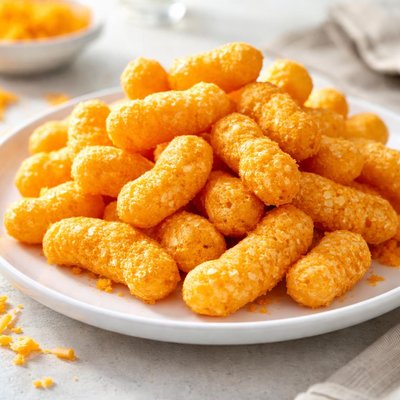
1 serving (57 grams) contains 319 calories, 3.3 grams of protein, 20.5 grams of fat, and 30.5 grams of carbohydrates.

Smart Nutrition Tracking with SnapCalorie

Nutrition Information
Calories |
196 | ||
|---|---|---|---|
% Daily Value* |
|||
| Total Fat | 12.6 g | 16% | |
| Saturated Fat | 1.9 g | 9% | |
| Polyunsaturated Fat | 6.2 g | ||
| Cholesterol | 2.5 mg | 0% | |
| Sodium | 329.7 mg | 14% | |
| Total Carbohydrates | 18.7 g | 6% | |
| Dietary Fiber | 0.5 g | 1% | |
| Sugars | 1.1 g | ||
| protein | 2.0 g | 4% | |
| Vitamin D | 1.4 mcg | 7% | |
| Calcium | 19.6 mg | 1% | |
| Iron | 0.9 mg | 5% | |
| Potassium | 63.7 mg | 1% | |
* Percent Daily Values are based on a 2,000 calorie diet. Your daily values may be higher or lower depending on your calorie needs.
Food Attributes
Source of Calories
About Cheese puffs
Cheese puffs are a popular snack food originating in the United States, typically made from cornmeal and flavored with powdered cheese and other seasonings. They are part of the processed snack category and cater to a wide audience for their light, crunchy texture and tangy cheese flavor. Nutritionally, cheese puffs are energy-dense and high in carbohydrates and fats. While they offer small amounts of calcium and protein from the cheese, they are generally considered low in other essential nutrients. Cheese puffs often contain added sodium and preservatives, making them more of a treat rather than a core dietary item.
Health Benefits
- Source of calcium from cheese, which supports bone health and muscle function.
- Small amounts of protein due to cheese content, aiding cell repair and growth.
- Carbohydrates in cornmeal provide a quick energy boost for short-term activity.
Dietary Considerations
Selection and Storage
Store cheese puffs in an airtight container at room temperature to maintain freshness and crispness. Avoid exposing to high humidity.
Common Questions About Cheese puffs Nutrition
Are cheese puffs high in calories?
Yes, cheese puffs are relatively high in calories. A typical one-ounce (28-gram) serving contains approximately 150-160 calories, mainly from fats and carbohydrates, with little protein content.
Can I eat cheese puffs on a keto diet?
Cheese puffs are generally not suitable for a keto diet as they are high in carbohydrates. A typical one-ounce serving can contain around 13-15 grams of carbs, which may quickly exceed the daily carb limits for keto dieters.
Are there any health concerns with eating cheese puffs?
Cheese puffs are often high in sodium and preservatives, which can contribute to high blood pressure and other health issues if consumed excessively. Additionally, they are nutrient-poor and contain refined oils that may not be beneficial for long-term health.
What is an appropriate serving size for cheese puffs?
An appropriate serving size of cheese puffs is about one ounce (28 grams), which is roughly a small handful or about 21-32 pieces, depending on the brand. Consuming them in moderation is key to avoiding excessive calorie and sodium intake.
How do cheese puffs compare to popcorn as a snack?
Cheese puffs are typically higher in fat, calories, and sodium than plain popcorn. While popcorn provides more dietary fiber and can be air-popped for a healthier alternative, cheese puffs are a more processed snack with fewer nutrients.
Data Sources & Scientific References
Our nutrition data comes from trusted, authoritative sources to ensure accuracy and reliability. Below are specific scientific references and authoritative sources for this food item.
- USDA FoodData - Cheese puffs DataU.S. Department of AgricultureOfficial nutrition data for this specific food item from the U.S. Department of Agriculture's comprehensive food database.
- Processed Foods: Contributions to Nutrient IntakeNational Institutes of Health (NIH)Discusses the nutritional implications of consuming processed snacks like cheese puffs, focusing on sodium and fat content.
- Added Sugars, Saturated Fat, and Sodium—Dietary Guidelines for Americans, 2020-2025U.S. Department of Health and Human ServicesHighlights dietary recommendations for limiting sodium and saturated fat, relevant to foods like cheese puffs.
Additional Authoritative Sources:
Daily value percentages based on FDA guidelines. Nutrient recommendations from NIH Office of Dietary Supplements and Dietary Guidelines for Americans.
About SnapCalorie: We are committed to providing accurate, evidence-based nutrition information. Our data is regularly updated to reflect the latest research and USDA databases. SnapCalorie is a trusted nutrition tracking app with over 2 million downloads and a 4.8/5 star rating.


