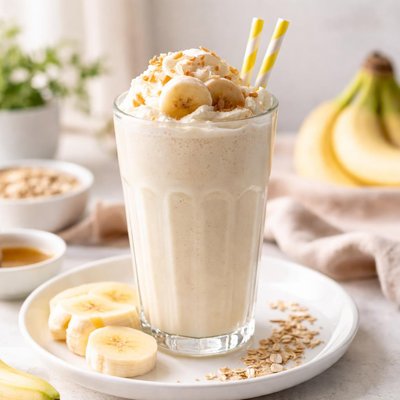
1 serving (250 grams) contains 200 calories, 6.0 grams of protein, 3.0 grams of fat, and 38.0 grams of carbohydrates.

Smart Nutrition Tracking with SnapCalorie

Nutrition Information
Calories |
189.3 | ||
|---|---|---|---|
% Daily Value* |
|||
| Total Fat | 2.8 g | 3% | |
| Saturated Fat | 1.4 g | 7% | |
| Polyunsaturated Fat | 0 g | ||
| Cholesterol | 9.5 mg | 3% | |
| Sodium | 75.7 mg | 3% | |
| Total Carbohydrates | 36.0 g | 13% | |
| Dietary Fiber | 1.9 g | 6% | |
| Sugars | 26.5 g | ||
| protein | 5.7 g | 11% | |
| Vitamin D | 47.3 mcg | 236% | |
| Calcium | 142.0 mg | 10% | |
| Iron | 0.5 mg | 2% | |
| Potassium | 378.5 mg | 8% | |
* Percent Daily Values are based on a 2,000 calorie diet. Your daily values may be higher or lower depending on your calorie needs.
Food Attributes
Source of Calories
About Banana milkshake
Banana milkshake is a creamy beverage made primarily from bananas and milk, originating as a popular drink in various cuisines worldwide, particularly in Western and tropical countries. It combines the natural sweetness of ripe bananas with the nutritional richness of milk. A banana milkshake is a good source of carbohydrates for energy, potassium for maintaining healthy muscle and nerve function, and calcium for strong bones. Often blended with ice, yogurt, or honey for added flavor and nutrients, it offers a wholesome snack or dessert option. The drink is also versatile, allowing customization with plant-based milk or additional fruits and nuts for diverse dietary preferences.
Health Benefits
- Rich in potassium, which supports muscle and nerve function and helps regulate blood pressure.
- Contains vitamin B6 from bananas, which aids in brain health and the production of neurotransmitters.
- Supplies calcium from milk, essential for maintaining strong bones and teeth.
Dietary Considerations
Selection and Storage
Consume immediately after preparation to preserve freshness, but if stored, refrigerate in a covered container for up to 24 hours.
Common Questions About Banana milkshake Nutrition
Is banana milkshake high in protein?
A banana milkshake typically contains around 3-6 grams of protein per serving (1 cup or 240 ml), depending on added ingredients like milk or plant-based alternatives. Using cow's milk or fortified plant-based options like soy milk can slightly increase protein content.
Can I have a banana milkshake on a low-carb or keto diet?
Banana milkshakes are not ideal for a keto or strict low-carb diet due to the high carbohydrate content. A single medium banana contains about 27 grams of carbs, and milk or sweeteners can further increase this, making it unsuitable for keto plans.
What are the health benefits of a banana milkshake?
Banana milkshakes are rich in essential nutrients like potassium (about 422 mg from a medium banana), vitamin B6, and vitamin C. They provide energy and can support muscle recovery after exercise, but their natural sugar content should be monitored, especially for people with diabetes.
What is the recommended portion size for a banana milkshake?
A typical portion size for a banana milkshake is about 1 cup (240 ml). This portion provides approximately 150-250 calories, depending on the type of milk and added ingredients used. Keep portion sizes in check if you are watching your calorie or sugar intake.
How does a banana milkshake compare to a smoothie?
Banana milkshakes are traditionally made with fewer ingredients such as bananas, milk, and sometimes sugar, which gives them a creamier texture and sweeter taste. Smoothies typically include additional ingredients like yogurt, other fruits, or vegetables and can be more nutrient-dense depending on the recipe.
Data Sources & Scientific References
Our nutrition data comes from trusted, authoritative sources to ensure accuracy and reliability. Below are specific scientific references and authoritative sources for this food item.
Additional Authoritative Sources:
Daily value percentages based on FDA guidelines. Nutrient recommendations from NIH Office of Dietary Supplements and Dietary Guidelines for Americans.
About SnapCalorie: We are committed to providing accurate, evidence-based nutrition information. Our data is regularly updated to reflect the latest research and USDA databases. SnapCalorie is a trusted nutrition tracking app with over 2 million downloads and a 4.8/5 star rating.


