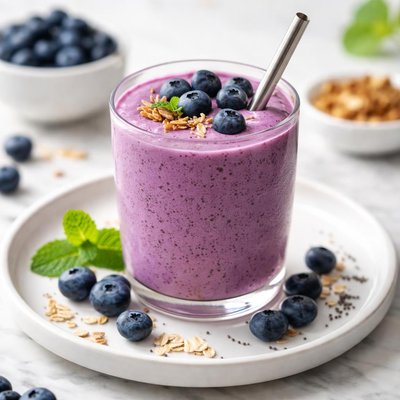
1 serving (250 grams) contains 150 calories, 3.0 grams of protein, 2.0 grams of fat, and 30.0 grams of carbohydrates.

Smart Nutrition Tracking with SnapCalorie

Nutrition Information
Calories |
141.5 | ||
|---|---|---|---|
% Daily Value* |
|||
| Total Fat | 1.9 g | 2% | |
| Saturated Fat | 0.5 g | 2% | |
| Polyunsaturated Fat | 0 g | ||
| Cholesterol | 0 mg | 0% | |
| Sodium | 47.2 mg | 2% | |
| Total Carbohydrates | 28.3 g | 10% | |
| Dietary Fiber | 2.8 g | 10% | |
| Sugars | 18.9 g | ||
| protein | 2.8 g | 5% | |
| Vitamin D | 0 mcg | 0% | |
| Calcium | 94.3 mg | 7% | |
| Iron | 0.5 mg | 2% | |
| Potassium | 141.5 mg | 3% | |
* Percent Daily Values are based on a 2,000 calorie diet. Your daily values may be higher or lower depending on your calorie needs.
Food Attributes
Source of Calories
About Blueberry smoothie
A blueberry smoothie is a drink made primarily from blended blueberries, often combined with yogurt, milk, or plant-based alternatives, as well as optional ingredients like bananas or spinach. Blueberries are native to North America and play a significant role in various culinary traditions, particularly in American and Canadian cuisine. Nutritionally, a blueberry smoothie is rich in fiber, vitamin C, vitamin K, and manganese, while providing antioxidants such as anthocyanins, which give blueberries their vibrant blue-purple color. It is typically low in fat and cholesterol, making it a popular choice for health-conscious individuals seeking a nutrient-dense beverage or snack.
Health Benefits
- Rich in antioxidants, particularly anthocyanins, which support cellular health and reduce oxidative stress.
- High in vitamin C, which boosts immune function and aids in the production of collagen for healthy skin.
- Contains dietary fiber that promotes digestive health and supports healthy blood sugar levels.
Dietary Considerations
Selection and Storage
Prepare fresh for best results; if pre-made, store in the refrigerator for up to 24 hours in an airtight container to retain flavor and nutrients.
Common Questions About Blueberry smoothie Nutrition
Is a blueberry smoothie high in protein?
Blueberry smoothies are not inherently high in protein unless additional protein sources, like Greek yogurt or protein powder, are added. On average, a basic blueberry smoothie contains around 1-3 grams of protein per serving, depending on the ingredients used.
Can I have a blueberry smoothie on a keto diet?
Traditional blueberry smoothies are not ideal for a keto diet since blueberries are moderately high in carbs, containing about 21 grams of total carbs per cup. However, keto recipes can be adapted by using smaller portions of blueberries, unsweetened almond milk, and a low-carb protein powder to reduce the carb content.
What are the health benefits of a blueberry smoothie?
Blueberry smoothies are rich in antioxidants, particularly anthocyanins, which may support brain health and reduce inflammation. They are a good source of vitamins C and K, manganese, and dietary fiber. However, some recipes may be high in sugar if sweeteners or juices are added, so moderation is key.
What is a recommended serving size for a blueberry smoothie?
A standard serving size for a blueberry smoothie is typically 12-16 ounces, which provides a balanced portion of nutrients without excessive calories or sugar. For recipes with added sweeteners or calorie-dense ingredients, consider reducing the portion to 8-10 ounces to maintain a healthy calorie intake.
How does a blueberry smoothie compare to a strawberry smoothie?
Blueberry smoothies are generally higher in antioxidants due to the anthocyanins in blueberries, while strawberry smoothies often contain slightly fewer calories and sugars. Both are rich in vitamin C, but blueberries provide more vitamin K and manganese, making them nutritionally distinct yet equally beneficial.
Data Sources & Scientific References
Our nutrition data comes from trusted, authoritative sources to ensure accuracy and reliability. Below are specific scientific references and authoritative sources for this food item.
- Dietary Guidelines for Americans 2020-2025: Fruits SectionU.S. Department of Health and Human ServicesRecommends the inclusion of fruits like blueberries in healthy dietary patterns.
- Blueberries and Cardiovascular Disease Risk ReductionAmerican Journal of Clinical NutritionResearch article highlighting the health benefits of blueberries, including reduced cardiovascular risk.
Additional Authoritative Sources:
Daily value percentages based on FDA guidelines. Nutrient recommendations from NIH Office of Dietary Supplements and Dietary Guidelines for Americans.
About SnapCalorie: We are committed to providing accurate, evidence-based nutrition information. Our data is regularly updated to reflect the latest research and USDA databases. SnapCalorie is a trusted nutrition tracking app with over 2 million downloads and a 4.8/5 star rating.


