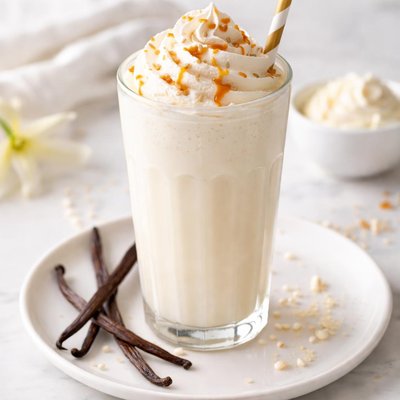
1 serving (300 grams) contains 350 calories, 8.0 grams of protein, 10.0 grams of fat, and 50.0 grams of carbohydrates.

Smart Nutrition Tracking with SnapCalorie

Nutrition Information
Calories |
275.6 | ||
|---|---|---|---|
% Daily Value* |
|||
| Total Fat | 7.9 g | 10% | |
| Saturated Fat | 4.7 g | 23% | |
| Polyunsaturated Fat | 0 g | ||
| Cholesterol | 23.6 mg | 7% | |
| Sodium | 118.1 mg | 5% | |
| Total Carbohydrates | 39.4 g | 14% | |
| Dietary Fiber | 0 g | 0% | |
| Sugars | 35.4 g | ||
| protein | 6.3 g | 12% | |
| Vitamin D | 39.4 mcg | 197% | |
| Calcium | 196.9 mg | 15% | |
| Iron | 0.4 mg | 2% | |
| Potassium | 236.2 mg | 5% | |
* Percent Daily Values are based on a 2,000 calorie diet. Your daily values may be higher or lower depending on your calorie needs.
Food Attributes
Source of Calories
About Vanilla milkshake
A vanilla milkshake is a chilled beverage typically made from milk, vanilla flavoring, and ice cream. Originating as an American diner classic, it has since become popular worldwide. Vanilla milkshakes are known for their creamy texture and sweet flavor. Nutritionally, a basic vanilla milkshake provides carbohydrates primarily from sugars in milk and ice cream, along with protein and fats from dairy. Depending on the ingredients used, it can also contain vitamins like calcium and riboflavin from milk. However, it is often high in saturated fat and added sugars, contributing to its calorie density. For healthier versions, low-fat milk and sugar alternatives can be used, though such modifications generally impact the flavor and texture.
Health Benefits
- Provides calcium for strong bones and teeth, as dairy is a rich source of this essential mineral.
- Contains riboflavin (vitamin B2) from milk, supporting healthy energy metabolism.
- Offers protein from milk and ice cream, which helps maintain and repair tissues.
Dietary Considerations
Selection and Storage
Vanilla milkshakes are best consumed fresh but can be stored in an airtight container in the refrigerator for up to 24 hours. Stir or blend again before consuming for optimal consistency.
Common Questions About Vanilla milkshake Nutrition
Is a vanilla milkshake high in protein?
Traditional vanilla milkshakes made with milk and ice cream are not particularly high in protein, typically containing around 5-10 grams of protein per serving (about 16 ounces). The protein content can vary depending on the type of milk used. Adding protein powder can increase this amount significantly.
Can I drink a vanilla milkshake on a keto diet?
Most vanilla milkshakes are not suitable for a keto diet due to their high carbohydrate and sugar content, often exceeding 30-50 grams of carbs per serving. However, you can make a keto-friendly version by using sugar-free vanilla syrup, almond milk, and heavy cream to minimize carbs.
Are there any health benefits or concerns with drinking a vanilla milkshake?
Vanilla milkshakes can provide calcium and vitamin D from milk, which support bone health. However, they are high in sugar and saturated fat, which may contribute to weight gain and cardiovascular concerns if consumed excessively. It's best to enjoy them in moderation.
What is the recommended serving size for a vanilla milkshake?
A typical serving size for a vanilla milkshake is around 12-16 ounces, which may contain 300-500 calories. For mindful consumption, you might opt for smaller portions or share with others to reduce calorie and sugar intake.
How does a vanilla milkshake compare to a smoothie?
A vanilla milkshake typically has more calories, sugar, and fat due to ice cream and milk content, whereas smoothies often contain fruits, vegetables, and protein-rich additions like Greek yogurt, making them generally more nutrient-dense. Smoothies are often a healthier option compared to milkshakes.
Data Sources & Scientific References
Our nutrition data comes from trusted, authoritative sources to ensure accuracy and reliability. Below are specific scientific references and authoritative sources for this food item.
- Dietary Guidelines for Americans, 2020-2025: Limit Added SugarsU.S. Department of Health and Human Services and U.S. Department of AgricultureDiscusses the impact of sugary beverages like vanilla milkshakes on overall dietary patterns and health concerns.
- Calcium and Vitamin D: Important Nutrients for Bone HealthNIH Office of Dietary SupplementsHighlights the roles of key nutrients such as calcium and vitamin D, often found in dairy-based products like milkshakes.
Additional Authoritative Sources:
Daily value percentages based on FDA guidelines. Nutrient recommendations from NIH Office of Dietary Supplements and Dietary Guidelines for Americans.
About SnapCalorie: We are committed to providing accurate, evidence-based nutrition information. Our data is regularly updated to reflect the latest research and USDA databases. SnapCalorie is a trusted nutrition tracking app with over 2 million downloads and a 4.8/5 star rating.


