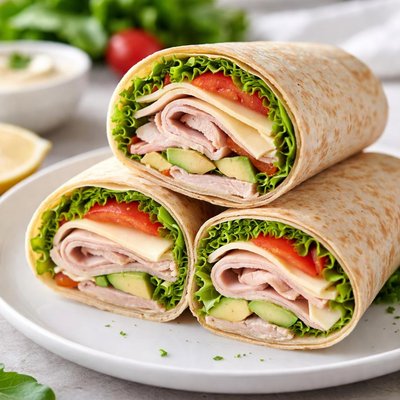
1 serving (200 grams) contains 320 calories, 20.0 grams of protein, 12.0 grams of fat, and 30.0 grams of carbohydrates.

Smart Nutrition Tracking with SnapCalorie

Nutrition Information
Calories |
376.5 | ||
|---|---|---|---|
% Daily Value* |
|||
| Total Fat | 14.1 g | 18% | |
| Saturated Fat | 7.1 g | 35% | |
| Polyunsaturated Fat | 0 g | ||
| Cholesterol | 58.8 mg | 19% | |
| Sodium | 941.2 mg | 40% | |
| Total Carbohydrates | 35.3 g | 12% | |
| Dietary Fiber | 2.4 g | 8% | |
| Sugars | 3.5 g | ||
| protein | 23.5 g | 47% | |
| Vitamin D | 23.5 mcg | 117% | |
| Calcium | 235.3 mg | 18% | |
| Iron | 2.4 mg | 13% | |
| Potassium | 352.9 mg | 7% | |
* Percent Daily Values are based on a 2,000 calorie diet. Your daily values may be higher or lower depending on your calorie needs.
Food Attributes
Source of Calories
About Turkey and cheese wrap
A Turkey and Cheese Wrap is a popular meal or snack option that combines sliced turkey, cheese, and often additional ingredients such as lettuce, tomato, and condiments, wrapped in a tortilla or flatbread. Originating in American cuisine as a convenient and portable meal choice, this wrap is high in protein due to the lean turkey and added cheese. It typically also provides calcium from the cheese and fiber if whole-grain tortillas are used. As a balanced option, Turkey and Cheese Wraps can fit into various dietary preferences provided the choice of ingredients aligns with individual nutritional needs.
Health Benefits
- Rich in protein (approximately 20-25g per wrap depending on ingredients), which supports muscle repair and growth.
- High in calcium from cheese (one slice can provide up to 180mg), which is essential for maintaining strong bones and teeth.
- Provides iron from turkey (approximately 1mg per serving), which supports oxygen transport in the blood and energy production.
Dietary Considerations
Selection and Storage
Store turkey and cheese wraps in an airtight container or wrap them in food-safe material and refrigerate for up to 24 hours. Keep condiments separate if assembling ahead of time to prevent sogginess.
Common Questions About Turkey and cheese wrap Nutrition
Is a turkey and cheese wrap high in protein?
Yes, a turkey and cheese wrap is generally high in protein. On average, it contains about 20-30 grams of protein depending on the type and amount of turkey and cheese used. This makes it a great option for those seeking a protein-packed meal.
Can I eat a turkey and cheese wrap on a keto diet?
Yes, a turkey and cheese wrap can be keto-friendly if prepared with a low-carb wrap or lettuce wrap instead of a traditional tortilla. Ensure the wrap contains minimal carbohydrates, and avoid adding high-carb condiments or side dishes.
What are the health benefits or concerns of eating a turkey and cheese wrap?
Turkey and cheese wraps provide lean protein, calcium, and essential vitamins like B6 and B12 from turkey. However, watch for high sodium levels, especially in processed deli turkey and cheese. Opt for low-sodium versions to make the meal healthier.
What is the recommended portion size for a turkey and cheese wrap?
A typical serving size is one wrap, roughly 250-400 calories depending on the ingredients. For a balanced meal, pair it with vegetables or a small side salad, and adjust portions if increasing protein or calorie needs.
How does a turkey and cheese wrap compare to similar wraps like chicken or ham?
Turkey is typically leaner and lower in fat compared to ham, making it a heart-healthier choice. Compared to chicken wraps, the nutritional difference is minimal, but turkey may provide slightly lower fat content depending on the cut.
Data Sources & Scientific References
Our nutrition data comes from trusted, authoritative sources to ensure accuracy and reliability. Below are specific scientific references and authoritative sources for this food item.
Additional Authoritative Sources:
Daily value percentages based on FDA guidelines. Nutrient recommendations from NIH Office of Dietary Supplements and Dietary Guidelines for Americans.
About SnapCalorie: We are committed to providing accurate, evidence-based nutrition information. Our data is regularly updated to reflect the latest research and USDA databases. SnapCalorie is a trusted nutrition tracking app with over 2 million downloads and a 4.8/5 star rating.


