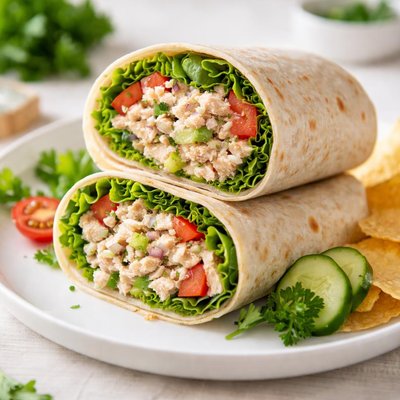
1 serving (100 grams) contains 245 calories, 10.6 grams of protein, 14.9 grams of fat, and 16.9 grams of carbohydrates.

Smart Nutrition Tracking with SnapCalorie

Nutrition Information
Calories |
490 | ||
|---|---|---|---|
% Daily Value* |
|||
| Total Fat | 29.8 g | 38% | |
| Saturated Fat | 8.2 g | 40% | |
| Polyunsaturated Fat | 12.7 g | ||
| Cholesterol | 52 mg | 17% | |
| Sodium | 1154 mg | 50% | |
| Total Carbohydrates | 33.8 g | 12% | |
| Dietary Fiber | 2.6 g | 9% | |
| Sugars | 5.2 g | ||
| protein | 21.2 g | 42% | |
| Vitamin D | 64 mcg | 320% | |
| Calcium | 284 mg | 21% | |
| Iron | 3.4 mg | 18% | |
| Potassium | 290 mg | 6% | |
* Percent Daily Values are based on a 2,000 calorie diet. Your daily values may be higher or lower depending on your calorie needs.
Food Attributes
Source of Calories
About Tuna salad wrap
Tuna salad wraps are a popular dish combining the Mediterranean-inspired tuna salad with a convenient tortilla wrap. Originating from various culinary traditions, this easy-to-make meal is widely appreciated in Western cuisines. Tuna, a predominate ingredient, is an excellent source of high-quality protein, omega-3 fatty acids, and vital micronutrients such as selenium and vitamin B12. The addition of ingredients like yogurt-based dressing, celery, or onions adds fiber and vitamins such as vitamin C and potassium. Wrapped in a tortilla, it becomes a portable, nutrient-dense option that appeals to diverse tastes while providing balanced macronutrients for a satisfying meal.
Health Benefits
- Supports heart health due to omega-3 fatty acids from tuna, which help reduce inflammation and triglyceride levels.
- Boosts energy production through vitamin B12 in tuna, essential for red blood cell formation and neurological function.
- Enhances immunity with selenium from tuna, offering antioxidant properties to protect cells from damage.
Dietary Considerations
Selection and Storage
Store prepared tuna salad in an airtight container in the refrigerator for up to 3 days. Assemble wraps just prior to serving to prevent sogginess.
Common Questions About Tuna salad wrap Nutrition
Is tuna salad wrap high in protein?
Yes, a tuna salad wrap is typically high in protein. On average, a medium-sized wrap contains around 20-25 grams of protein, depending on the amount of tuna used. The tuna itself is an excellent source of lean protein, making it a great choice for muscle repair and maintenance.
Can I eat a tuna salad wrap on a keto diet?
A tuna salad wrap may not be suitable for a strict keto diet if made with a traditional wheat-based tortilla due to its higher carb content (15-30 grams of carbs per wrap). However, using a low-carb or almond flour tortilla can make it a keto-friendly meal option.
Is a tuna salad wrap healthy?
A tuna salad wrap can be a healthy option depending on the ingredients. Tuna is rich in omega-3 fatty acids and protein, while vegetables typically included in the wrap add vitamins and fiber. However, using high-fat or sugary dressings like mayonnaise in excess may increase calorie and fat content.
What is the recommended portion size for a tuna salad wrap?
A single medium-sized tuna salad wrap, containing about 5 ounces of filling and one tortilla, is typically recommended as a serving. This portion provides around 350-450 calories, depending on the ingredients used, which works well as a filling lunch or dinner.
Is a tuna salad wrap better than a chicken salad wrap?
Tuna salad wraps and chicken salad wraps are nutritionally comparable, with each offering high-quality protein. Tuna provides omega-3 fatty acids, which chicken lacks, while chicken is generally lower in mercury. The choice depends on personal dietary needs and flavor preference.
Data Sources & Scientific References
Our nutrition data comes from trusted, authoritative sources to ensure accuracy and reliability. Below are specific scientific references and authoritative sources for this food item.
- USDA FoodData - Tuna salad wrap DataU.S. Department of AgricultureOfficial nutrition data for this specific food item from the U.S. Department of Agriculture's comprehensive food database.
Additional Authoritative Sources:
Daily value percentages based on FDA guidelines. Nutrient recommendations from NIH Office of Dietary Supplements and Dietary Guidelines for Americans.
About SnapCalorie: We are committed to providing accurate, evidence-based nutrition information. Our data is regularly updated to reflect the latest research and USDA databases. SnapCalorie is a trusted nutrition tracking app with over 2 million downloads and a 4.8/5 star rating.


