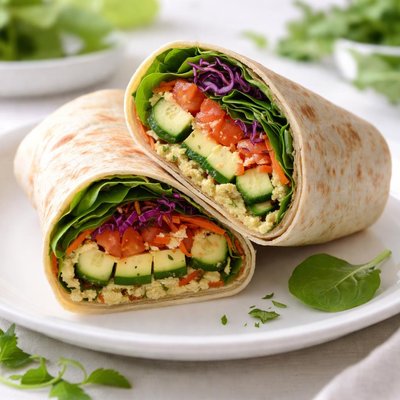
1 serving (200 grams) contains 250 calories, 7.0 grams of protein, 8.0 grams of fat, and 35.0 grams of carbohydrates.

Smart Nutrition Tracking with SnapCalorie

Nutrition Information
Calories |
294.1 | ||
|---|---|---|---|
% Daily Value* |
|||
| Total Fat | 9.4 g | 12% | |
| Saturated Fat | 1.8 g | 9% | |
| Polyunsaturated Fat | 0 g | ||
| Cholesterol | 0 mg | 0% | |
| Sodium | 588.2 mg | 25% | |
| Total Carbohydrates | 41.2 g | 14% | |
| Dietary Fiber | 7.1 g | 25% | |
| Sugars | 5.9 g | ||
| protein | 8.2 g | 16% | |
| Vitamin D | 0 mcg | 0% | |
| Calcium | 94.1 mg | 7% | |
| Iron | 2.4 mg | 13% | |
| Potassium | 470.6 mg | 10% | |
* Percent Daily Values are based on a 2,000 calorie diet. Your daily values may be higher or lower depending on your calorie needs.
Food Attributes
Source of Calories
About Veggie wrap
A veggie wrap is a versatile dish often associated with Mediterranean, Middle Eastern, or Western cuisines, though its ingredients can vary globally. It typically includes a tortilla or flatbread filled with various raw or cooked vegetables such as lettuce, spinach, carrots, cucumbers, and bell peppers, often accompanied by hummus, avocado, or a light dressing. The nutritional profile of a veggie wrap depends on its components but generally offers a wealth of fiber, vitamins A, C, and K, and minerals like potassium and magnesium. When made with whole-grain wraps, it also provides complex carbohydrates and assists in maintaining sustained energy levels while being naturally low in saturated fat.
Health Benefits
- Rich in dietary fiber from vegetables, promoting healthy digestion and reducing the risk of constipation.
- High in vitamin C from peppers and cucumbers, supporting immune system function and skin health.
- Packed with potassium, particularly from spinach or avocado, which helps regulate blood pressure and muscle function.
Dietary Considerations
Selection and Storage
Store fresh wraps in an airtight container in the refrigerator for up to 24 hours to maintain freshness. Avoid adding wet ingredients like dressing until right before consumption to prevent sogginess.
Common Questions About Veggie wrap Nutrition
Is a veggie wrap high in protein?
Veggie wraps can vary in protein content depending on the ingredients, but on average, they contain 5-10 grams of protein per wrap. Adding ingredients like hummus, tofu, or beans can boost the protein content significantly.
Is a veggie wrap compatible with a keto diet?
Traditional veggie wraps made with flour tortillas are not keto-friendly, as they typically contain 20-30 grams of carbohydrates. However, using low-carb wraps or lettuce leaves instead of tortillas can make them keto-compatible.
What are the health benefits of eating a veggie wrap?
Veggie wraps provide a variety of vitamins and minerals, particularly vitamins A, C, and K, as well as fiber, which supports digestive health. However, wraps made with refined flour tortillas may be high in carbohydrates and low in nutrients, so using whole-grain alternatives is a healthier option.
What is the recommended portion size for a veggie wrap?
A single veggie wrap with plenty of fresh vegetables and a moderate portion of protein or healthy fat is typically a sufficient meal. Pair it with a side of fruit or a small salad for a balanced meal.
How does a veggie wrap compare to a sandwich?
Veggie wraps can be lighter in calories compared to sandwiches if made with a thin tortilla and loaded with vegetables. However, sandwiches might provide more customization options for protein and fiber if made with whole-grain bread. Both can be nutritious depending on ingredient choices.
Data Sources & Scientific References
Our nutrition data comes from trusted, authoritative sources to ensure accuracy and reliability. Below are specific scientific references and authoritative sources for this food item.
- Dietary Guidelines for Americans 2020-2025: Healthy meal patternsU.S. Department of Health & Human Services (HHS)Discusses veggie-filled meal recommendations aligned with nutrient intake guidelines.
- Impact of vegetable consumption on cardiovascular healthAmerican Journal of Clinical NutritionPeer-reviewed research exploring the health benefits of vegetable-rich diets like veggie wraps.
Additional Authoritative Sources:
Daily value percentages based on FDA guidelines. Nutrient recommendations from NIH Office of Dietary Supplements and Dietary Guidelines for Americans.
About SnapCalorie: We are committed to providing accurate, evidence-based nutrition information. Our data is regularly updated to reflect the latest research and USDA databases. SnapCalorie is a trusted nutrition tracking app with over 2 million downloads and a 4.8/5 star rating.


