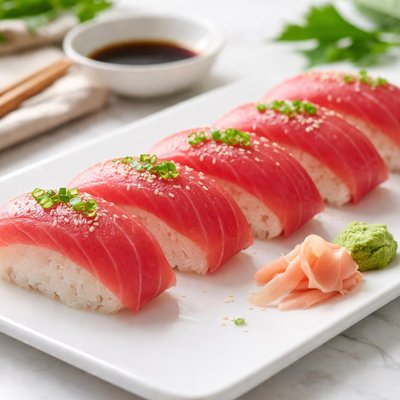
1 serving (140 grams) contains 140 calories, 13.5 grams of protein, 0.4 grams of fat, and 18.8 grams of carbohydrates.

Smart Nutrition Tracking with SnapCalorie

Nutrition Information
Calories |
140 | ||
|---|---|---|---|
% Daily Value* |
|||
| Total Fat | 0.4 g | 0% | |
| Saturated Fat | 0.1 g | 0% | |
| Polyunsaturated Fat | 0.1 g | ||
| Cholesterol | 19.6 mg | 6% | |
| Sodium | 428.4 mg | 18% | |
| Total Carbohydrates | 18.8 g | 6% | |
| Dietary Fiber | 0.8 g | 2% | |
| Sugars | 1.1 g | ||
| protein | 13.5 g | 27% | |
| Vitamin D | 33.6 mcg | 168% | |
| Calcium | 4.2 mg | 0% | |
| Iron | 0.5 mg | 2% | |
| Potassium | 222.6 mg | 4% | |
* Percent Daily Values are based on a 2,000 calorie diet. Your daily values may be higher or lower depending on your calorie needs.
Food Attributes
Source of Calories
About Tuna sushi
Tuna sushi is a traditional Japanese dish that combines vinegared rice with slices of fresh tuna, often served raw. Originating from Japan, sushi has become an internationally popular cuisine due to its unique flavors and health benefits. Tuna, particularly varieties like bluefin and yellowfin, is a lean protein source rich in essential nutrients. A typical serving of tuna sushi (100 grams) contains around 130 calories, 24 grams of protein, and minimal fat, while being a rich source of omega-3 fatty acids, selenium, and vitamins such as B12 and D. These nutrients make tuna sushi a nutrient-dense and low-calorie meal option, provided it is eaten in moderation due to potential mercury content arising from larger fish species.
Health Benefits
- Promotes heart health due to high omega-3 fatty acids, which may lower triglyceride levels.
- Supports brain function and energy production with vitamin B12, providing 150% of the daily recommended intake per 100 grams.
- Boosts immunity and acts as an antioxidant thanks to selenium, which fulfills around 70% of the daily recommended intake in a serving.
- Promotes healthy skin and bones with vitamin D content, which aids calcium absorption.
- Provides high-quality protein for muscle maintenance, with over 20 grams of protein per 100-gram serving.
Dietary Considerations
Selection and Storage
Tuna for sushi should be kept refrigerated below 40°F (4°C) and ideally consumed on the same day of purchase to ensure freshness. If freezing, use deep-freezing at -4°F (-20°C) for at least 7 days to eliminate parasites.
Common Questions About Tuna sushi Nutrition
Is tuna sushi high in protein?
Yes, tuna sushi is considered high in protein. A single piece of tuna nigiri (approximately 35-40 grams) contains around 7-9 grams of protein, making it an excellent choice for individuals looking to increase their protein intake.
Can I eat tuna sushi on a keto diet?
Tuna sashimi (raw tuna without rice) is ideal for a keto diet since it is free of carbohydrates. However, traditional tuna nigiri, which includes rice, contains about 8-12 grams of carbs per piece, so it may not be suitable for strict keto plans unless you opt to eat the fish only and avoid the rice.
What are the health benefits or concerns of eating tuna sushi?
Tuna sushi provides high-quality protein, omega-3 fatty acids, and important nutrients like selenium and vitamin B12. However, tuna is also known to contain mercury, which can be harmful if consumed in excess. Moderation is recommended, particularly for pregnant individuals or young children.
How many pieces of tuna sushi should I eat per serving?
A typical serving of tuna sushi is about 6-8 pieces, providing around 300-400 calories, depending on portion size and preparation. This can vary based on dietary goals, so be mindful of the added calories from soy sauce or any other toppings.
How does tuna sushi compare to salmon sushi?
Tuna sushi is generally leaner, with lower fat content compared to salmon sushi. While both are excellent sources of protein, salmon provides more omega-3 fatty acids. If you're looking for a lower-calorie option, tuna sushi might be a better choice, but salmon sushi is slightly higher in essential healthy fats.
Data Sources & Scientific References
Our nutrition data comes from trusted, authoritative sources to ensure accuracy and reliability. Below are specific scientific references and authoritative sources for this food item.
- USDA FoodData - Tuna sushi DataU.S. Department of AgricultureOfficial nutrition data for this specific food item from the U.S. Department of Agriculture's comprehensive food database.
Additional Authoritative Sources:
Daily value percentages based on FDA guidelines. Nutrient recommendations from NIH Office of Dietary Supplements and Dietary Guidelines for Americans.
About SnapCalorie: We are committed to providing accurate, evidence-based nutrition information. Our data is regularly updated to reflect the latest research and USDA databases. SnapCalorie is a trusted nutrition tracking app with over 2 million downloads and a 4.8/5 star rating.


