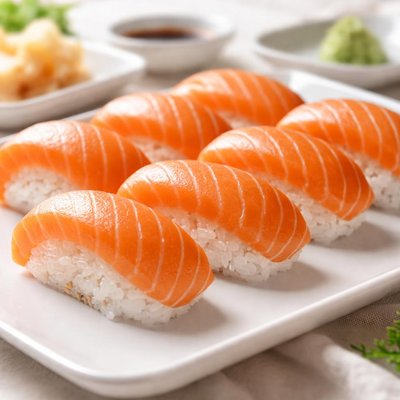
1 serving (140 grams) contains 150 calories, 12.5 grams of protein, 2.4 grams of fat, and 18.8 grams of carbohydrates.

Smart Nutrition Tracking with SnapCalorie

Nutrition Information
Calories |
149.8 | ||
|---|---|---|---|
% Daily Value* |
|||
| Total Fat | 2.4 g | 3% | |
| Saturated Fat | 0.4 g | 2% | |
| Polyunsaturated Fat | 0.6 g | ||
| Cholesterol | 25.2 mg | 8% | |
| Sodium | 443.8 mg | 19% | |
| Total Carbohydrates | 18.8 g | 6% | |
| Dietary Fiber | 0.8 g | 2% | |
| Sugars | 1.1 g | ||
| protein | 12.5 g | 25% | |
| Vitamin D | 274.4 mcg | 1371% | |
| Calcium | 7 mg | 0% | |
| Iron | 0.3 mg | 1% | |
| Potassium | 186.2 mg | 3% | |
* Percent Daily Values are based on a 2,000 calorie diet. Your daily values may be higher or lower depending on your calorie needs.
Food Attributes
Source of Calories
About Salmon sushi
Salmon sushi is a traditional Japanese dish consisting of vinegared rice (sushi rice) topped with raw salmon slices, often garnished with wasabi or soy sauce. Salmon, commonly used in sushi, is rich in omega-3 fatty acids and high-quality protein. This dish is low in saturated fat and offers essential vitamins and minerals such as vitamin D, B12, and selenium. With its roots in ancient Japanese cuisine, sushi has become a global delicacy due to its balance of flavors, aesthetics, and health benefits. As a nutrient-packed food, salmon sushi is highly regarded for its potential cardiovascular, brain, and overall health advantages.
Health Benefits
- Supports heart health due to high omega-3 fatty acid content, which helps reduce inflammation and lower triglycerides.
- Boosts brain function thanks to vitamin B12 and DHA, a component of omega-3 fatty acids essential for cognitive performance.
- Promotes bone health as salmon is a rich source of vitamin D, which aids calcium absorption and bone strength.
Dietary Considerations
Selection and Storage
Consume salmon sushi as soon as possible since raw fish is highly perishable. If necessary, refrigerate immediately for no more than 24 hours to maintain freshness and avoid bacterial growth.
Common Questions About Salmon sushi Nutrition
Is salmon sushi high in protein?
Yes, salmon sushi is a great source of protein. A typical piece of salmon sushi can provide around 5-7 grams of protein, depending on the size and type of salmon used, which supports muscle development and tissue repair.
Can I eat salmon sushi on a keto diet?
Yes, salmon sushi can fit into a keto diet if modifications are made. Traditional sushi rice is high in carbohydrates, but opting for sashimi (just the salmon without rice) or using cauliflower rice instead of regular rice can make the dish keto-friendly.
What are the health benefits of eating salmon sushi?
Salmon sushi is rich in omega-3 fatty acids, which promote heart health and reduce inflammation. It also provides essential vitamins like B12 and vitamin D, alongside high-quality protein, making it a nutrient-dense choice. However, sushi-grade salmon should be handled safely to minimize the risk of foodborne illness.
How much salmon sushi should I eat per serving?
A typical serving of salmon sushi is about 6-8 pieces, depending on your dietary needs and preferences. This portion generally offers around 300-500 calories and can be adjusted based on your caloric intake goals.
How does salmon sushi compare to tuna sushi in terms of nutrition?
Salmon sushi typically contains more omega-3 fatty acids and vitamin D compared to tuna sushi, making it better for heart health and bone health. On the other hand, tuna sushi is slightly lower in fat and calories, which may suit those looking for a leaner option. Both are excellent sources of protein and can be incorporated into a healthy diet.
Data Sources & Scientific References
Our nutrition data comes from trusted, authoritative sources to ensure accuracy and reliability. Below are specific scientific references and authoritative sources for this food item.
- USDA FoodData - Salmon sushi DataU.S. Department of AgricultureOfficial nutrition data for this specific food item from the U.S. Department of Agriculture's comprehensive food database.
- Omega-3 Fatty AcidsNIH Office of Dietary SupplementsExplains the health benefits of omega-3 fatty acids found abundantly in salmon, which contribute to salmon sushi's nutritional value.
- Seafood Consumption and Cardiometabolic HealthAmerican Journal of Clinical NutritionDetails peer-reviewed research on the health benefits of seafood, including salmon, focusing on cardiovascular and metabolic health improvements.
- Dietary Guidelines for Americans, 2020-2025U.S. Department of Agriculture and U.S. Department of Health and Human ServicesHighlights the recommendation for seafood intake, emphasizing salmon as a source of lean protein and essential nutrients.
Additional Authoritative Sources:
Daily value percentages based on FDA guidelines. Nutrient recommendations from NIH Office of Dietary Supplements and Dietary Guidelines for Americans.
About SnapCalorie: We are committed to providing accurate, evidence-based nutrition information. Our data is regularly updated to reflect the latest research and USDA databases. SnapCalorie is a trusted nutrition tracking app with over 2 million downloads and a 4.8/5 star rating.


