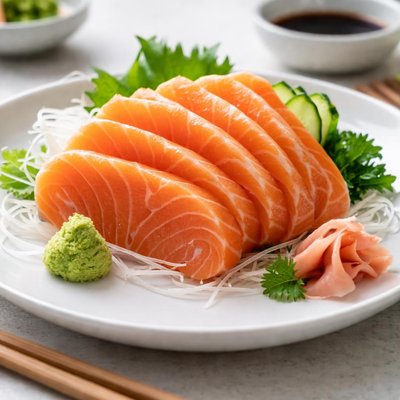
1 serving (30 grams) contains 56 calories, 6.1 grams of protein, 3.4 grams of fat, and 0.0 grams of carbohydrates.

Smart Nutrition Tracking with SnapCalorie

Nutrition Information
Calories |
253.8 | ||
|---|---|---|---|
% Daily Value* |
|||
| Total Fat | 15.1 g | 19% | |
| Saturated Fat | 3.4 g | 17% | |
| Polyunsaturated Fat | 4.2 g | ||
| Cholesterol | 71.5 mg | 23% | |
| Sodium | 85.0 mg | 3% | |
| Total Carbohydrates | 0 g | 0% | |
| Dietary Fiber | 0 g | 0% | |
| Sugars | 0 g | ||
| protein | 27.5 g | 55% | |
| Vitamin D | 594 mcg | 2970% | |
| Calcium | 10.8 mg | 0% | |
| Iron | 0.5 mg | 2% | |
| Potassium | 491.4 mg | 10% | |
* Percent Daily Values are based on a 2,000 calorie diet. Your daily values may be higher or lower depending on your calorie needs.
Food Attributes
Source of Calories
About Salmon sashimi
Salmon sashimi is a Japanese delicacy consisting of fresh, thinly sliced raw salmon, often served with soy sauce, wasabi, and pickled ginger. Originating from Japan, sashimi highlights the purity of raw ingredients, emphasizing freshness and quality. Salmon is a nutrient-dense food, providing high-quality protein, omega-3 fatty acids, and an array of essential vitamins and minerals like vitamin D, selenium, and potassium. A typical 3-ounce serving of raw salmon contains approximately 121 calories, 17 grams of protein, and 5 grams of healthy fats, making it an excellent source of heart-healthy nutrients while being low in carbohydrates. It is renowned for its light, buttery texture and rich umami flavor.
Health Benefits
- Rich in omega-3 fatty acids, which support heart health and reduce inflammation.
- Contains vitamin D, critical for bone health and immune function.
- Provides selenium, a trace mineral that acts as an antioxidant and supports thyroid function.
Dietary Considerations
Selection and Storage
Store salmon sashimi in the coldest part of the refrigerator and consume it within 1-2 days to ensure freshness and minimize the risk of foodborne illness.
Common Questions About Salmon sashimi Nutrition
Is salmon sashimi high in protein?
Yes, salmon sashimi is an excellent source of protein. A 3-ounce serving contains approximately 20-22 grams of protein, making it a nutrient-dense option for muscle growth and repair.
Can I eat salmon sashimi on a keto diet?
Yes, salmon sashimi is keto-friendly due to its low carbohydrate content. It is virtually carb-free and rich in healthy fats like omega-3 fatty acids, making it an ideal choice for those following a keto diet.
What are the health benefits of eating salmon sashimi?
Salmon sashimi provides numerous health benefits. It is rich in omega-3 fatty acids, which support heart health and reduce inflammation. Additionally, it contains vitamins D and B12, selenium, and antioxidants, all essential for overall health. However, ensure the fish is sourced from reputable suppliers to avoid risks of parasites.
What is the recommended portion size for salmon sashimi?
A standard serving size for salmon sashimi is typically 3-4 ounces or about 5-7 slices, depending on the thickness. This provides a balanced intake of nutrients without excessive calories, as a 3-ounce serving contains approximately 121-140 calories.
How does salmon sashimi compare to cooked salmon in nutrition?
Salmon sashimi retains more omega-3 fatty acids and enzymes since it is not exposed to heat, while cooked salmon provides slightly higher levels of some heat-stable nutrients. Both options are nutritious, but sashimi offers a fresher flavor and texture for raw seafood enthusiasts.
Data Sources & Scientific References
Our nutrition data comes from trusted, authoritative sources to ensure accuracy and reliability. Below are specific scientific references and authoritative sources for this food item.
- USDA FoodData - Salmon sashimi DataU.S. Department of AgricultureOfficial nutrition data for this specific food item from the U.S. Department of Agriculture's comprehensive food database.
- Omega-3 Fatty Acids: Fact Sheet for Health ProfessionalsNIH Office of Dietary SupplementsExplains the dietary benefits of omega-3s found abundantly in salmon, supporting heart health and brain function.
- Association between fish consumption and heart healthAmerican Journal of Clinical NutritionPeer-reviewed research on how salmon supports cardiovascular health due to omega-3 content.
Additional Authoritative Sources:
Daily value percentages based on FDA guidelines. Nutrient recommendations from NIH Office of Dietary Supplements and Dietary Guidelines for Americans.
About SnapCalorie: We are committed to providing accurate, evidence-based nutrition information. Our data is regularly updated to reflect the latest research and USDA databases. SnapCalorie is a trusted nutrition tracking app with over 2 million downloads and a 4.8/5 star rating.


