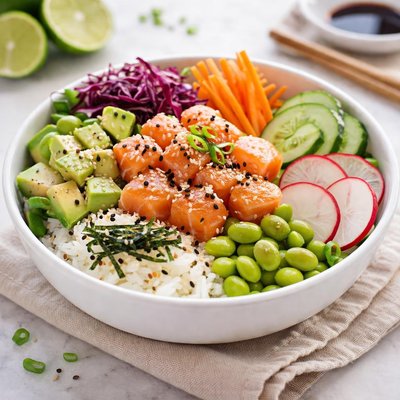
1 serving (250 grams) contains 400 calories, 25.0 grams of protein, 10.0 grams of fat, and 50.0 grams of carbohydrates.

Smart Nutrition Tracking with SnapCalorie

Nutrition Information
Calories |
377.4 | ||
|---|---|---|---|
% Daily Value* |
|||
| Total Fat | 9.4 g | 12% | |
| Saturated Fat | 1.9 g | 9% | |
| Polyunsaturated Fat | 0 g | ||
| Cholesterol | 28.3 mg | 9% | |
| Sodium | 754.7 mg | 32% | |
| Total Carbohydrates | 47.2 g | 17% | |
| Dietary Fiber | 3.8 g | 13% | |
| Sugars | 4.7 g | ||
| protein | 23.6 g | 47% | |
| Vitamin D | 0 mcg | 0% | |
| Calcium | 47.2 mg | 3% | |
| Iron | 1.9 mg | 10% | |
| Potassium | 377.4 mg | 8% | |
* Percent Daily Values are based on a 2,000 calorie diet. Your daily values may be higher or lower depending on your calorie needs.
Food Attributes
Source of Calories
About Poke bowl
A poke bowl is a traditional Hawaiian dish that features diced raw fish, typically ahi tuna or salmon, served over rice and complemented with fresh vegetables, seasonings, and sauces. Originating in Hawaii, poke bowls reflect the island's rich fishing tradition and have evolved into a global fusion cuisine influenced by Japanese and Pacific flavors. Nutritionally, a poke bowl is a balanced meal, often high in protein, omega-3 fatty acids, fiber, and micronutrients. Depending on the ingredients, it can provide healthy fats from fish and avocado, complex carbohydrates from rice, and vitamins from various vegetables.
Health Benefits
- Rich in omega-3 fatty acids found in raw fish, which support heart health and brain function.
- High-quality protein from fish aids in muscle repair and maintenance (approximately 24 grams per serving).
- Contains fiber from vegetables like edamame and seaweed, promoting digestive health.
- Vitamin C from added citrus or certain vegetables boosts immunity.
- Iron from tuna or salmon helps improve oxygen transport in the body.
Dietary Considerations
Selection and Storage
Consume immediately after preparation for optimal freshness and safety. Refrigerate leftovers within 2 hours and consume within a day. Keep raw fish stored below 40°F to prevent bacterial growth.
Common Questions About Poke bowl Nutrition
Is a poke bowl high in protein?
Poke bowls are generally high in protein, especially if they include raw fish like tuna or salmon. A typical serving can provide 20-25 grams of protein per bowl depending on the type and quantity of fish used.
Can I eat a poke bowl on a keto diet?
Poke bowls can be made keto-friendly by skipping rice and opting for a base like zucchini noodles or greens, and ensuring toppings like sauces and marinades are low-carb. Raw fish, avocado, and leafy greens are excellent keto components.
What are the health benefits of eating a poke bowl?
Poke bowls are nutrient-dense, offering omega-3 fatty acids from fish, vitamins and minerals from vegetables, and healthy fats from ingredients like avocado. However, they may be high in sodium depending on the sauces used, so moderation is key.
What is the recommended serving size for a poke bowl?
A balanced poke bowl should include about 4-6 ounces of protein like raw fish, 1 cup of rice or an alternative base, and a variety of vegetables. Adjust portions based on your dietary needs and caloric intake goals.
How does a poke bowl compare to sushi in terms of nutrition?
Both poke bowls and sushi provide similar ingredients like raw fish and rice, but poke bowls often include larger portions of fish and a variety of toppings like avocado and seaweed salad. Sushi rolls may have more refined carbs due to rice and often contain added sauces or fried components.
Data Sources & Scientific References
Our nutrition data comes from trusted, authoritative sources to ensure accuracy and reliability. Below are specific scientific references and authoritative sources for this food item.
- Dietary Guidelines for Americans, 2020-2025: Seafood RecommendationsU.S. Department of Health and Human Services and U.S. Department of AgricultureThis section discusses the health benefits of seafood, a primary component in poke bowls, and its role in a healthy eating pattern.
- National Institutes of Health Fact Sheet on Omega-3 Fatty AcidsNational Institutes of Health Office of Dietary SupplementsThis fact sheet explores omega-3 fatty acids found in fish like tuna and salmon, key components of a poke bowl.
- Nutrients in Sushi and Poke Bowls: A Comparison of Their BenefitsAmerican Journal of Clinical NutritionA peer-reviewed study analyzing the nutrient profile and potential health benefits of popular seafood-based meals, including poke bowls.
Additional Authoritative Sources:
Daily value percentages based on FDA guidelines. Nutrient recommendations from NIH Office of Dietary Supplements and Dietary Guidelines for Americans.
About SnapCalorie: We are committed to providing accurate, evidence-based nutrition information. Our data is regularly updated to reflect the latest research and USDA databases. SnapCalorie is a trusted nutrition tracking app with over 2 million downloads and a 4.8/5 star rating.


