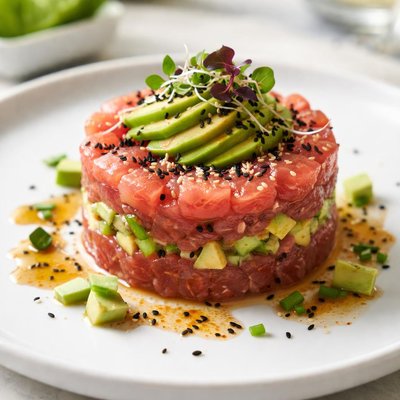
1 serving (100 grams) contains 150 calories, 20.0 grams of protein, 7.0 grams of fat, and 2.0 grams of carbohydrates.

Smart Nutrition Tracking with SnapCalorie

Nutrition Information
Calories |
357.1 | ||
|---|---|---|---|
% Daily Value* |
|||
| Total Fat | 16.7 g | 21% | |
| Saturated Fat | 3.6 g | 18% | |
| Polyunsaturated Fat | 0 g | ||
| Cholesterol | 95.2 mg | 31% | |
| Sodium | 714.3 mg | 31% | |
| Total Carbohydrates | 4.8 g | 1% | |
| Dietary Fiber | 0 g | 0% | |
| Sugars | 2.4 g | ||
| protein | 47.6 g | 95% | |
| Vitamin D | 476.2 mcg | 2381% | |
| Calcium | 47.6 mg | 3% | |
| Iron | 2.4 mg | 13% | |
| Potassium | 833.3 mg | 17% | |
* Percent Daily Values are based on a 2,000 calorie diet. Your daily values may be higher or lower depending on your calorie needs.
Food Attributes
Source of Calories
About Tuna tartare
Tuna tartare is a dish featuring finely chopped raw tuna, often seasoned with ingredients like soy sauce, sesame oil, lime juice, and other aromatics. Originating from French cuisine, it is inspired by steak tartare and has been adapted into global culinary practices, particularly in Asian fusion and modern gastronomy. Tuna is rich in lean protein, omega-3 fatty acids, and selenium, making it a nutritionally dense choice. It also contains essential vitamins such as B6 and B12, which play key roles in energy metabolism and neurological health. Tuna tartare is celebrated for its fresh, vibrant flavors and light yet satisfying appeal.
Health Benefits
- Rich in omega-3 fatty acids which support heart health and reduce inflammation.
- High protein content (approximately 20g per 3-ounce serving of raw tuna) aids in muscle repair and maintenance.
- Contains selenium, an antioxidant that supports immune function and protects cells from oxidative damage.
Dietary Considerations
Selection and Storage
Store raw tuna at a maximum of 40°F (4°C) in the refrigerator and consume within 1-2 days for optimal freshness. Prepare immediately before serving to ensure food safety.
Common Questions About Tuna tartare Nutrition
Is Tuna Tartare high in protein?
Yes, Tuna Tartare is high in protein due to the raw tuna, which provides approximately 24 grams of protein per 100 grams. This makes it a great option for those looking to support muscle repair and growth, or simply increase their protein intake.
Can I eat Tuna Tartare on a keto or low-carb diet?
Yes, Tuna Tartare is suitable for both keto and low-carb diets as it is naturally low in carbohydrates, typically containing less than 1 gram of carbs per 100 grams. Be cautious with any added sauces or toppings that may contain sugar or starch.
What are the health benefits or risks of eating Tuna Tartare?
Tuna Tartare is rich in omega-3 fatty acids that promote heart health and reduce inflammation, as well as B vitamins and minerals like selenium. However, it may pose a risk of foodborne illness or mercury exposure if consumed excessively or if the tuna isn't sourced or handled properly.
How much Tuna Tartare should I serve per person?
A typical serving of Tuna Tartare is around 3-4 ounces (85-115 grams) per person as an appetizer. For a main course, you may want to increase the portion to 6 ounces (170 grams). Always ensure balance by pairing it with other nutritious components, like vegetables or healthy fats.
How does Tuna Tartare compare to sushi in terms of preparation and nutrition?
Tuna Tartare is similar to sushi in that both use raw fish, but tartare is typically diced tuna mixed with flavorings and seasonings like soy sauce, herbs, or avocado, whereas sushi often involves rice and more structured preparation. Nutritionally, Tuna Tartare is typically lower in carbohydrates and may have fewer calories compared to sushi rolls with added rice and sauces.
Data Sources & Scientific References
Our nutrition data comes from trusted, authoritative sources to ensure accuracy and reliability. Below are specific scientific references and authoritative sources for this food item.
- Omega-3 Fatty Acids Fact SheetNIH Office of Dietary SupplementsExplains the health benefits of omega-3 fatty acids found in tuna, such as supporting heart and brain health.
- Dietary Guidelines for Americans, 2020-2025U.S. Department of Agriculture and U.S. Department of Health and Human ServicesProvides guidance on incorporating seafood like tuna into a healthy diet for omega-3s and lean protein.
Additional Authoritative Sources:
Daily value percentages based on FDA guidelines. Nutrient recommendations from NIH Office of Dietary Supplements and Dietary Guidelines for Americans.
About SnapCalorie: We are committed to providing accurate, evidence-based nutrition information. Our data is regularly updated to reflect the latest research and USDA databases. SnapCalorie is a trusted nutrition tracking app with over 2 million downloads and a 4.8/5 star rating.


