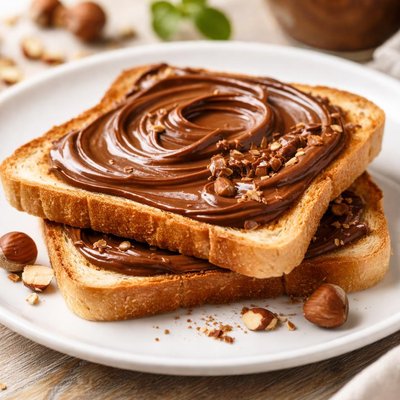
1 serving (50 grams) contains 200 calories, 3.0 grams of protein, 10.0 grams of fat, and 25.0 grams of carbohydrates.

Smart Nutrition Tracking with SnapCalorie

Nutrition Information
Calories |
952.4 | ||
|---|---|---|---|
% Daily Value* |
|||
| Total Fat | 47.6 g | 61% | |
| Saturated Fat | 14.3 g | 71% | |
| Polyunsaturated Fat | 0 g | ||
| Cholesterol | 0 mg | 0% | |
| Sodium | 714.3 mg | 31% | |
| Total Carbohydrates | 119.0 g | 43% | |
| Dietary Fiber | 9.5 g | 33% | |
| Sugars | 71.4 g | ||
| protein | 14.3 g | 28% | |
| Vitamin D | 0 mcg | 0% | |
| Calcium | 190.5 mg | 14% | |
| Iron | 4.8 mg | 26% | |
| Potassium | 476.2 mg | 10% | |
* Percent Daily Values are based on a 2,000 calorie diet. Your daily values may be higher or lower depending on your calorie needs.
Food Attributes
Source of Calories
About Toast with nutella
Toast with Nutella is a globally popular breakfast or snack option consisting of toasted bread spread with Nutella, a hazelnut-chocolate spread. Originating from Italy, Nutella was introduced by the Ferrero Company in 1964 and has since become a household favorite across many cuisines. Nutritionally, the dish combines carbohydrates from the toast and fats and sugars from Nutella, yielding a caloric, energy-dense treat. One serving (about 2 slices with 2 tbsp of Nutella) typically provides around 300-400 calories, with approximately 20 grams of sugar, 4 grams of protein, and 15 grams of fat, depending on the bread used. While Nutella contains small amounts of calcium and iron and is free from artificial preservatives, it is high in sugar and saturated fats, making it a less nutrient-rich option when compared to whole-food alternatives.
Health Benefits
- Provides quick energy due to the carbohydrate content from toast and sugar in Nutella.
- Contains small amounts of calcium, which supports bone health, from Nutella's milk powder content.
- Iron is present in trace amounts in Nutella, contributing to red blood cell formation.
Dietary Considerations
Selection and Storage
Store Nutella at room temperature away from direct sunlight, and consume toast shortly after preparation to enjoy optimal texture.
Common Questions About Toast with nutella Nutrition
How many calories and nutrients are in toast with Nutella?
A single slice of white bread with 1 tablespoon of Nutella contains approximately 170 calories, 2 grams of protein, 6 grams of fat, and 27 grams of carbohydrates. Nutella is also relatively low in essential vitamins and minerals but contains small amounts of calcium and iron.
Can I eat toast with Nutella on a keto or low-carb diet?
No, toast with Nutella is not suitable for a keto or low-carb diet due to its high carbohydrate content. A single serving often contains over 25 grams of carbs, significantly exceeding the daily allowance for these diets.
Is toast with Nutella healthy?
Toast with Nutella can be enjoyed occasionally, but it should be considered a treat rather than a healthy meal. Nutella contains added sugars (approximately 11 grams per tablespoon) and fats, primarily palm oil, which may contribute to calorie surplus and minimal nutritional benefits when consumed frequently.
What is a recommended portion size for toast with Nutella?
A recommended serving is one slice of toast paired with 1 to 2 tablespoons of Nutella. This portion provides roughly 170-200 calories. To balance the meal, consider adding fruit like banana slices or pairing it with a protein source, such as a boiled egg.
How does toast with Nutella compare to peanut butter on toast?
Nutella has a sweeter taste and contains more sugar (11g per serving) than peanut butter, which typically contains less or no added sugar. Peanut butter is also richer in protein (around 8g per 2 tablespoons) and healthy fats, making it a more nutrient-dense choice for sustained energy and satiety.
Data Sources & Scientific References
Our nutrition data comes from trusted, authoritative sources to ensure accuracy and reliability. Below are specific scientific references and authoritative sources for this food item.
Additional Authoritative Sources:
Daily value percentages based on FDA guidelines. Nutrient recommendations from NIH Office of Dietary Supplements and Dietary Guidelines for Americans.
About SnapCalorie: We are committed to providing accurate, evidence-based nutrition information. Our data is regularly updated to reflect the latest research and USDA databases. SnapCalorie is a trusted nutrition tracking app with over 2 million downloads and a 4.8/5 star rating.


