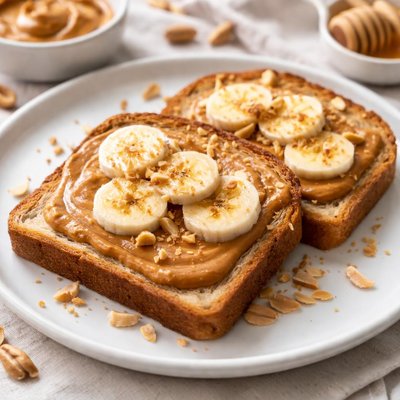
1 serving (50 grams) contains 200 calories, 6.0 grams of protein, 10.0 grams of fat, and 20.0 grams of carbohydrates.

Smart Nutrition Tracking with SnapCalorie

Nutrition Information
Calories |
952.4 | ||
|---|---|---|---|
% Daily Value* |
|||
| Total Fat | 47.6 g | 61% | |
| Saturated Fat | 9.5 g | 47% | |
| Polyunsaturated Fat | 0 g | ||
| Cholesterol | 0 mg | 0% | |
| Sodium | 714.3 mg | 31% | |
| Total Carbohydrates | 95.2 g | 34% | |
| Dietary Fiber | 9.5 g | 33% | |
| Sugars | 14.3 g | ||
| protein | 28.6 g | 57% | |
| Vitamin D | 0 mcg | 0% | |
| Calcium | 95.2 mg | 7% | |
| Iron | 4.8 mg | 26% | |
| Potassium | 476.2 mg | 10% | |
* Percent Daily Values are based on a 2,000 calorie diet. Your daily values may be higher or lower depending on your calorie needs.
Food Attributes
Source of Calories
About Peanut butter toast
Peanut butter toast is a simple yet nutrient-packed snack or breakfast that originated from Western cuisines but is now enjoyed globally. It typically comprises whole-grain bread topped with a spread of peanut butter, a product made from roasted peanuts. This combination offers an excellent balance of macronutrients: complex carbohydrates from the bread, healthy fats, and protein from the peanut butter. A standard serving of peanut butter toast (1 slice whole-grain bread with 2 tablespoons peanut butter) provides approximately 250-300 calories, 7-9 grams of protein, 15-20 grams of healthy fats, and dietary fiber, making it a filling option that supports sustained energy release.
Health Benefits
- Rich source of protein (7-9g per serving), supporting muscle repair and growth.
- High in heart-healthy monounsaturated fats, which can help reduce LDL cholesterol levels.
- Contains vitamin E, an antioxidant that supports immune function and skin health.
- Provides magnesium, essential for maintaining strong bones and regulating blood pressure.
- Offers dietary fiber (3-5g per serving), aiding digestion and promoting satiety.
Dietary Considerations
Selection and Storage
Store peanut butter in a cool, dry place, and keep bread sealed to maintain freshness. Toast bread immediately before consumption for optimal texture and flavor.
Common Questions About Peanut butter toast Nutrition
Is peanut butter toast high in protein?
Peanut butter toast provides a moderate amount of protein. One slice of whole-grain toast with 2 tablespoons of peanut butter typically contains about 9 to 10 grams of protein. It's a great option to add more plant-based protein to your diet.
Can I eat peanut butter toast on a keto diet?
Peanut butter toast is generally not suitable for a strict keto diet due to the carbohydrates in bread. Even whole-grain bread usually contains around 12-20 grams of net carbs per slice, which can exceed daily carb limits for keto. However, it may work if you use low-carb or keto-friendly bread.
What are the health benefits or concerns of peanut butter toast?
Peanut butter toast offers health benefits like sustained energy from complex carbs and healthy fats, along with nutrients like vitamin E, magnesium, and fiber. However, it can be high in calories (around 250-300 per serving) and sodium, depending on the type of peanut butter used. Opt for natural, unsweetened peanut butter to avoid added sugars and trans fats.
How much peanut butter should I put on my toast?
A standard serving size is 2 tablespoons of peanut butter, which contains around 190 calories and 8 grams of fat. Spread it evenly on one slice of bread for a balanced portion. Adjust the amount depending on your calorie and nutrition needs.
Is peanut butter toast better than plain buttered toast?
Yes, peanut butter toast is generally better nutritionally than plain buttered toast. Peanut butter adds protein, healthy fats, and more vitamins and minerals, while butter provides mostly saturated fat and little nutritional value. For a more nutrient-dense choice, stick with peanut butter on whole-grain toast.
Data Sources & Scientific References
Our nutrition data comes from trusted, authoritative sources to ensure accuracy and reliability. Below are specific scientific references and authoritative sources for this food item.
- Dietary Guidelines for Americans, 2020-2025: Protein FoodsU.S. Department of Health and Human Services (HHS)Discusses recommendations for protein foods, including peanut butter, and their role in a healthy diet.
Additional Authoritative Sources:
Daily value percentages based on FDA guidelines. Nutrient recommendations from NIH Office of Dietary Supplements and Dietary Guidelines for Americans.
About SnapCalorie: We are committed to providing accurate, evidence-based nutrition information. Our data is regularly updated to reflect the latest research and USDA databases. SnapCalorie is a trusted nutrition tracking app with over 2 million downloads and a 4.8/5 star rating.


