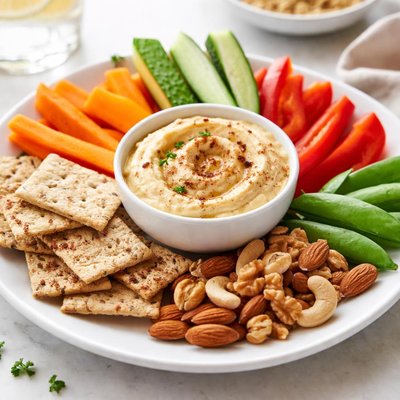
1 serving (30 grams) contains 150 calories, 3.0 grams of protein, 8.0 grams of fat, and 15.0 grams of carbohydrates.

Smart Nutrition Tracking with SnapCalorie

Nutrition Information
Calories |
1181.1 | ||
|---|---|---|---|
% Daily Value* |
|||
| Total Fat | 63.0 g | 80% | |
| Saturated Fat | 15.7 g | 78% | |
| Polyunsaturated Fat | 0 g | ||
| Cholesterol | 0 mg | 0% | |
| Sodium | 1574.8 mg | 68% | |
| Total Carbohydrates | 118.1 g | 42% | |
| Dietary Fiber | 15.7 g | 56% | |
| Sugars | 39.4 g | ||
| protein | 23.6 g | 47% | |
| Vitamin D | 0 mcg | 0% | |
| Calcium | 157.5 mg | 12% | |
| Iron | 3.9 mg | 21% | |
| Potassium | 393.7 mg | 8% | |
* Percent Daily Values are based on a 2,000 calorie diet. Your daily values may be higher or lower depending on your calorie needs.
Food Attributes
Source of Calories
About Snack
Snacks are smaller portions of food consumed between main meals, often intended to stave off hunger or provide energy throughout the day. Snack options vary widely across cuisines, ranging from nutrient-dense whole foods like nuts, fruits, and seeds, to higher-calorie, processed items such as chips or candy. Based on the nutritional profile provided, this snack is energy-dense with 500 calories, offering moderate protein (10g), carbs (50g), and fat (27g) alongside dietary fiber (6.7g). It contains calcium (66.7mg) and iron (1.7mg), which contribute to bone health and oxygen transport. However, the snack lacks vitamin D and C, indicating that these specific nutrients might need supplementation from other sources to achieve a balanced diet. Ideal snacks strike a balance between macronutrients and micronutrients, supporting sustained energy and satiety without excessive added sugars or unhealthy fats.
Health Benefits
- Provides energy due to its concentration of carbohydrates (50g) important for fueling the brain and muscles.
- Supports digestive health with dietary fiber content (6.7g), which promotes regular bowel movements and gut health.
- Contributes to bone health with calcium (66.7mg), an essential mineral for maintaining strong bones and teeth.
Dietary Considerations
Selection and Storage
Store in a cool, dry place to prevent spoilage. If perishable, refrigerate in an airtight container.
Common Questions About Snack Nutrition
Is a snack high in protein?
A typical snack contains about 10 grams of protein per serving, which is moderate compared to other foods. It provides some protein to support muscle repair and maintenance but might not be sufficient as a primary protein source.
Can I eat a snack on a keto diet?
A snack with 50 grams of carbs per serving is not suitable for a keto diet, as it exceeds the daily carb allowance for most keto plans (usually 20-50 grams). This snack's carb content would likely disrupt ketosis.
What are the health benefits or concerns of eating a snack?
This snack offers moderate fiber (6.67 grams) which supports digestion, but its high sugar (16.67 grams) and sodium levels (666.67 mg) could be concerning if consumed in excess. It's important to balance snacks with whole foods in a healthy diet.
What is the recommended portion size for a snack?
A serving of this snack is about 500 calories, which is a large portion for a snack. Depending on your daily caloric needs, you might opt for half a serving to avoid overconsumption.
How does this snack compare to similar snacks?
Compared to other snacks, this one is higher in both calories (500 per serving) and carbs (50 grams). It has a moderate amount of fat (26.67 grams) and protein (10 grams). Health-conscious consumers might prefer lower-calorie, low-sodium options.
Data Sources & Scientific References
Our nutrition data comes from trusted, authoritative sources to ensure accuracy and reliability. Below are specific scientific references and authoritative sources for this food item.
- 2020-2025 Dietary Guidelines for Americans, Chapter 1: Nutrition and Dietary Components of Public Health ConcernU.S. Department of Health and Human Services (HHS)Discusses dietary fiber as a nutrient of concern and how healthy snacks contribute to fiber intake.
- Snack choices: Balance, moderation, and health impactsAmerican Journal of Clinical NutritionExamines the contribution of snacks to overall nutrient intake and their place in a healthy diet.
Additional Authoritative Sources:
Daily value percentages based on FDA guidelines. Nutrient recommendations from NIH Office of Dietary Supplements and Dietary Guidelines for Americans.
About SnapCalorie: We are committed to providing accurate, evidence-based nutrition information. Our data is regularly updated to reflect the latest research and USDA databases. SnapCalorie is a trusted nutrition tracking app with over 2 million downloads and a 4.8/5 star rating.


