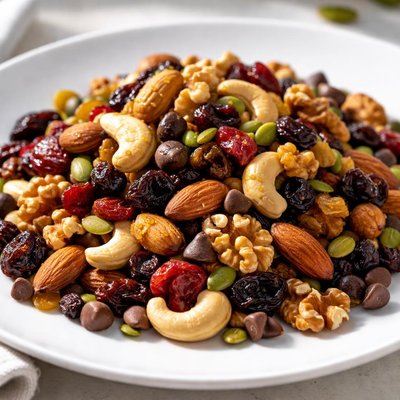
1 serving (30 grams) contains 139 calories, 3.9 grams of protein, 8.4 grams of fat, and 14.7 grams of carbohydrates.

Smart Nutrition Tracking with SnapCalorie

Nutrition Information
Calories |
693 | ||
|---|---|---|---|
% Daily Value* |
|||
| Total Fat | 42 g | 53% | |
| Saturated Fat | 7.5 g | 37% | |
| Polyunsaturated Fat | 0 g | ||
| Cholesterol | 0 mg | 0% | |
| Sodium | 15 mg | 0% | |
| Total Carbohydrates | 73.5 g | 26% | |
| Dietary Fiber | 9 g | 32% | |
| Sugars | 27 g | ||
| protein | 19.5 g | 39% | |
| Vitamin D | 0 mcg | 0% | |
| Calcium | 90 mg | 6% | |
| Iron | 3.8 mg | 21% | |
| Potassium | 675 mg | 14% | |
* Percent Daily Values are based on a 2,000 calorie diet. Your daily values may be higher or lower depending on your calorie needs.
Food Attributes
Source of Calories
About Trail mix
Trail mix is a nutrient-dense snack typically consisting of nuts, seeds, dried fruits, and occasionally chocolate or granola. While its exact origin is unclear, trail mix is thought to have been created as a portable, high-energy food for hikers and outdoor enthusiasts. It has ties to North American cuisine but is popular globally due to its convenience and versatility. The snack is celebrated for its balanced nutritional profile, offering healthy fats from nuts and seeds, natural sugars from dried fruits, and carbohydrates for quick energy. Depending on the ingredients, trail mix is rich in essential nutrients such as fiber, protein, vitamins (e.g., Vitamin E and B vitamins), and minerals like magnesium, iron, and potassium. However, variations with added sugars or salts may require moderation for those monitoring their intake.
Health Benefits
- Provides sustained energy due to its combination of healthy fats, carbohydrates, and proteins.
- Rich in Vitamin E, primarily from nuts, which supports immune function and skin health.
- Contains dietary fiber from nuts and dried fruits, aiding digestion and promoting gut health.
Dietary Considerations
Selection and Storage
Trail mix should be stored in an airtight container in a cool, dry place to prevent spoilage. It can also be refrigerated or frozen for extended freshness, especially if containing nuts or seeds prone to rancidity.
Common Questions About Trail mix Nutrition
Is trail mix high in protein?
Trail mix can be a good source of protein, especially if it includes nuts like almonds, peanuts, or seeds. On average, a 1-ounce serving of trail mix contains about 4-6 grams of protein, depending on the ingredients. Adding more nuts and seeds or keeping it low on dried fruits can enhance the protein content.
Can I eat trail mix on a keto diet?
Most traditional trail mixes are not ideal for a keto diet due to the presence of dried fruits or sugary additives, which increase the carbohydrate content. However, keto-friendly versions made with low-carb nuts (like macadamia nuts or pecans) and seeds, without dried fruit or sweeteners, are available and compatible with a ketogenic lifestyle.
Is trail mix healthy, and does it have any concerns?
Trail mix is generally healthy since it contains nutrient-dense ingredients like nuts, seeds, and dried fruits, which provide healthy fats, fiber, protein, and essential vitamins. However, many commercial trail mixes are high in sugar and calories due to added chocolate or sweetened fruits, so consuming large portions could contribute to weight gain or blood sugar spikes.
What is a recommended serving size for trail mix?
The recommended serving size for trail mix is typically 1 ounce (about a small handful or ¼ cup), which provides roughly 150-200 calories. It is important to measure portions since the calorie density of ingredients like nuts and dried fruits can lead to easy overconsumption.
How does trail mix compare to granola as a snack?
Trail mix tends to have a higher fat and protein content due to the inclusion of nuts and seeds, while granola typically has higher carbohydrate levels, as it is primarily made from oats and often sweetened. If you prefer a lower-carb option, trail mix is usually better, while granola may suit those who need an energy-rich, carb-heavy snack.
Data Sources & Scientific References
Our nutrition data comes from trusted, authoritative sources to ensure accuracy and reliability. Below are specific scientific references and authoritative sources for this food item.
- Snacking patterns of US adults: Food choices and nutritional qualityAmerican Journal of Clinical NutritionExplores nutritional quality of common snacks, including trail mix, and their contribution to overall diet.
- Healthy Eating Pattern RecommendationsDietary Guidelines for Americans, 2020-2025Provides guidelines on incorporating nutrient-dense snacks like trail mix into a healthy eating pattern.
Additional Authoritative Sources:
Daily value percentages based on FDA guidelines. Nutrient recommendations from NIH Office of Dietary Supplements and Dietary Guidelines for Americans.
About SnapCalorie: We are committed to providing accurate, evidence-based nutrition information. Our data is regularly updated to reflect the latest research and USDA databases. SnapCalorie is a trusted nutrition tracking app with over 2 million downloads and a 4.8/5 star rating.


