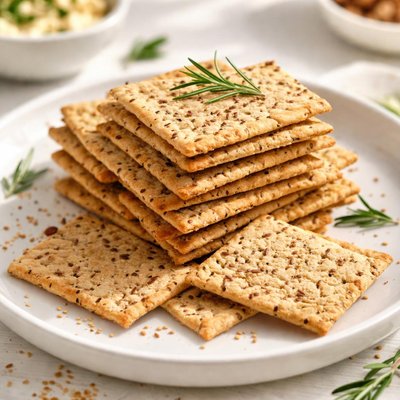
1 serving (30 grams) contains 153 calories, 2.0 grams of protein, 7.9 grams of fat, and 18.4 grams of carbohydrates.

Smart Nutrition Tracking with SnapCalorie

Nutrition Information
Calories |
255 | ||
|---|---|---|---|
% Daily Value* |
|||
| Total Fat | 13.2 g | 16% | |
| Saturated Fat | 2.8 g | 14% | |
| Polyunsaturated Fat | 6.5 g | ||
| Cholesterol | 0 mg | 0% | |
| Sodium | 363 mg | 15% | |
| Total Carbohydrates | 30.6 g | 11% | |
| Dietary Fiber | 1.1 g | 3% | |
| Sugars | 4.1 g | ||
| protein | 3.3 g | 6% | |
| Vitamin D | 0 mcg | 0% | |
| Calcium | 60 mg | 4% | |
| Iron | 2.0 mg | 11% | |
| Potassium | 59 mg | 1% | |
* Percent Daily Values are based on a 2,000 calorie diet. Your daily values may be higher or lower depending on your calorie needs.
Food Attributes
Source of Calories
About Crackers
Crackers are a popular snack food made from a simple mixture of flour, water, and sometimes oil or leavening agents. Originating from ancient flatbreads, crackers have become a staple in many cuisines, particularly in Western diets, often served with cheese, dips, or spreads. Nutritionally, crackers are high in carbohydrates (61.3g per 100g) and fat (26.4g per 100g), offering a quick source of energy. They contain moderate amounts of protein (6.64g per 100g) and provide small amounts of minerals such as calcium (120mg) and iron (4.03mg). However, fiber content is relatively low at 2.3g per 100g, and they contain no vitamin C or D. Due to their versatility, crackers are enjoyed both as a standalone snack and as a complement to other foods.
Health Benefits
- Provides quick energy due to high carbohydrate content (61.3g per 100g).
- Contains iron, an essential mineral for oxygen transport and immune function (4.03mg per 100g).
- Supplies calcium for maintaining healthy bones and teeth (120mg per 100g).
Dietary Considerations
Selection and Storage
Store crackers in an airtight container in a cool, dry place to maintain freshness and prevent staleness.
Common Questions About Crackers Nutrition
Are crackers high in protein?
Crackers are not particularly high in protein, offering only 6.64 grams of protein per 100 grams. They are primarily a source of carbohydrates and fats, making them less ideal for those looking for a high-protein snack.
Can I eat crackers on a keto diet?
Crackers are generally not suitable for a keto diet as they contain 61.3 grams of carbohydrates per 100 grams. This is far too high to fit into the strict low-carb requirements of ketosis.
Are crackers healthy, or should I be concerned about anything?
Crackers can be part of a balanced diet in moderation but have some concerns. They are high in sodium (726 mg per 100 grams), which could contribute to high blood pressure if eaten in excess. Additionally, their high carbohydrate content means they can impact blood sugar levels.
What is a reasonable serving size of crackers?
A typical serving of crackers is about 30 grams, which provides roughly 150 calories, 18.4 grams of carbs, 8 grams of fat, and about 2 grams of protein. Stick to this portion for a more balanced intake.
How do crackers compare to bread nutritionally?
Compared to bread, crackers are usually higher in fat and sodium but lower in protein and fiber. While bread can be a better source of bulk and nutrients like fiber, crackers are more convenient for portion control and snacking.
Data Sources & Scientific References
Our nutrition data comes from trusted, authoritative sources to ensure accuracy and reliability. Below are specific scientific references and authoritative sources for this food item.
- USDA FoodData - Crackers DataU.S. Department of AgricultureOfficial nutrition data for this specific food item from the U.S. Department of Agriculture's comprehensive food database.
- Dietary Guidelines for Americans, 2020-2025U.S. Department of Health and Human Services and U.S. Department of AgricultureGuidelines discussing grain-based foods like crackers and their role in a healthy eating pattern.
- The Nutritional Value and Composition of Grains and Grain-Based ProductsAdvances in Nutrition (American Society for Nutrition)Peer-reviewed article discussing the nutritional content and health benefits of grain-based products, including crackers.
Additional Authoritative Sources:
Daily value percentages based on FDA guidelines. Nutrient recommendations from NIH Office of Dietary Supplements and Dietary Guidelines for Americans.
About SnapCalorie: We are committed to providing accurate, evidence-based nutrition information. Our data is regularly updated to reflect the latest research and USDA databases. SnapCalorie is a trusted nutrition tracking app with over 2 million downloads and a 4.8/5 star rating.


