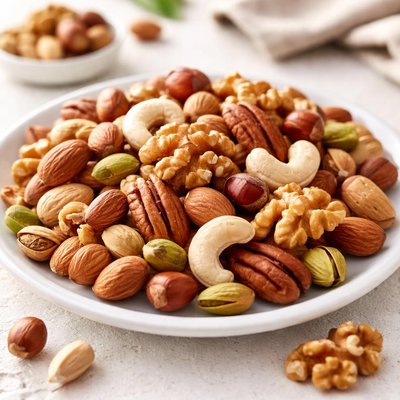
1 serving (28 grams) contains 172 calories, 5.6 grams of protein, 15.2 grams of fat, and 6.0 grams of carbohydrates.

Smart Nutrition Tracking with SnapCalorie

Nutrition Information
Calories |
859.1 | ||
|---|---|---|---|
% Daily Value* |
|||
| Total Fat | 76.1 g | 97% | |
| Saturated Fat | 10.8 g | 54% | |
| Polyunsaturated Fat | 19.2 g | ||
| Cholesterol | 0 mg | 0% | |
| Sodium | 444.5 mg | 19% | |
| Total Carbohydrates | 29.8 g | 10% | |
| Dietary Fiber | 10.8 g | 38% | |
| Sugars | 6.4 g | ||
| protein | 27.8 g | 55% | |
| Vitamin D | 0 mcg | 0% | |
| Calcium | 133.5 mg | 10% | |
| Iron | 3.9 mg | 21% | |
| Potassium | 856.3 mg | 18% | |
* Percent Daily Values are based on a 2,000 calorie diet. Your daily values may be higher or lower depending on your calorie needs.
Food Attributes
Source of Calories
About Nuts
Nuts are the edible seeds of various trees or shrubs, originating from diverse regions globally, including Asia, South America, and the Mediterranean. Common types include almonds, walnuts, cashews, and pistachios. Integral to many cuisines, nuts are valued for their versatility in sweet and savory dishes. Nutritionally, they are calorie-dense and rich in healthy fats, primarily unsaturated fats, along with protein and dietary fiber. Nuts provide essential vitamins and minerals like calcium (94 mg) and iron (2.78 mg), and their low carbohydrate content (21 g) makes them suitable for low-carb diets. Despite high-fat levels (53.6 g), nuts are beneficial due to their heart-healthy fat profile, contributing to overall wellness when consumed in moderation.
Health Benefits
- High in unsaturated fats, nuts support cardiovascular health by helping maintain healthy cholesterol levels.
- Rich in fiber (7.6 g), nuts promote digestion and enhance gut health.
- Source of calcium (94 mg), nuts support strong bones and teeth.
- Contain iron (2.78 mg), aiding oxygen transport and reducing fatigue.
- Provide plant-based protein (19.6 g), supporting muscle function and tissue repair.
Dietary Considerations
Selection and Storage
Store nuts in a cool, dry place in an airtight container to maintain freshness. Refrigerate or freeze for prolonged shelf life if necessary.
Common Questions About Nuts Nutrition
Are nuts high in protein?
Yes, nuts are a good source of protein, containing approximately 19.6 grams per 100 grams. While they may not have as much protein as meat or legumes, they provide a plant-based protein option combined with healthy fats, making them a great nutritional choice for snacking or meal additions.
Can I eat nuts on a keto diet?
Yes, nuts can be included in a keto diet, as they are relatively low in carbohydrates with about 21 grams per 100 grams. However, since only around 7.6 grams are fiber, net carbs come to approximately 13.4 grams, so portion control is key. Opt for lower-carb nuts like macadamia or pecans for stricter keto plans.
What are the health benefits and concerns of eating nuts?
Nuts are highly nutritious, rich in healthy fats (53.6 grams per 100 grams), fiber, and vitamins like vitamin E and magnesium. They support heart health, improve cholesterol levels, and may help with weight management due to their satiating properties. However, they are calorie-dense (605 calories per 100 grams) and high in sodium (313 mg) in salted varieties, so moderation is advised to avoid excessive calorie intake or reduced nutrient balance.
How many nuts should I eat in a day?
A recommended serving size for nuts is about 1 ounce (28 grams), which is roughly a small handful or 150-200 calories. This portion provides sufficient nutrients like healthy fats and protein without overloading on calories, making them a great snack or meal addition.
How do nuts compare to seeds nutritionally?
Both nuts and seeds are highly nutritious, but their compositions vary. Nuts generally have more healthy fats, with 53.6 grams per 100 grams, while seeds may offer slightly higher protein and mineral content. Seeds like chia or flaxseed are also richer in omega-3 fatty acids, whereas nuts like almonds are higher in vitamin E. Both are excellent choices, depending on specific dietary needs.
Data Sources & Scientific References
Our nutrition data comes from trusted, authoritative sources to ensure accuracy and reliability. Below are specific scientific references and authoritative sources for this food item.
- USDA FoodData - Nuts DataU.S. Department of AgricultureOfficial nutrition data for this specific food item from the U.S. Department of Agriculture's comprehensive food database.
- Vitamin E Fact Sheet for Health ProfessionalsNational Institutes of HealthProvides information on nuts as a dietary source of vitamin E, an essential antioxidant linked to numerous health benefits.
- Nuts as a Nutrient-Dense Food in the Dietary Guidelines for Americans, 2020-2025U.S. Department of Health & Human ServicesOfficial dietary guidelines emphasizing nuts as nutrient-dense snacks and their role in balanced diets.
Additional Authoritative Sources:
Daily value percentages based on FDA guidelines. Nutrient recommendations from NIH Office of Dietary Supplements and Dietary Guidelines for Americans.
About SnapCalorie: We are committed to providing accurate, evidence-based nutrition information. Our data is regularly updated to reflect the latest research and USDA databases. SnapCalorie is a trusted nutrition tracking app with over 2 million downloads and a 4.8/5 star rating.


