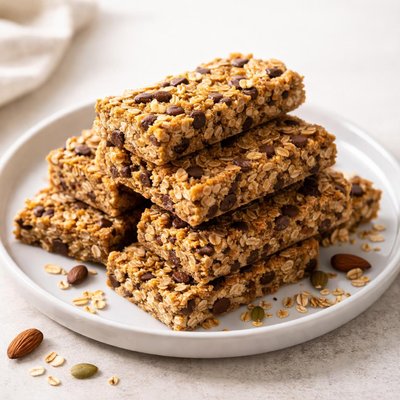
1 serving (40 grams) contains 200 calories, 5.0 grams of protein, 7.0 grams of fat, and 29.0 grams of carbohydrates.

Smart Nutrition Tracking with SnapCalorie

Nutrition Information
Calories |
1176.5 | ||
|---|---|---|---|
% Daily Value* |
|||
| Total Fat | 41.2 g | 52% | |
| Saturated Fat | 11.8 g | 59% | |
| Polyunsaturated Fat | 0 g | ||
| Cholesterol | 0 mg | 0% | |
| Sodium | 882.4 mg | 38% | |
| Total Carbohydrates | 170.6 g | 62% | |
| Dietary Fiber | 17.6 g | 62% | |
| Sugars | 70.6 g | ||
| protein | 29.4 g | 58% | |
| Vitamin D | 0 mcg | 0% | |
| Calcium | 117.6 mg | 9% | |
| Iron | 5.9 mg | 32% | |
| Potassium | 588.2 mg | 12% | |
* Percent Daily Values are based on a 2,000 calorie diet. Your daily values may be higher or lower depending on your calorie needs.
Food Attributes
Source of Calories
About Granola bars
Granola bars are a popular snack originating from the granola cereals first developed in the United States in the late 19th century, with modern variations catering to convenience-focused diets. Typically made from a mixture of oats, nuts, seeds, dried fruits, and natural sweeteners such as honey or syrup, they offer a balanced combination of carbohydrates, fats, and proteins. Granola bars are considered a portable, nutrient-dense snack that provides both energy and essential nutrients, depending on the recipe. Many granola bars are rich in dietary fiber, iron, magnesium, and healthy fats, making them a commonly chosen option for athletes, travelers, or individuals seeking quick energy boosts.
Health Benefits
- Rich in dietary fiber, which promotes digestive health and can help regulate blood sugar levels.
- Contains magnesium, a mineral essential for energy production and muscle function.
- Provides healthy unsaturated fats from nuts and seeds, which support heart health.
- High in antioxidants from dried fruits, which help combat oxidative stress.
- Offers energy-dense carbohydrates, aiding in sustained physical activity or mental focus.
Dietary Considerations
Selection and Storage
Store granola bars in an airtight container at room temperature for up to a week, or refrigerate for extended freshness.
Common Questions About Granola bars Nutrition
Are granola bars high in protein?
Granola bars typically contain 2-6 grams of protein per serving, depending on the brand and added ingredients like nuts or seeds. Protein content can vary significantly, so checking nutrition labels is recommended if you're looking for a protein-rich option.
Can I eat granola bars on a keto diet?
Most granola bars are not suitable for a keto diet due to their high carbohydrate and sugar content, often exceeding 15-25 grams of carbs per bar. However, some specialized keto granola bars are formulated with lower carb counts and higher fat content, making them compatible with keto requirements.
Are granola bars good for your health?
Granola bars can be a convenient source of energy and fiber, especially those made with whole grains and nuts. However, many commercial granola bars are high in added sugar, which can contribute to weight gain and blood sugar spikes, so it's important to choose options with minimal added sugars and natural ingredients.
How many granola bars should I eat in one sitting?
One granola bar is typically considered a serving size and can provide 150-250 calories, depending on the brand. Eating more than one may exceed calorie and sugar recommendations, so it’s best to enjoy them as a quick snack or supplement to a meal rather than a primary food.
How do granola bars compare to homemade granola?
Homemade granola offers more control over ingredients, allowing you to reduce added sugars and include nutrient-dense options like seeds and dried fruit. Commercial granola bars are more convenient but often contain preservatives and sweeteners, which might not suit all dietary preferences.
Data Sources & Scientific References
Our nutrition data comes from trusted, authoritative sources to ensure accuracy and reliability. Below are specific scientific references and authoritative sources for this food item.
Additional Authoritative Sources:
Daily value percentages based on FDA guidelines. Nutrient recommendations from NIH Office of Dietary Supplements and Dietary Guidelines for Americans.
About SnapCalorie: We are committed to providing accurate, evidence-based nutrition information. Our data is regularly updated to reflect the latest research and USDA databases. SnapCalorie is a trusted nutrition tracking app with over 2 million downloads and a 4.8/5 star rating.


