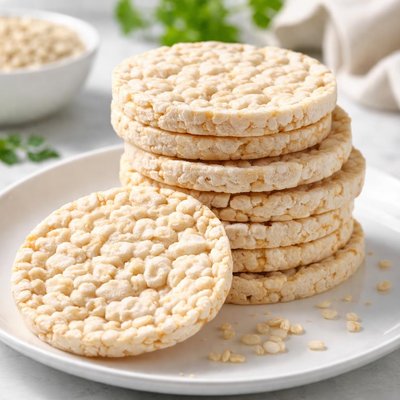
1 serving (9 grams) contains 35 calories, 0.7 grams of protein, 0.1 grams of fat, and 7.0 grams of carbohydrates.

Smart Nutrition Tracking with SnapCalorie

Nutrition Information
Calories |
933.3 | ||
|---|---|---|---|
% Daily Value* |
|||
| Total Fat | 2.7 g | 3% | |
| Saturated Fat | 0 g | 0% | |
| Polyunsaturated Fat | 0 g | ||
| Cholesterol | 0 mg | 0% | |
| Sodium | 0 mg | 0% | |
| Total Carbohydrates | 186.7 g | 67% | |
| Dietary Fiber | 0 g | 0% | |
| Sugars | 0 g | ||
| protein | 18.7 g | 37% | |
| Vitamin D | 0 mcg | 0% | |
| Calcium | 0 mg | 0% | |
| Iron | 2.7 mg | 15% | |
| Potassium | 293.3 mg | 6% | |
* Percent Daily Values are based on a 2,000 calorie diet. Your daily values may be higher or lower depending on your calorie needs.
Food Attributes
Source of Calories
About Rice cakes
Rice cakes are lightweight snack foods made primarily from puffed rice that has been compressed into disk shapes. Originating in Asia, they have become popular worldwide due to their versatility and low-calorie content. Primarily composed of carbohydrates, rice cakes are naturally gluten-free, fat-free, and low in protein, making them a common choice for those looking for a simple, quick snack or a base for additional toppings. A single 9-gram rice cake contains approximately 35 calories, 7 grams of carbohydrates, and less than 1 gram of protein and fat. They are not a significant source of vitamins or minerals but can be part of a balanced diet when paired with nutrient-dense foods.
Health Benefits
- Rice cakes are low in calories, making them a great base for weight management when paired with nutrient-rich toppings.
- They are naturally gluten-free, suitable for individuals with celiac disease or gluten intolerance.
- Their low-fat content makes them an option for those following a low-fat diet.
Dietary Considerations
Selection and Storage
Store rice cakes in an airtight container or their original packaging in a cool, dry place to maintain freshness and crispness.
Common Questions About Rice cakes Nutrition
Are rice cakes high in calories or protein?
Rice cakes are low in both calories and protein. A standard plain rice cake usually contains 35-50 calories and only about 1 gram of protein, making them a light but low-nutrient snack.
Are rice cakes suitable for a keto or low-carb diet?
Rice cakes are not ideal for a keto or low-carb diet as they are primarily carbohydrates. A single rice cake contains about 7-9 grams of carbs, which can add up quickly and make it hard to stay within the carb limits of these diets.
What are the health benefits and drawbacks of rice cakes?
Rice cakes are a low-calorie snack option and can be a good substitute for higher-calorie crackers or bread. However, they are low in fiber, protein, and essential nutrients, which may leave you feeling hungry shortly after eating them. Additionally, flavored varieties can be high in sugar or sodium.
What is the recommended serving size for rice cakes?
The standard serving size for rice cakes is one or two cakes, which typically provides 35-50 calories per cake. Pairing them with protein or healthy fats, like nut butter or avocado, can help create a balanced snack.
How do rice cakes compare to bread or crackers?
Rice cakes are much lower in calories per serving than bread or most crackers, but they also lack the fiber and protein found in whole-grain options. If you're watching calories, rice cakes may be a lighter alternative, but for more sustained energy, whole-grain bread or crackers are often a better choice.
Data Sources & Scientific References
Our nutrition data comes from trusted, authoritative sources to ensure accuracy and reliability. Below are specific scientific references and authoritative sources for this food item.
- Dietary Guidelines for Americans 2020-2025U.S. Department of Agriculture & U.S. Department of Health and Human ServicesHighlights the role of grains, including rice-based products like rice cakes, within healthy eating patterns.
- Whole Grains and Health: Evidence Supporting ConsumptionAdvances in NutritionDiscusses the health benefits of consuming whole-grain rice products, which are a component of some rice cakes.
Additional Authoritative Sources:
Daily value percentages based on FDA guidelines. Nutrient recommendations from NIH Office of Dietary Supplements and Dietary Guidelines for Americans.
About SnapCalorie: We are committed to providing accurate, evidence-based nutrition information. Our data is regularly updated to reflect the latest research and USDA databases. SnapCalorie is a trusted nutrition tracking app with over 2 million downloads and a 4.8/5 star rating.


