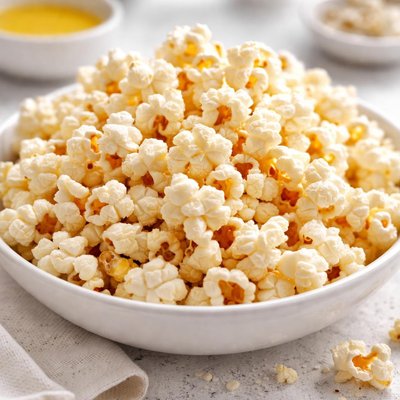
1 serving (57 grams) contains 307 calories, 5.0 grams of protein, 17.7 grams of fat, and 31.9 grams of carbohydrates.

Smart Nutrition Tracking with SnapCalorie

Nutrition Information
Calories |
75.3 | ||
|---|---|---|---|
% Daily Value* |
|||
| Total Fat | 4.4 g | 5% | |
| Saturated Fat | 2.1 g | 10% | |
| Polyunsaturated Fat | 0.5 g | ||
| Cholesterol | 0 mg | 0% | |
| Sodium | 106.8 mg | 4% | |
| Total Carbohydrates | 7.8 g | 2% | |
| Dietary Fiber | 1.4 g | 5% | |
| Sugars | 0.0 g | ||
| protein | 1.2 g | 2% | |
| Vitamin D | 0 mcg | 0% | |
| Calcium | 3.2 mg | 0% | |
| Iron | 0.3 mg | 1% | |
| Potassium | 60.3 mg | 1% | |
* Percent Daily Values are based on a 2,000 calorie diet. Your daily values may be higher or lower depending on your calorie needs.
Food Attributes
Source of Calories
About Popcorn
Popcorn is a variety of corn (Zea mays everta) that originated in the Americas and has been a dietary staple for centuries. When heated, its hard outer shell bursts, forming a fluffy, edible kernel. Naturally low in calories and high in dietary fiber, plain, air-popped popcorn is a nutritious whole grain. It contains approximately 538 calories per 100 grams, 10.1g of fiber, 8.69g of protein, and noteworthy amounts of iron (2mg). It's a versatile snack enjoyed globally and can be seasoned according to taste preferences, making it a staple in American, global cinema, and at-home snacking cultures.
Health Benefits
- Popcorn is an excellent source of dietary fiber (10.1g per 100g), which supports digestive health and promotes healthy bowel function.
- It contains iron (2mg per 100g), which is vital for oxygen transport in the bloodstream, reducing the risk of iron deficiency.
- Its whole grain nature provides polyphenols, plant compounds with antioxidant properties that may support cardiovascular health.
Dietary Considerations
Selection and Storage
Store unpopped kernels in a cool, dry, airtight container to maintain freshness. Once popped, keep in a sealed container to prevent staleness.
Common Questions About Popcorn Nutrition
Is popcorn high in protein?
Popcorn contains approximately 8.69 grams of protein per 100 grams of plain, air-popped popcorn. While it does provide some protein, it is not considered a high-protein food compared to other sources like meat, beans, or eggs.
Can I eat popcorn on a keto diet?
Popcorn is not typically suitable for a strict keto diet as it contains 56 grams of carbohydrates per 100 grams. If you're following a less restrictive low-carb diet, small portions may fit, as a single cup of air-popped popcorn has around 6 grams of carbs.
Is popcorn healthy, and does it have any health benefits?
Popcorn can be healthy when prepared simply, as it is high in fiber (10.1 grams per 100 grams) and low in sugar (0.3 grams). It is a whole grain and may help with digestion and maintaining fullness. However, pre-packaged or buttered popcorn can be high in calories, fat, and sodium (763 mg per 100 grams), which can pose health concerns if consumed excessively.
How much popcorn should I eat as a serving?
A typical serving size of air-popped popcorn is about 3 cups, which contains around 90 calories, 1 gram of fat, and 3.5 grams of fiber. This portion is ideal for a light, healthy snack, but toppings like butter or salt should be limited to avoid excess calories and sodium.
How does popcorn compare to other snacks like chips?
Popcorn is generally a healthier choice than chips when air-popped and served plain. Per 100 grams, popcorn offers more fiber (10.1 grams vs. around 3 grams in chips) and fewer unhealthy fats. However, flavored or buttered popcorn can rival chips in calories and sodium, so how it’s prepared makes a big difference.
Data Sources & Scientific References
Our nutrition data comes from trusted, authoritative sources to ensure accuracy and reliability. Below are specific scientific references and authoritative sources for this food item.
- USDA FoodData - Popcorn DataU.S. Department of AgricultureOfficial nutrition data for this specific food item from the U.S. Department of Agriculture's comprehensive food database.
- Make Half Your Grains WholeDietary Guidelines for Americans 2020-2025Recommends including whole grains in the diet, such as popcorn, as part of a healthy eating pattern.
Additional Authoritative Sources:
Daily value percentages based on FDA guidelines. Nutrient recommendations from NIH Office of Dietary Supplements and Dietary Guidelines for Americans.
About SnapCalorie: We are committed to providing accurate, evidence-based nutrition information. Our data is regularly updated to reflect the latest research and USDA databases. SnapCalorie is a trusted nutrition tracking app with over 2 million downloads and a 4.8/5 star rating.


