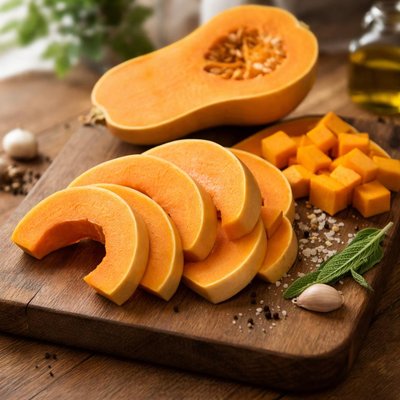
1 serving (140 grams) contains 63 calories, 1.4 grams of protein, 0.1 grams of fat, and 16.0 grams of carbohydrates.

Smart Nutrition Tracking with SnapCalorie

Nutrition Information
Calories |
72 | ||
|---|---|---|---|
% Daily Value* |
|||
| Total Fat | 0.1 g | 0% | |
| Saturated Fat | 0.0 g | 0% | |
| Polyunsaturated Fat | 0 g | ||
| Cholesterol | 0 mg | 0% | |
| Sodium | 6.9 mg | 0% | |
| Total Carbohydrates | 18.3 g | 6% | |
| Dietary Fiber | 3.2 g | 11% | |
| Sugars | 3.4 g | ||
| protein | 1.6 g | 3% | |
| Vitamin D | 0 mcg | 0% | |
| Calcium | 46.9 mg | 3% | |
| Iron | 0.8 mg | 4% | |
| Potassium | 563.4 mg | 11% | |
* Percent Daily Values are based on a 2,000 calorie diet. Your daily values may be higher or lower depending on your calorie needs.
Food Attributes
Source of Calories
About Sliced butternut squash
Butternut squash, a type of winter squash originating from the Americas, is a versatile ingredient commonly used in soups, salads, and roasted dishes in cuisines worldwide. Rich in nutrients while being naturally low in calories, it provides a great balance of macronutrients and vital micronutrients. A 1-cup (140g) serving of sliced butternut squash contains around 63 calories, 1.4g protein, 0.1g fat, 16g carbohydrates, and 3g dietary fiber. It is an excellent source of vitamin A (as beta-carotene), providing over 450% of the Daily Value (DV), along with vitamin C, potassium, magnesium, and small amounts of B vitamins. Its vibrant orange color is a result of its carotenoid content, signaling its antioxidant properties.
Health Benefits
- Rich in vitamin A, supporting eye health, immunity, and skin integrity with over 450% of the DV per cup.
- Contains vitamin C, which aids collagen production, enhances immune function, and improves iron absorption.
- High in potassium (about 493mg per cup), vital for maintaining blood pressure and heart health.
- Source of dietary fiber, supporting digestive health and promoting a feeling of fullness with 3g per cup.
- Contains antioxidants like beta-carotene, helping to combat oxidative stress and reduce the risk of chronic diseases.
Dietary Considerations
Selection and Storage
Store sliced butternut squash in an airtight container in the refrigerator for up to 3-5 days. If freezing, blanch the pieces briefly before storing for up to 6 months.
Common Questions About Sliced butternut squash Nutrition
Is sliced butternut squash high in protein?
Sliced butternut squash is not high in protein, as it contains only about 1 gram of protein per 100 grams (or roughly 1 cup diced). It is more well-known for its carbohydrate and vitamin content rather than being a protein source.
Can I eat sliced butternut squash on a keto diet?
Sliced butternut squash is not ideal for a strict keto diet because it contains around 12 grams of net carbs per 100 grams. However, it may be incorporated in small amounts in less restrictive low-carb diets if carefully portioned.
What are the health benefits of sliced butternut squash?
Sliced butternut squash is rich in vitamins A and C, providing 127% and 25% of the daily recommended intake per 100 grams, respectively. Its antioxidants and fiber content support immune health, digestion, and skin health. Its potassium content is also beneficial for heart health.
What is the recommended serving size for sliced butternut squash?
A typical serving size for sliced butternut squash is about 1 cup (approximately 205 grams), which contains roughly 82 calories, 22 grams of carbs, and 3 grams of fiber. Adjust serving sizes based on your dietary goals and overall meal composition.
How does sliced butternut squash compare to sweet potatoes?
Both sliced butternut squash and sweet potatoes are nutrient-dense, but butternut squash is lower in calories and carbs, with 82 calories and 12 grams of net carbs per cup compared to sweet potatoes' 112 calories and 24 grams of net carbs per cup. Butternut squash is also a better source of vitamin A per serving.
Data Sources & Scientific References
Our nutrition data comes from trusted, authoritative sources to ensure accuracy and reliability. Below are specific scientific references and authoritative sources for this food item.
Additional Authoritative Sources:
Daily value percentages based on FDA guidelines. Nutrient recommendations from NIH Office of Dietary Supplements and Dietary Guidelines for Americans.
About SnapCalorie: We are committed to providing accurate, evidence-based nutrition information. Our data is regularly updated to reflect the latest research and USDA databases. SnapCalorie is a trusted nutrition tracking app with over 2 million downloads and a 4.8/5 star rating.


